It started with Henry Ford’s country estate. It ended up on the quarter-mile with a 427, fiberglass body panels and absolutely no interest in behaving like a family car.
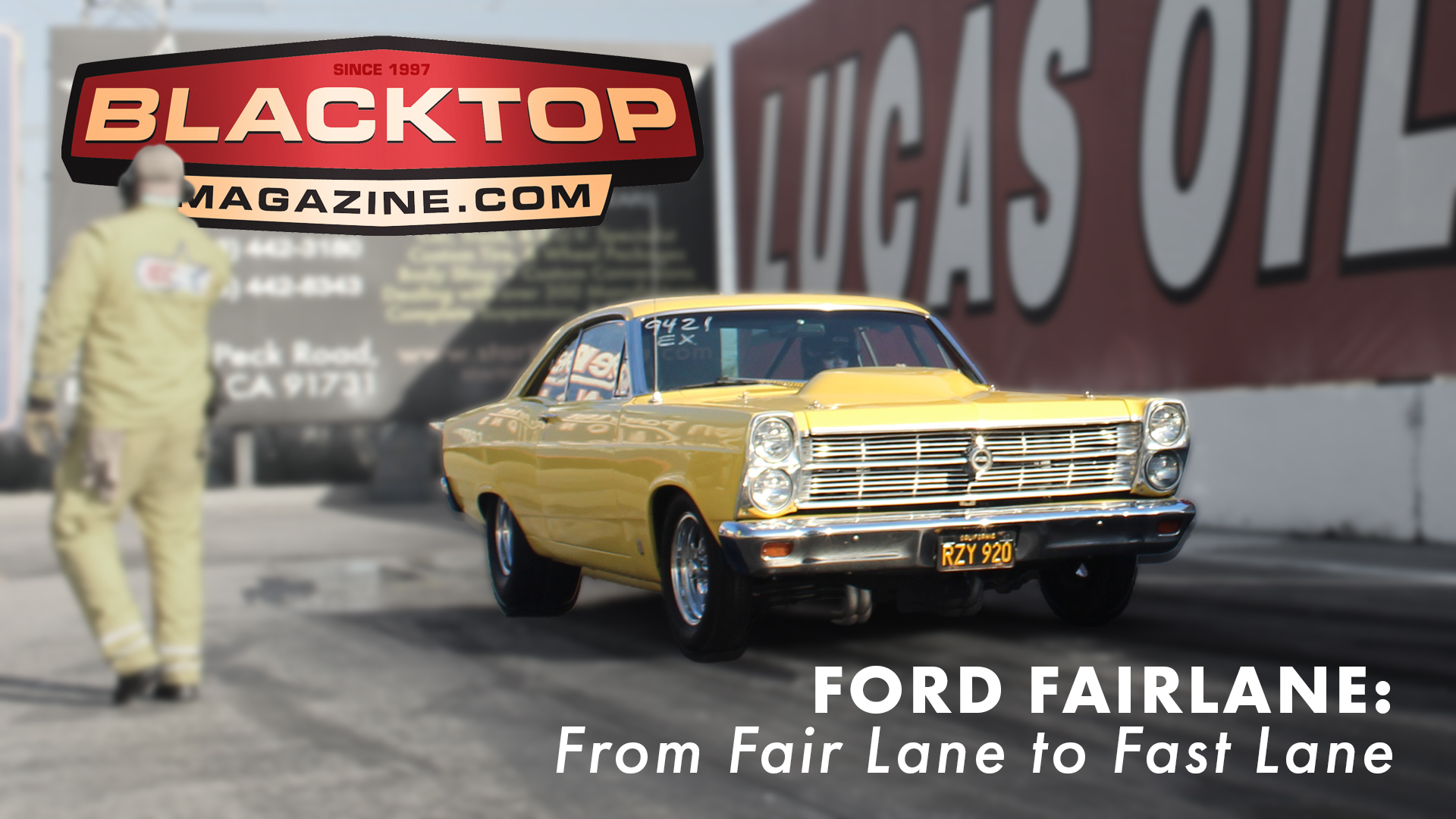
The Fairlane rolled slowly toward the starting line. From the outside, it still looked vaguely like something Dad might have driven to work—a square-roofed Ford sedan with chrome bumpers, steel wheels and enough room for the family.
Then somebody opened the throttle. Suddenly, there was nothing ordinary about it.
Under the hood sat 427 cubic inches of Ford FE fury breathing through a pair of four-barrel carburetors. Fiberglass had replaced steel wherever Ford could get away with it. Unnecessary weight had been tossed aside. The inside headlights were gone so cold air could be rammed straight toward the engine.
When the light dropped, the Fairlane left hard. Very hard. This was the 1964 Ford Thunderbolt, one of the most outrageous machines ever produced during Detroit’s factory horsepower wars. And here’s the strange part. The name on its fender came from the quiet estate where Henry Ford once lived with his wife Clara.
From Fair Lane to the fast lane, the Ford Fairlane had taken one hell of a journey.
Before Horsepower, There Was Fair Lane
Long before anyone stuffed a 427 into one, Fair Lane was home.
Henry and Clara Ford’s sprawling estate sat along the Rouge River in Dearborn, Michigan. It represented something very different from tire smoke and open headers—success, permanence and the increasingly comfortable life created by the automobile empire Ford had built.
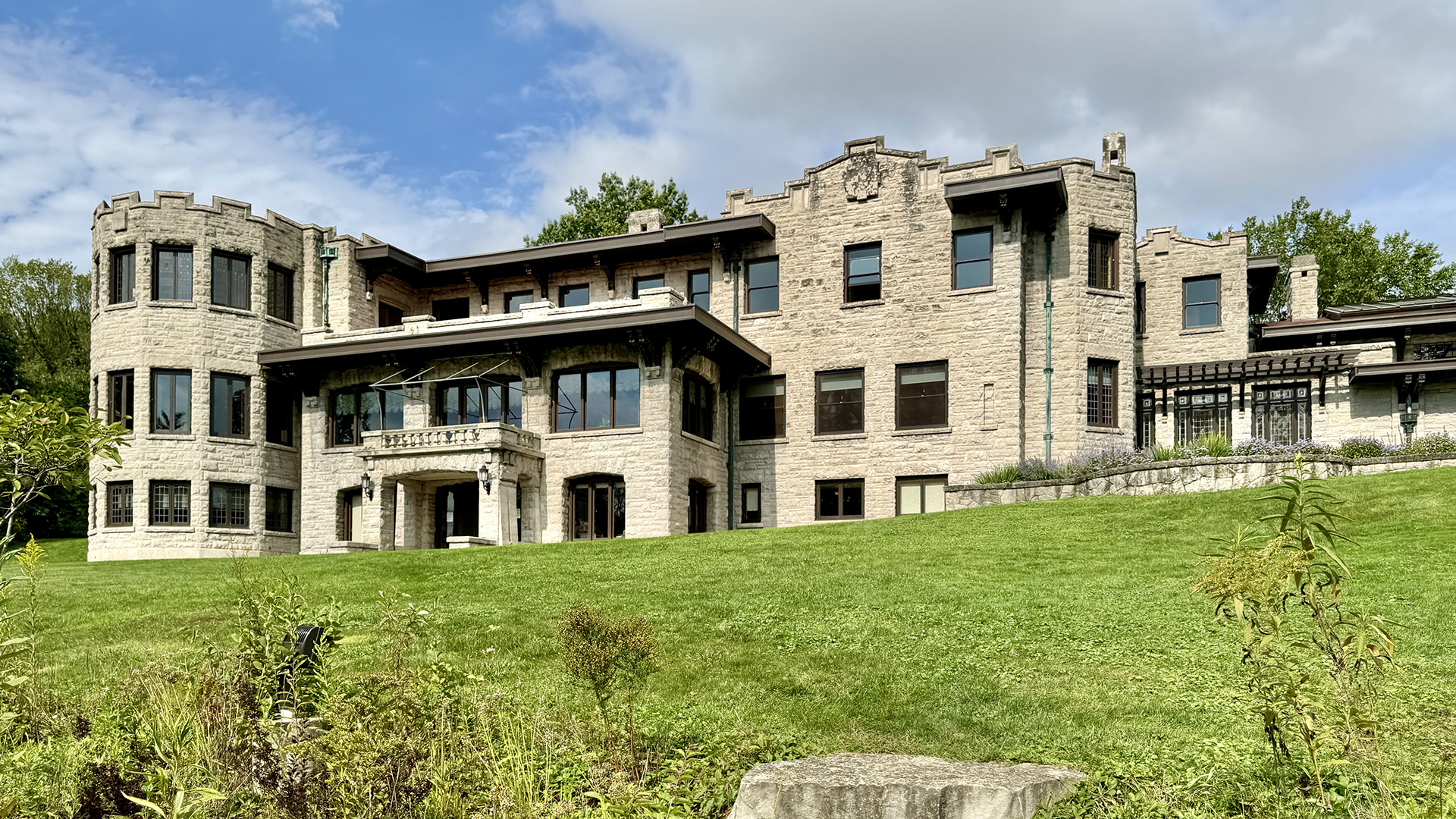
When Ford Motor Company needed a name for its new upscale model line for 1955, it didn’t reach for a mythical creature or some exotic destination. It reached into the Ford family itself.
Fair Lane became Fairlane.
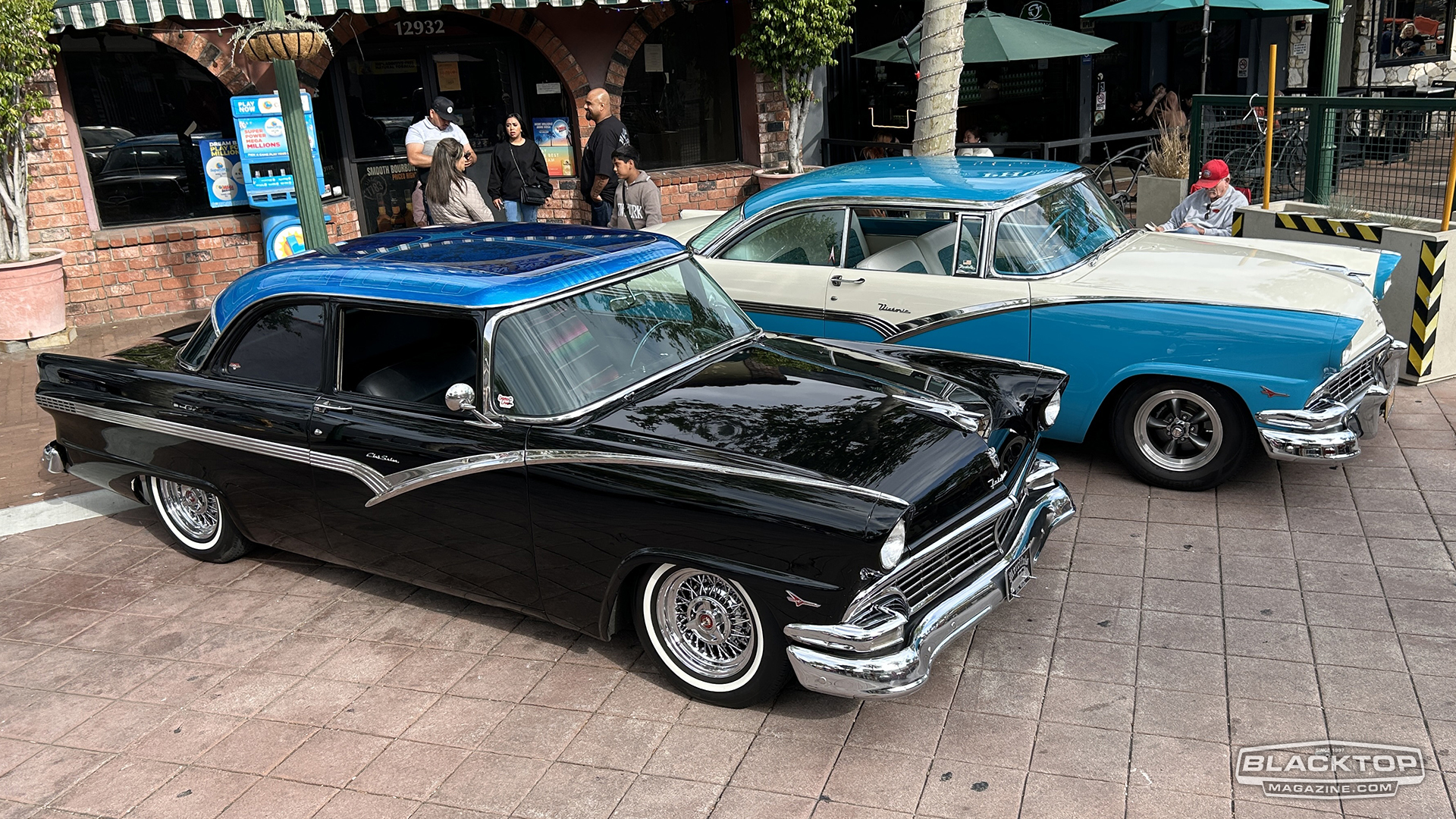
The early Fairlanes were handsome, heavily chromed and respectable. Cars like the Fairlane Victoria and Crown Victoria sat near the top of Ford’s lineup. These weren’t street fighters. They were automobiles you washed on Saturday before taking a Sunday Drive with the family somewhere nice.
But America—and Ford—was changing fast.
Bigger. Lower. More Chrome.
By the late 1950s, Detroit had entered a styling arms race. Cars grew longer. Rooflines dropped. Chrome multiplied. Tailfins climbed skyward. Every manufacturer wanted next year’s car to make this year’s car look old before the first payment book was finished.
Ford’s Fairlane fit right into the spectacle.
The Fairlane 500 appeared for 1957, and the lineup even included the incredible Skyliner retractable hardtop—a car whose steel roof mechanically disappeared into the trunk in a display that looked like something General Motors might have designed for the World’s Fair.
Fairlane had become one of Ford’s prestige names.
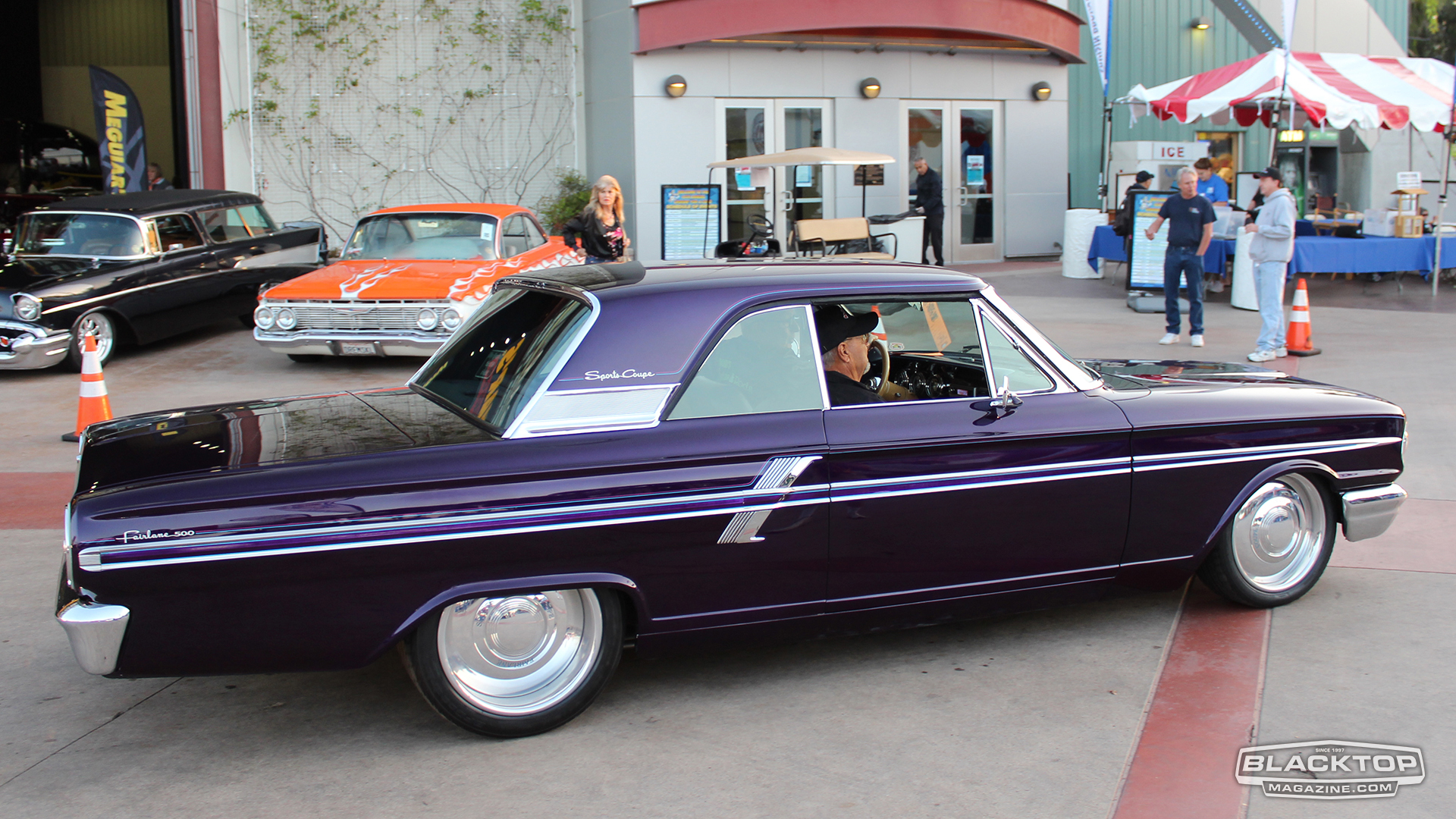
Then the Galaxie showed up. By the beginning of the 1960s, Galaxie was moving into the top spot in Ford’s full-size hierarchy. Fairlane was pushed down. That could have been the beginning of its fade into obscurity. Instead, Ford made a decision that would eventually turn the Fairlane into something far more interesting.
Ford Shrinks the Fairlane—and Finds Trouble
For 1962, Fairlane came back as an intermediate. It was larger than the compact Falcon but smaller and lighter than the full-size Galaxie. On paper, it made perfect sense for the American family. In the hands of racers and Ford engineers, it made perfect sense for something else. Horsepower. The early 1960s were becoming an extraordinary time inside Detroit. Manufacturers weren’t merely advertising performance anymore. They were fighting wars with it.
Win on Sunday. Sell on Monday.
NASCAR mattered. Drag racing mattered. Bonneville mattered. Sports-car racing mattered.
Ford’s increasingly aggressive Total Performance program meant that virtually anything carrying a blue oval might eventually find itself lined up beside a race track. And someone at Ford looked at the lighter Fairlane and started doing the same arithmetic hot rodders had been doing forever:
Small car. Big engine. What’s the worst that could happen?
Then Came the Thunderbolt
Ford already possessed one of the nastiest engines available in Detroit: the 427 FE.
There was just one problem.
The Fairlane’s engine compartment wasn’t exactly waiting around for one. So Ford and Dearborn Steel Tubing went to work. The result was less a production car than a factory-sanctioned act of mechanical violence. The 1964 Fairlane Thunderbolt was created specifically to attack NHRA Super Stock competition.
Getting the 427 High Riser into the Fairlane required serious surgery. The suspension and engine bay had to be modified. Large tubular exhaust headers twisted their way through whatever space remained.
Then Ford started throwing weight overboard. Fiberglass hood. Fiberglass fenders. Fiberglass front bumper. Lightweight windows. No radio. No heater. Less insulation. Battery relocated to the trunk. The inner headlights disappeared and the openings were converted into air inlets feeding the dual four-barrel carburetors. And looming over everything was that giant teardrop hood bubble. It looked outrageous because it was. This wasn’t a Fairlane that happened to be fast.
This was a race car disguised just enough to maintain a connection with the Fairlane sitting under the fluorescent lights at your local Ford dealership. And when it reached the drag strip, the disguise wasn’t fooling anyone.
Ford Wasn’t Playing Around
At the 1964 NHRA Winternationals, Thunderbolts ended up facing each other in the final. Gas Ronda versus Butch Leal. Ford versus Ford. Ronda took the win with an 11.78-second pass at 123.40 mph. Remember, this was 1964. Most Americans were driving cars with drum brakes, bias-ply tires and AM radios while Ford was building Fairlanes capable of storming through the quarter-mile in the elevens.
The Thunderbolt had turned the family-sized Fairlane into one of the most feared silhouettes in Super Stock racing.
And for Southern California enthusiasts, the story gets better.
Gas Ronda Brings the Thunderbolt West
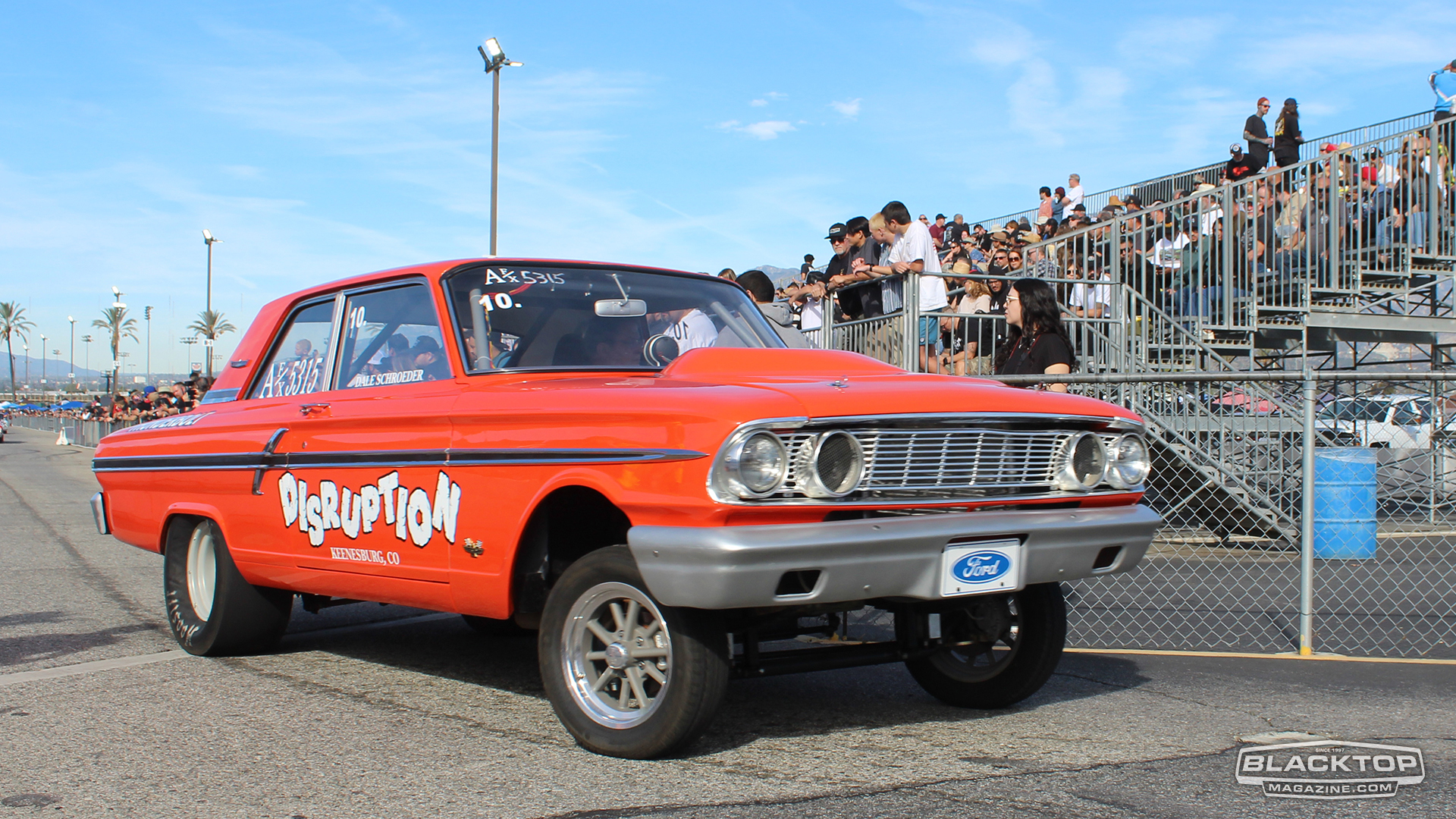
Gas Ronda was already a serious racer before the Thunderbolt appeared, but the Fairlane gave him a weapon worthy of the growing factory drag wars. During the 1964 season, Ronda moved his racing operation to Russ Davis Ford in Covina, California, working alongside respected Ford tuner Les Ritchey.
The combination was potent.
Ronda’s Thunderbolt became one of the defining Ford drag cars of the period, and he eventually captured the 1964 NHRA Top Stock championship. Imagine seeing one pull into a Southern California drag strip back then. From a distance, it was still recognizable as the same basic Ford someone might be driving down Whittier Boulevard.
Then the hood came off. Two carburetors. Headers everywhere. Nothing subtle about it. That was the beauty of Super Stock racing in the early 1960s. The cars still looked enough like what Detroit was selling that spectators could imagine owning one. Even when what they were watching was only one step removed from a full-blown race car.
The Muscle Car Arrives
By 1966, Detroit had figured out what young buyers wanted. They wanted horsepower. They wanted bucket seats. They wanted aggressive styling. And increasingly, they wanted the same kind of machine they had been watching battle at drag strips across America.
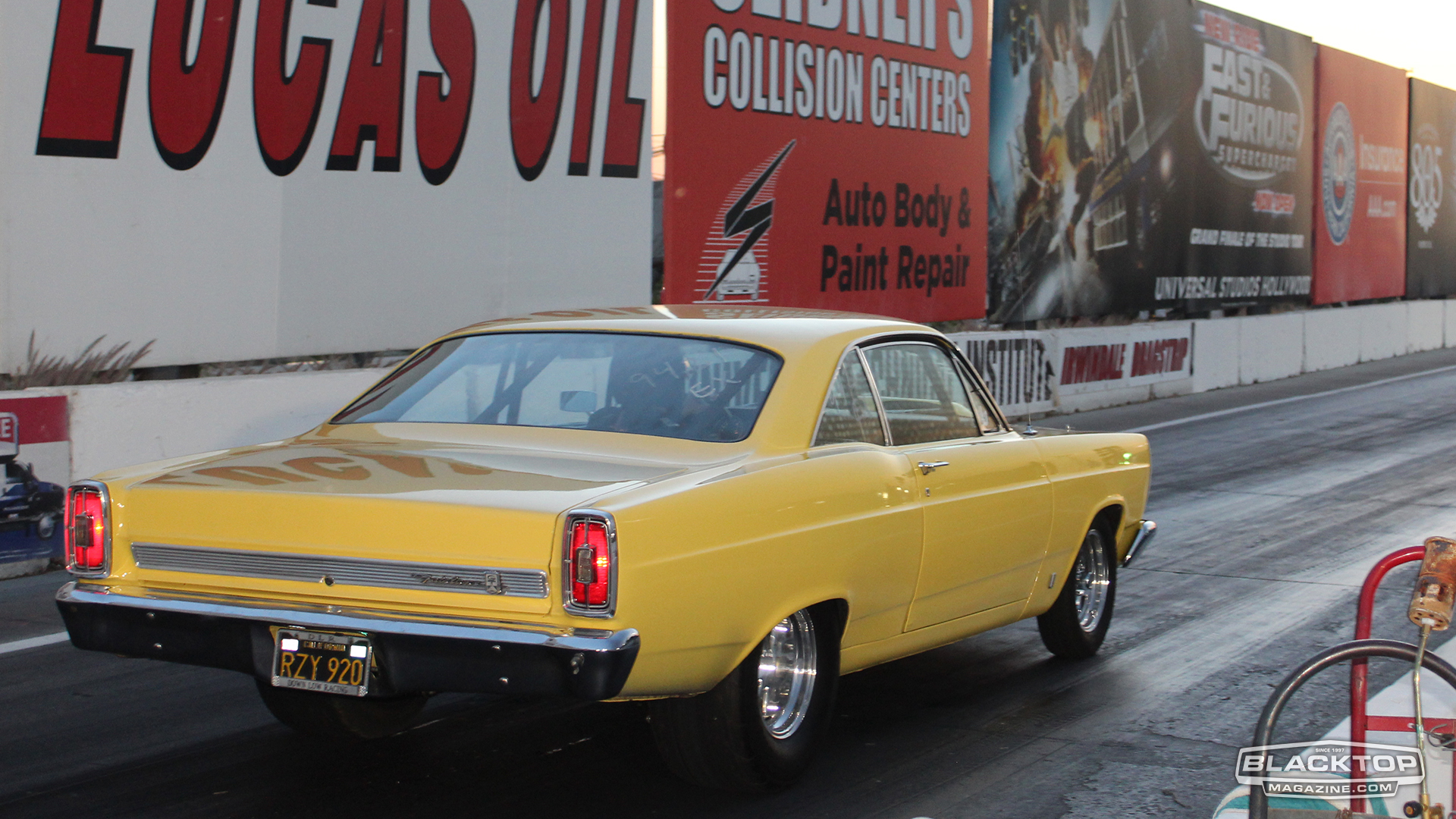
Ford redesigned the Fairlane for 1966 and introduced the Fairlane GT and GTA. Now the performance connection wasn’t hidden inside some limited-production racing program. It was sitting in the showroom.
The GT came with a 390-cubic-inch FE V8 rated at 335 horsepower along with suspension and appearance upgrades that made its intentions clear. The GTA offered much of the same attitude with Ford’s automatic transmission. Suddenly the Fairlane occupied the sweet spot of the emerging muscle-car market.
Big enough to be useful. Small enough to feel aggressive. And capable of carrying serious big-block power. Ford even built limited numbers of 427-powered Fairlanes for buyers who thought the 390 simply wasn’t enough. Because by the mid-1960s, apparently there was such a thing as not enough 390.
Then Mario Andretti Climbed Into One
Drag racing had proven that the Fairlane could accelerate. Daytona would prove it could do something else entirely.On February 26, 1967, Mario Andretti strapped into a Holman-Moody-prepared No. 11 Ford Fairlane for the Daytona 500. Andretti was already known as an open-wheel phenomenon. Stock cars were another world. Heavy cars. High banks. Long races. A very different style of competition. None of it seemed to bother him.
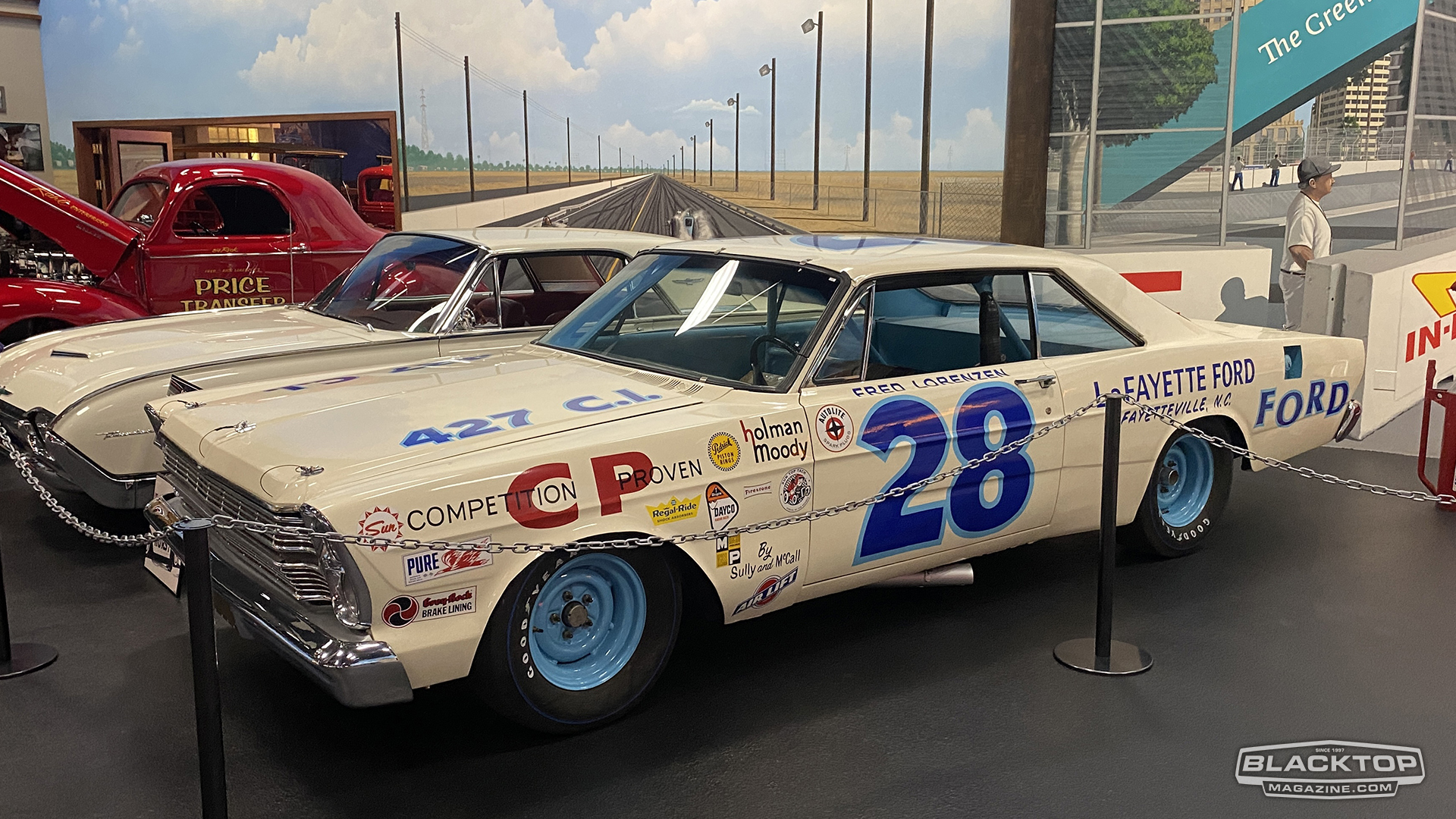
Andretti started 12th. Then he went to work. He led 112 of the race’s 200 laps. Late in the event, he chased down teammate Fred Lorenzen, regained the lead and drove the Fairlane to victory in the Daytona 500. Mario Andretti would go on to become one of the most versatile racing drivers in history.
- Indianapolis 500 winner.
- Formula One World Champion.
- Sports-car winner.
- Indy car legend.
But he won exactly one NASCAR Cup race.
The Daytona 500. In a Ford Fairlane. That’s not a footnote. That’s racing immortality.
Torino Moves In
Nothing in Detroit stays still for long. For 1968, Ford introduced the Torino as the upscale member of its intermediate family. The relationship was almost a reversal of what had happened years earlier with the Galaxie. Again, another Ford name started moving above Fairlane. By 1970, Torino had become the dominant intermediate badge while Fairlane was reduced to the lower end of the lineup. For 1971, the Fairlane name disappeared from Ford’s American catalog.
The Torino carried Ford’s intermediate performance program into the next decade with Cobra Jets, Talladegas and NASCAR competition. But the groundwork had already been laid. Fairlane had done the dirty work.
One Name. Several Completely Different Cars.
That’s what makes the Fairlane story so good. There isn’t one Fairlane. There are several. There’s the elegant 1955 Fairlane, polished and parked outside a nice restaurant. There’s the extravagant 1957 Fairlane 500 Skyliner dropping its roof into the trunk. There’s the sensible 1962 intermediate Ford built for America’s growing suburbs. There’s the muscular 1966 GT waiting at a stoplight with a 390 under the hood. And then there’s the Thunderbolt.
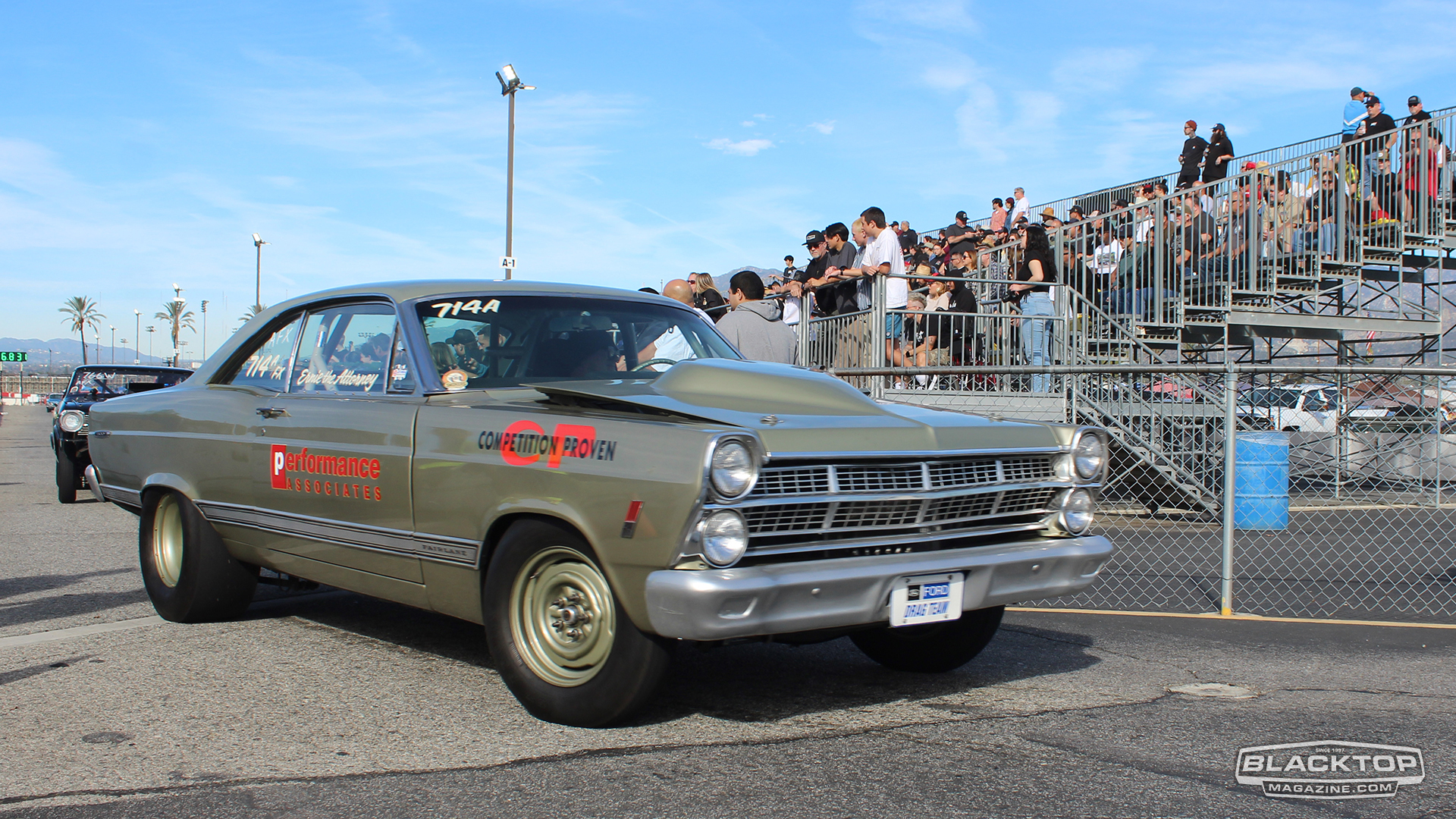
- Fiberglass panels.
- 427 High Riser.
- Twin four-barrels.
- Headlights turned into air intakes.
- Quarter-mile in the elevens.
Same name. Completely different attitude.
From Fair Lane to the Fast Lane
There is something beautifully American about the arc of the Fairlane story.
A name taken from Henry Ford’s peaceful family estate eventually ended up lettered across some of the most violent factory race cars of the 1960s. That’s the automobile business for you. Take something respectable. Add horsepower. Go racing.
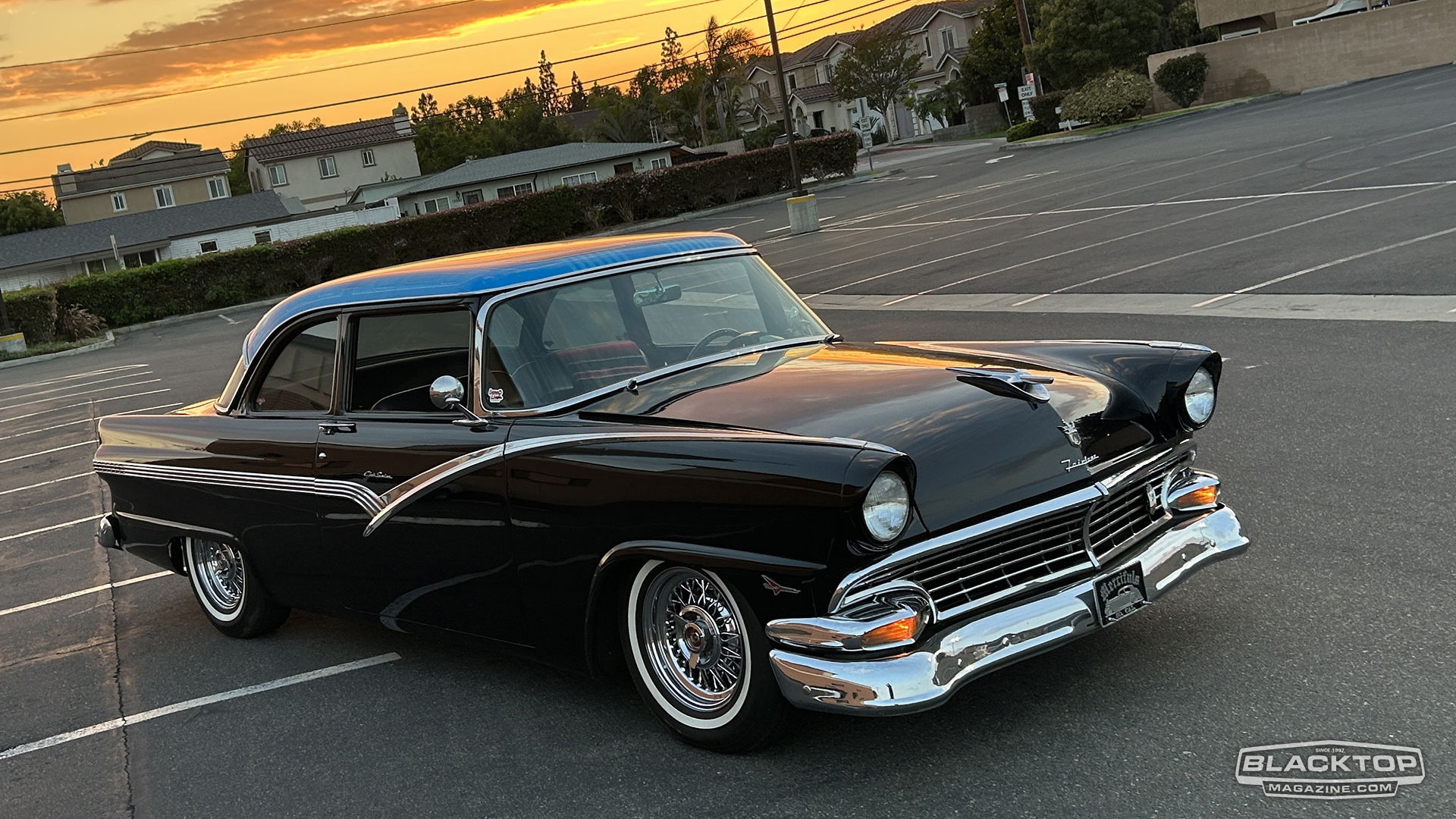
The Fairlane never enjoyed the uninterrupted fame of the Mustang, nor did its name survive as long as the Thunderbird, Corvette or Charger. It didn’t need to. The Fairlane was there when Ford needed an intermediate family car. It was there when Detroit discovered the muscle-car formula. It was there when factory drag racing became warfare. And it was there when Mario Andretti crossed the finish line first at Daytona.
Not bad for a car named after a quiet house along the Rouge River.
Fair Lane was where Henry Ford went home.
The Fairlane was where Ford went racing.