Santa Rosa, California — Summer, 1969
A fictional Blacktop Magazine story inspired by a family memory
There are family stories you remember because somebody told them a hundred times.
And then there are the ones you wish you’d been standing there to see. This is one of those. I have told this story dozens of times, because at the ripe age of 7, this was my introduction to the car world. I can see the overspray and smell of lacquer like it was yesterday.
In the summer of 1969, my uncle Doug was a teenager, and like a lot of kids in Northern California at the time, cars occupied a pretty large part of his thinking. His ’64 Pontiac GTO was ready for a make-over.
But Doug didn’t have a paint booth. He didn’t have a body shop. What he had was an idea. And my dad had a 4-car garage. So, Doug came to my dad and asked him a simple question.
“Can I paint my car in your garage?”
The car was five years old. Already used. Already fast. And by the time Doug was finished with it, it was absolutely impossible to ignore.
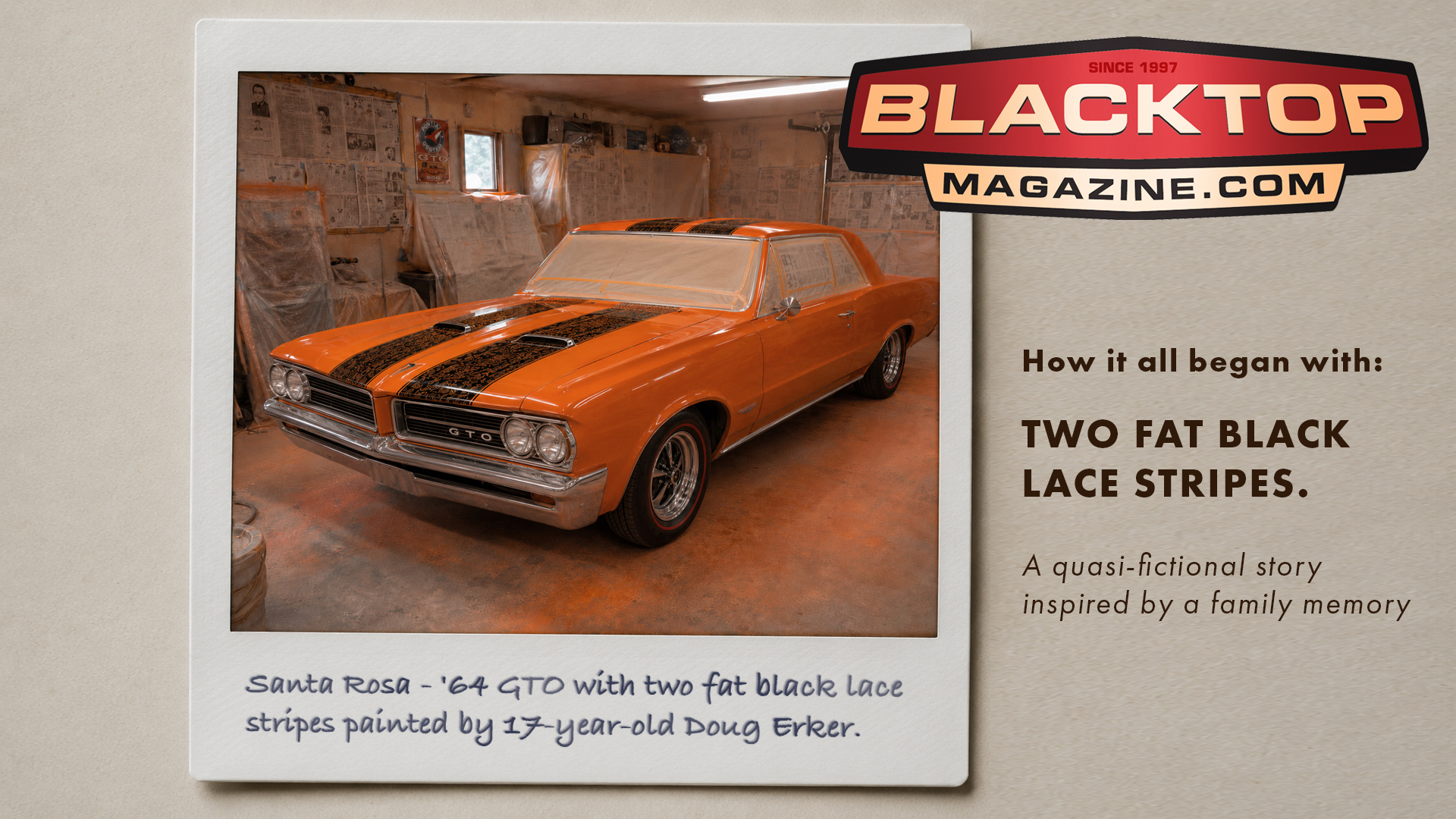
He painted it Competition Orange with two fat black lace stripes.
This wasn’t done in some famous Northern California custom shop. It happened in our family garage in Santa Rosa. And from what I understand, nobody in town could forget it.
• • •
Northern California in 1969 had its own version of car culture. Los Angeles got most of the magazine covers. Down south were the famous builders, the big shows, the wild customs and seemingly endless boulevards filled with hot rods. But Northern California wasn’t exactly sitting quietly.
Oakland had one of the most important custom-car shows in the country. The Bay Area had racers, builders, painters and hot rodders doing things their own way. And farther north, in places like Santa Rosa, the influence showed up in neighborhood garages.
These weren’t trailer queens. Most of these cars still had jobs to do. They went to school. They went to work. They cruised downtown on Friday night. And every once in a while they ended up somewhere outside town where two guys needed to find out whose car was actually faster. It was just like we see in American Grafitti.
By 1969, traditional customs and the muscle-car movement had started running into each other. A GTO could have a four-speed, a 389, wide tires and mag wheels—and still get lace painted over the roof. There really weren’t many rules.
• • •
Doug had seen lace painting before. It was one of those custom tricks that made absolutely no sense until you saw it finished. You stretched lace over the body and sprayed through it. Pull the material away and the floral pattern remained behind. Part hot rod. Part psychedelic. Part your grandmother’s doilies. But mostly inspired by your girlfriends lace- let’s call it “intimate wear”.
Perfect for 1969.
Doug had the idea. Now he needed someplace to do it. That was where my dad came in. Dad wasn’t running a paint shop he was a contractor. This was the family garage. The place where normal garage things happened. Tools. Storage. Household stuff. Probably a lawn mower somewhere nearby. Next year we converted half of it into the “Casa d’Cane” an Italian American Man Cave.
And now Doug wanted to fill it with overspray. I remember the conversation. Doug promised he’d cover everything. And my dad believed him. Or at least believed him enough to say yes.
• • •
The GTO arrived looking nothing like the car it would become.
The paint was tired. The body needed work. There was damage in one of the quarters. Trim needed to come off. Bad spots needed to be blocked. The kind of job where the exciting part—spraying color—was still a long way away. So, Doug started sanding. Then sanding some more.
Anyone who has ever done bodywork knows the truth:
Painting gets the attention. Preparation makes the paint job.
Occassionally, I would peek my head inside. The Pontiac slowly came apart. Emblems. Trim. Door handles. Headlight pieces. Anything that didn’t need to turn orange came off or got covered. Primer dust started settling over the garage. My dad opens the door from the house one night and looking around at what used to be a reasonably normal workspace.
“You’re cleaning this up when you’re done.”
Doug gave him re-assurance: “Yeah.”
Which, translated from seventeen-year-old, meant: Eventually.
• • •
As the week went on, word started spreading. Something was happening in the garage on Wright Street. Cars began appearing outside. Nobody needed an invitation in those days. A Chevy would pull up. Then somebody’s Falcon. Maybe an Impala.
Guys would stand around the driveway drinking Cokes and offering expertise nobody had requested.
Everybody knew how Doug should paint the GTO.
“Needs metalflake.”
“Paint the scoops black.”
“Needs Cragars.”
“Needs Americans.”
“Should’ve gone candy red.”
Doug ignored them.
He already knew what he wanted.
Competition Orange.
Not subtle orange. Not autumn orange. Competition Orange. The kind of color that looked like it was moving when the car was standing still. Then the black lace.
Two strips. A foot wide each. Right over the top.
• • •
When paint night finally came, the family garage became a spray booth through sheer optimism.
Newspaper covered anything that looked important. Shelves. Cabinets. Tools. Anything my dad didn’t want permanently tinted orange. The floor was cleaned and wet down. Ventilation was supplied by an metal fan surrounded by cardboard to add velocity.
But it was 1969. The mission was simple: Keep dust out of the paint. Doug carefully mixed the orange.
The GTO sat waiting.
Then he pulled the trigger. The first pass began covering the primer. The next gave the color life. Another made the Pontiac look completely different. Competition Orange rolled across the fenders. Over the long hood. Across the doors. Around the quarters. The old GTO was disappearing. A different car was coming out from underneath it. And outside the garage, the unsolicited advice began getting quieter. That’s usually how you know you’re doing something right.
• • •
Then Doug found the flaw.
Passenger-side quarter. Something in the old repair wasn’t quite straight. Most people standing six feet away probably wouldn’t have noticed it. Doug did. The reflection wasn’t right. The panel moved where it shouldn’t. Somebody probably told him to leave it.
It was late. The paint was going on. Everybody wanted to see the finished car. But Doug knew it was there. That’s the trouble with doing something yourself. Once you see the mistake, you can never unsee it. So the gun went down. The sandpaper came back out. Seventeen years old. Middle of the night. Competition Orange already on the car.
And Doug went backward because the finished job mattered more than being finished.
That’s the part of this story I like.
• • •
Then came the lace.
A length of floral lace runner was stretched over the Pontiac. Imagine that for a moment. A 1964 GTO. 389. Four-speed. One of the cars that helped define the muscle-car era. And a bunch of young guys are standing in a Santa Rosa garage stretching floral lace across it. They were giggling and laughing about cracking jokes about it being your momma’s lace undies, etc.
You couldn’t invent a better picture of 1969. Something to take their minds away from the shit-show that was going on in the world.
Doug laid out two stripes. Each one twelve inches wide. Straight across the hood. Over the roof. Down the deck. The lace had to stay tight. Any movement would change the pattern.
Doug loaded the gun with black.
Somebody standing nearby almost certainly said: “You’re going to ruin it.”
Then Doug sprayed. A light pass. Another. Black mist settled through the open pattern in the lace. The material fluttered from the air pressure. Hands grabbed the edges and pulled it tight.
Nobody joked anymore.
When the spraying was finished, they began lifting the lace away. Slowly. Underneath it appeared the pattern. Flowers. Loops. Fine black detail floating over Competition Orange.
Two enormous twelve-inch-wide lace stripes running the length of a Pontiac GTO.
It was outrageous. It was unnecessary. It was exactly right.
• • •
Sometime during all of this, a black ’56 Ford pulled up. Nobody recognized it with it’s distinctive blue candy metalflake top, black lace panels and wire wheels. The driver got out. Older than the guys gathered around the garage. Maybe forty. White T-shirt. Dark pants. He didn’t say much. He just looked. Walked around the GTO. Looked at the paint. Studied the lace. Checked the body lines.
Finally he asked: “Who painted it?”
Somebody pointed toward Doug.
The man looked at the seventeen-year-old standing in my dad’s garage covered in paint dust.
“You work in a shop?”
Doug shook his head.
The man looked around. “You’re doing this here?”
Doug nodded.
The stranger walked down the passenger side. He stopped at the repaired quarter. Sighted along it. Looked again.
Then he said something Doug probably remembered for a long time.
“Pretty straight.”
He reached into his pocket and pulled out a business card. A body and paint shop in Oakland. He laid it on the workbench.
“If you ever get tired of painting cars next to washing machines and a lawnmower, come see me.”
Before he climbed back into the Ford and disappeared he said: “I will see you again unc…” and stopped before he could finish his sentence. The driveway got a little quieter after that. Suddenly all the guys who had been telling Doug how to paint didn’t have quite as much to say.
• • •
Sunday morning, the GTO rolled outside. Santa Rosa mornings can start cool and gray before the sun burns through it’s how the grapes get their flavor. At first, the Pontiac probably looked almost calm. Then sunlight hit it. Competition Orange lit up. The black lace stripes cut across the car from a block away. This wasn’t a stock restoration. Nobody was trying to make it look like Pontiac intended.
It looked like Northern California in 1969.
Muscle car underneath. Custom paint on top. Homebuilt. Garage sprayed. No apologies.
My dad came outside to inspect what had happened inside his garage.
Dad walked slowly around the car. Checking the panels. Looking at the orange paint. Then stopping at the lace.
“You painted flowers on it?”
“Lace.”
“Looks like flowers.”
Doug defended the difference. Dad didn’t care. But after walking around the GTO one more time, he gave Doug the kind of compliment fathers and uncles of that generation were famous for.
“Looks pretty good.”
Which meant: You did good, kid.
• • •
The GTO left the driveway that morning. The 389 fired. The four-speed went into gear. Competition Orange and black lace rolled down the street. Imagine what that must feel like at seventeen.
A week of work. Hours of preparation. A couple gallons of nerve. A huge feeling of confidence.
For years, he drove it everywhere Petaluma. Novato. All around the Bay.
Then he sold it.
There were rumors of it being spotted all over. Someone claimed it raced a Corvette. Someone else heard it had been shown in Oakland. As happens with old car stories, fact and legend started becoming difficult to separate.
Then the GTO disappeared. So did the years. Doug grew up. Everybody did. The Oakland business card disappeared. Jobs came. Families came. Life moved forward. But family stories have a funny way of staying parked somewhere in the background.
• • •
Nearly forty years later, Doug and his life-long buddy Steve Heidebrink were walking through a local car show when he stopped.
They hadn’t seen the car. Not yet. They’d seen the stripes. Two fat black lace stripes across an orange roof. Twelve inches wide. He started toward it. Fast. There sat an orange 1964 GTO.
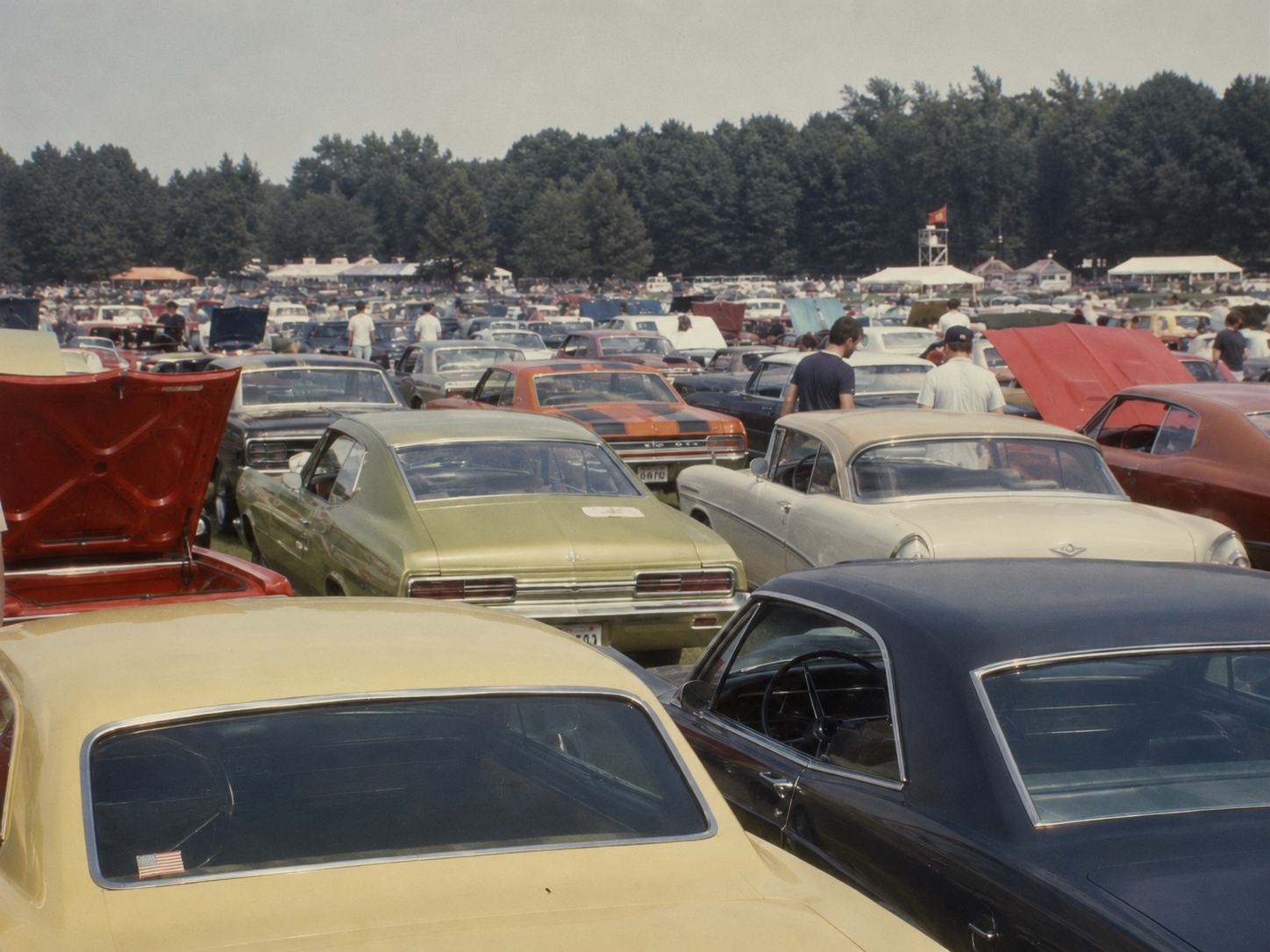
The paint wasn’t perfect anymore. There were chips. Scratches. Age. The black had faded.
But the pattern was there.
Same flowers. Same loops. Same little imperfections where the lace had shifted slightly while a seventeen-year-old sprayed it in a Santa Rosa garage.
Doug walked around the passenger side. Stopped at the quarter. He knew that panel. The owner noticed him staring.
“You know the car?”
Doug answered: “I painted it.”
The owner smiled. Old car-show smile. Sure you did.
Doug pointed toward the passenger quarter.
“That was hit before it was painted.”
The owner stopped smiling.
Doug pointed at the trunk.
“Open it up.”
“Why?”
“Because there’s my signature under the trunk mat.”
He opened the trunk.
Sure enough, scribbled on the trunk floor with a marker were the remnants of a signature.
Doug Erker.
Seventeen years old.
Santa Rosa, California.
The owner stared at the markings.
Doug just smiled.
• • •
Then the owner reached further in the trunk.
He came back carrying a folder.
Old receipts. Registration papers. Photographs.
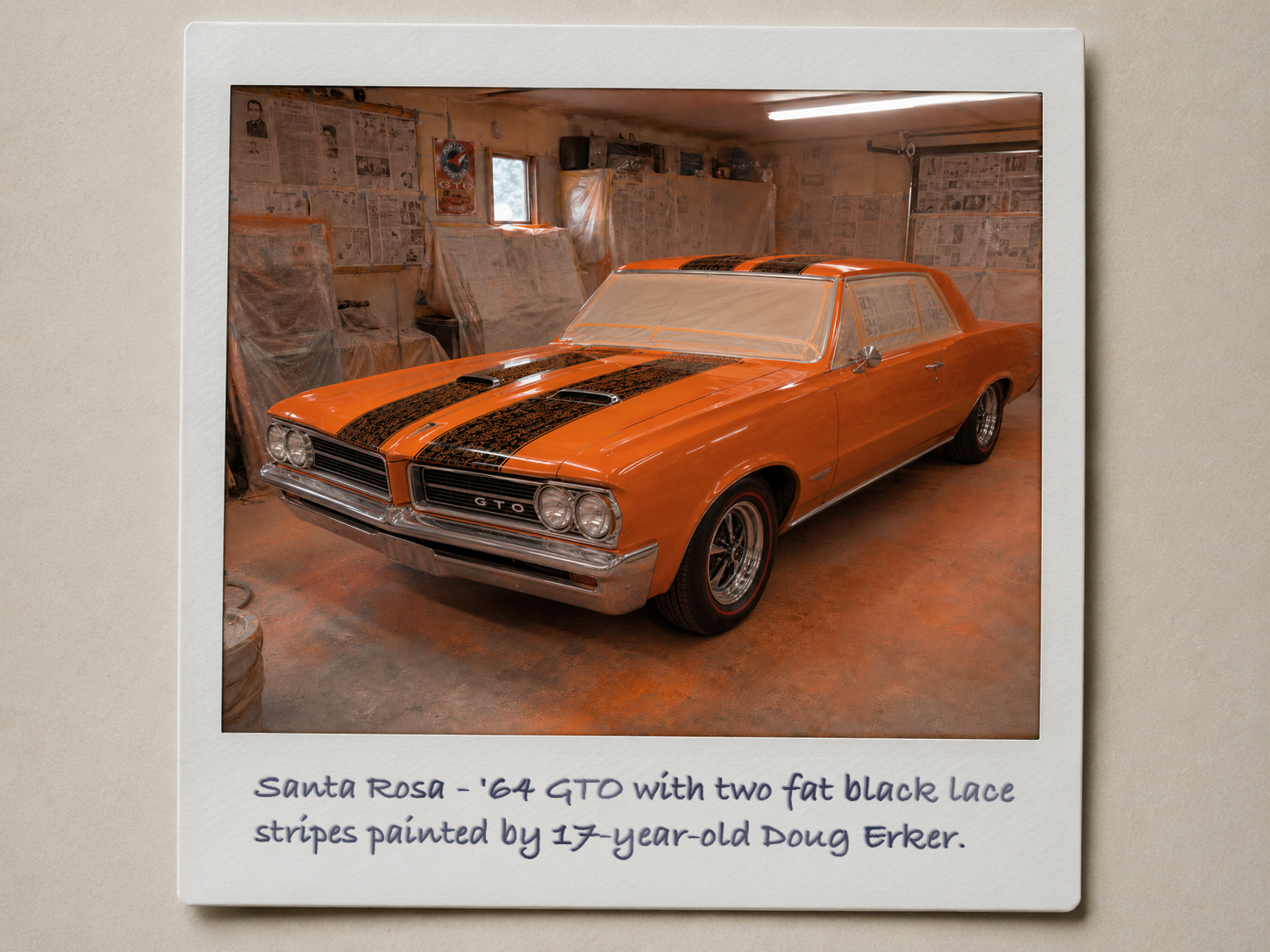
Especially haunting was an old Polaroid.
There was the GTO. Fresh Competition Orange. Twin black lace stripes. 1969.
Underneath was a short caption:
Santa Rosa ’64 GTO. With two fat black lace stripes painted by 17-year-old Doug Erker.
Doug had never seen it. He looked closer at the photograph. The background wasn’t Oakland. It wasn’t a car show.
It was our garage.
My family’s garage. The place where Doug had asked: “Can I paint my car in here?”
Standing at the edge of another old photograph was the black ’56 Ford. The stranger hadn’t wandered into the neighborhood accidentally. He’d heard about the kid in Santa Rosa painting a lace-striped GTO. And he’d brought a camera. The owner handed the photo to Doug. Doug tried to give it back.
The man shook his head.
“You keep it.”
And that is where, for me, the story evolves.
I know something about what happens when somebody is given a place to try something before they know whether they can actually pull it off. A seventeen-year-old asked his brother-in-law if he could borrow the family garage and paint a car. He said yes and Doug picked up the spray gun.
And somewhere in Northern California, for decades afterward, a Competition Orange GTO carried two twelve-inch-wide black lace stripes down the road.
Maybe that’s why I like old cars so much.
Sometimes you’re not really looking at paint, chrome or horsepower.
You’re looking at proof that somebody once had an idea…
and somebody else opened the garage door.
Images created with AI technology. We didn’t carry around cameras back then. 🙂