Your Most Hated Tool That’s Still in Your Toolbox
There is an unwritten rule in almost every garage: if there is a 9/16-inch nut in front of you, reach for a 9/16-inch wrench. If there is a 14mm bolt, grab a 14mm wrench. And if you reach for an adjustable wrench instead, somebody nearby is probably going to ask if you lost the rest of your tools.
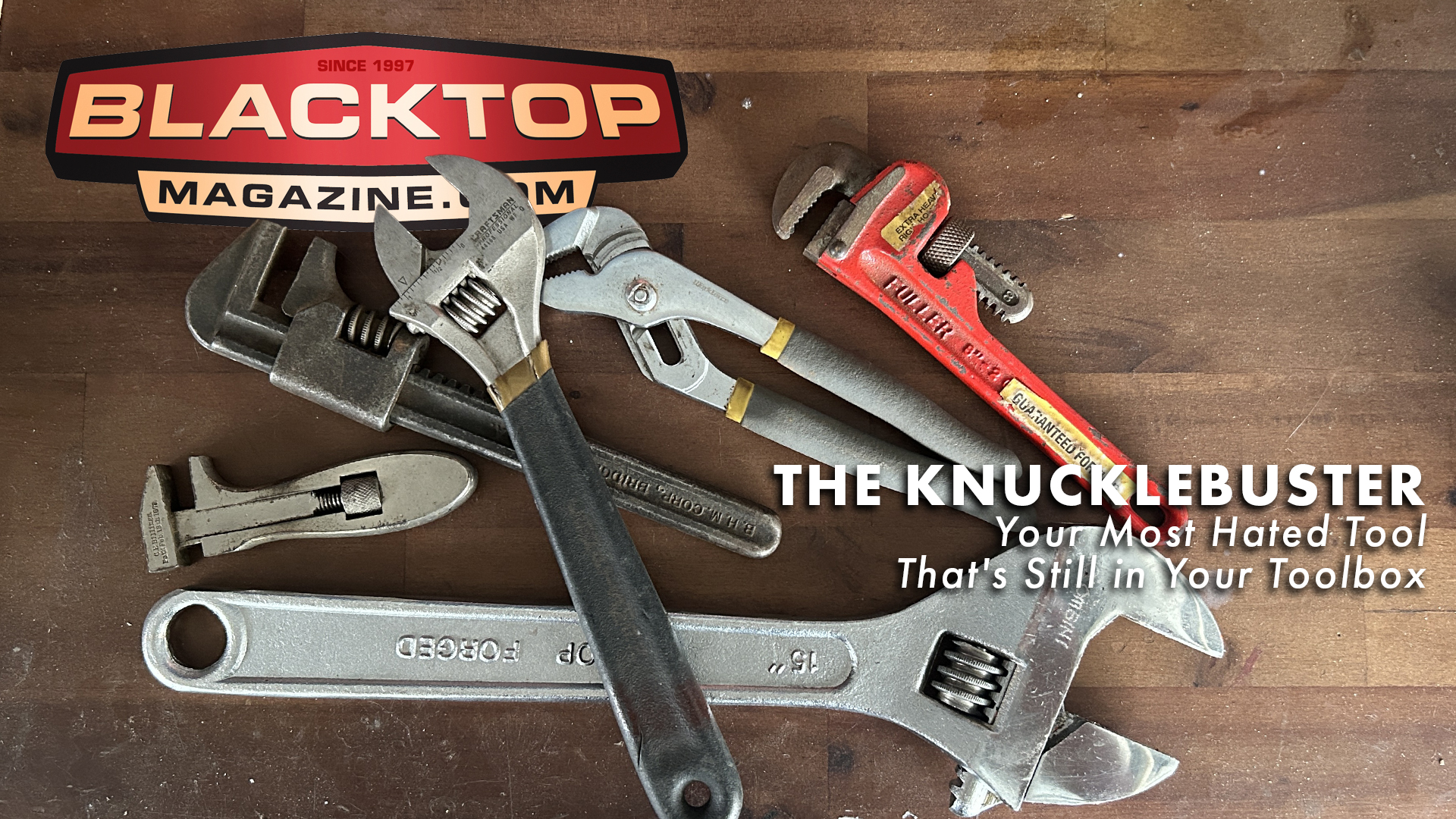
The adjustable wrench has been called a knuckle-buster, nut-rounder, farmer wrench and universal socket. Mechanics love to make fun of it, but the much-abused tool is actually the result of nearly two centuries of mechanical ingenuity.
When One Wrench Wasn’t Enough
Early wrenches developed alongside machinery during the Industrial Revolution. As threaded fasteners became more common, craftsmen needed tools designed specifically to turn them. The problem was simple: every different-size nut required another wrench.
That led inventors to an obvious question. Could one wrench fit several different fasteners?
In 1835, Solyman Merrick of Springfield, Massachusetts, patented an improved screw wrench with a movable jaw. Similar to todays’ “Monkey Wrench” where the jaws were positioned 90° of the handle. A few years later, Loring Coes developed another influential adjustable design. His 1841 wrench used an adjustment screw positioned alongside the handle, making it easier to change the jaw opening while holding the tool. The jaw of Loring’s design was set at a slight angle to the handle.
Large adjustable designs like these became associated with the familiar monkey wrench. They were especially useful around steam engines, farm machinery and industrial equipment where mechanics might otherwise need to carry a small arsenal of fixed-size wrenches.
Sweden Makes It Smaller
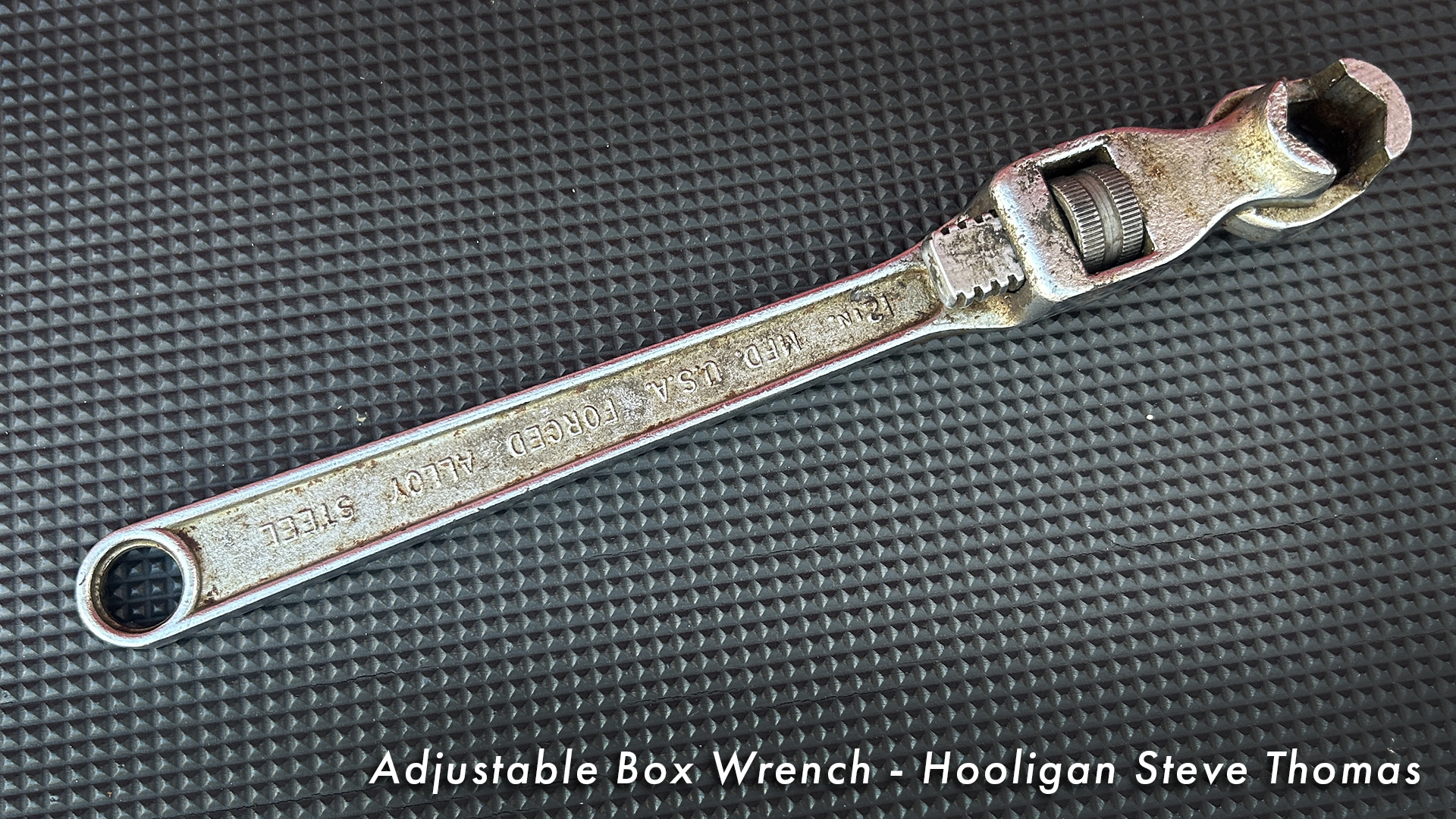
The idea continued to evolve in Sweden, where mechanic and inventor Johan Petter Johansson wanted to reduce the number of tools workers needed to carry. During the late 1880s and early 1890s, he developed adjustable pipe wrenches and spanners, eventually refining a design with one fixed jaw and one movable jaw controlled by a screw.
That arrangement is essentially what we still use today.
Johansson wasn’t the first man to invent an adjustable wrench, but his design helped transform the concept from a large industrial tool into something smaller and more practical. His work later became closely associated with Bahco, a company still known for adjustable wrenches today.
Then America gave the tool a name almost everyone would recognize.
Just Hand Me the Crescent
In 1907, Swedish immigrant Karl Peterson founded Crescent Tool Company in Jamestown, New York. Crescent’s compact open-end adjustable wrench became enormously popular, and before long the brand name became shorthand for the tool itself.
Ask somebody in an American garage for a Crescent wrench and they usually know exactly what you mean, whether the name stamped on the handle actually says Crescent or not.
Its popularity also guaranteed it a permanent place in the toolbox.
Unfortunately, that also gave mechanics plenty of time to complain about it.
Why Mechanics Call It a Knuckle-Buster
A properly sized socket or box wrench fits a fastener precisely. An adjustable wrench has a movable jaw, which means there must be a little clearance in the mechanism. If the jaws are not tightened firmly against the flats of the fastener, the wrench can slip.
That usually produces a familiar sequence.
The wrench slips, the hand keeps moving and the nearest sharp piece of metal suddenly becomes acquainted with your knuckles.
Hence the nickname.
The tool itself, however, often gets blamed for bad technique. An adjustable wrench should fit tightly against the fastener, and the fixed jaw should carry most of the load. If serious torque is required, the correct socket or fixed-size wrench is usually the smarter choice.
In other words, the adjustable wrench works just fine when you don’t ask it to perform miracles.
SIDEBAR: Why They Never Made a Left-Handed Wrench
For generations, apprentices have been sent around shops looking for essential equipment such as blinker fluid, muffler bearings, buckets of steam and, of course, the legendary left-handed wrench.
There is a reason nobody ever seems to find one.
A wrench works equally well in either hand. Turn it one direction to tighten, the other to loosen. Even an adjustable wrench, which has a preferred orientation because of its fixed and movable jaws, still doesn’t care whether the mechanic is right- or left-handed.
So the left-handed wrench remains one of the most important imaginary tools in any garage.
Mostly because somebody has to keep the new guy busy.
And if an apprentice ever comes back carrying one, you may want to hire him. He clearly knows how to improvise.
Still in the Toolbox
The adjustable wrench was never meant to replace every socket and wrench in the drawer. It was invented because mechanics needed versatility at a time when machinery was becoming more complicated and fastener sizes were anything but standardized.
Nearly two centuries later, the basic idea still works.
You may prefer the right-sized combination wrench. You may ridicule the adjustable every time somebody reaches for it. You may even keep yours buried at the bottom of the toolbox where nobody can see it.
But eventually there will be an odd-sized fitting, a roadside repair or a nut that refuses to cooperate.
That’s when the old knuckle-buster comes back out.
Just make sure nobody in the next bay is watching.