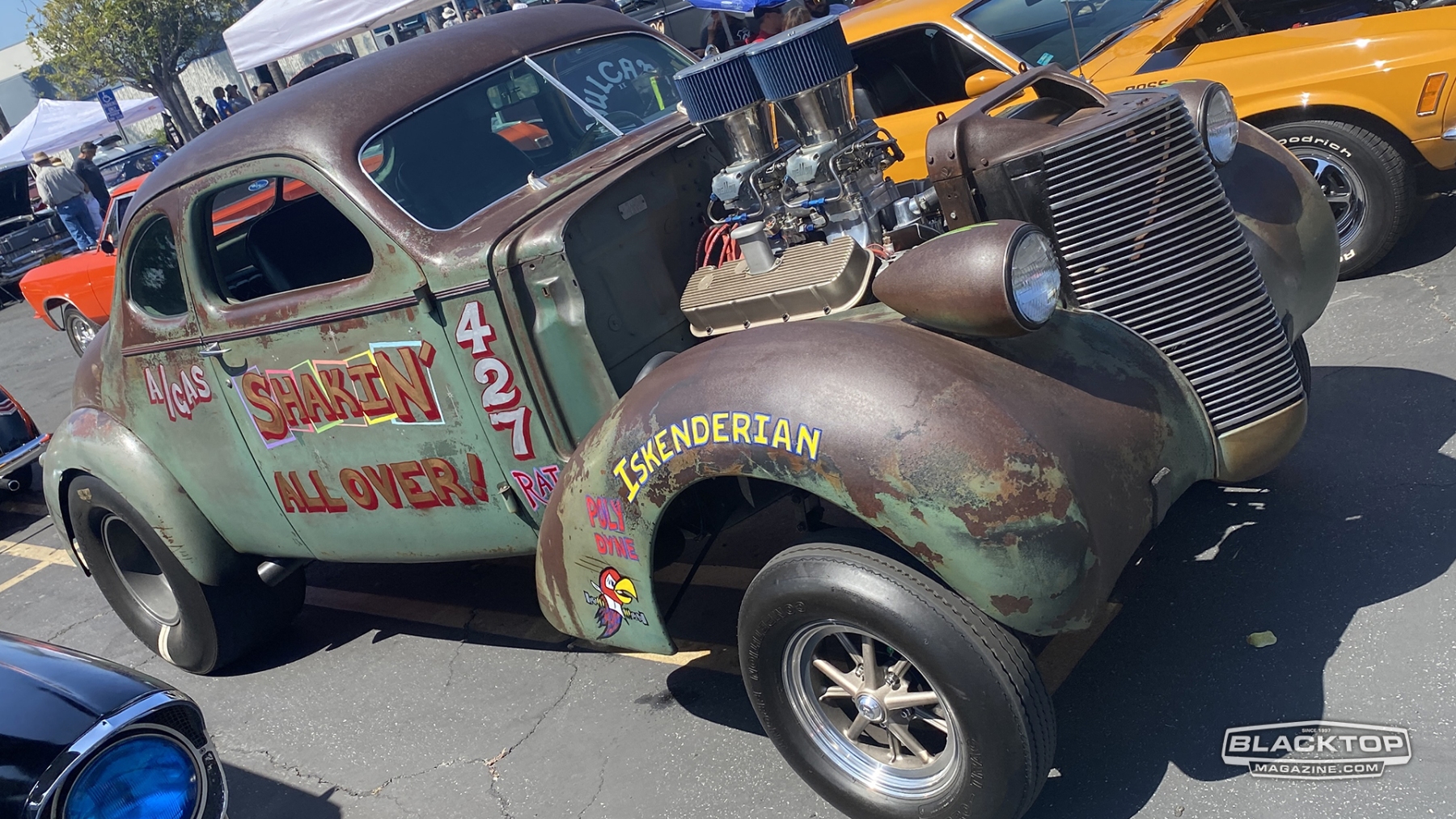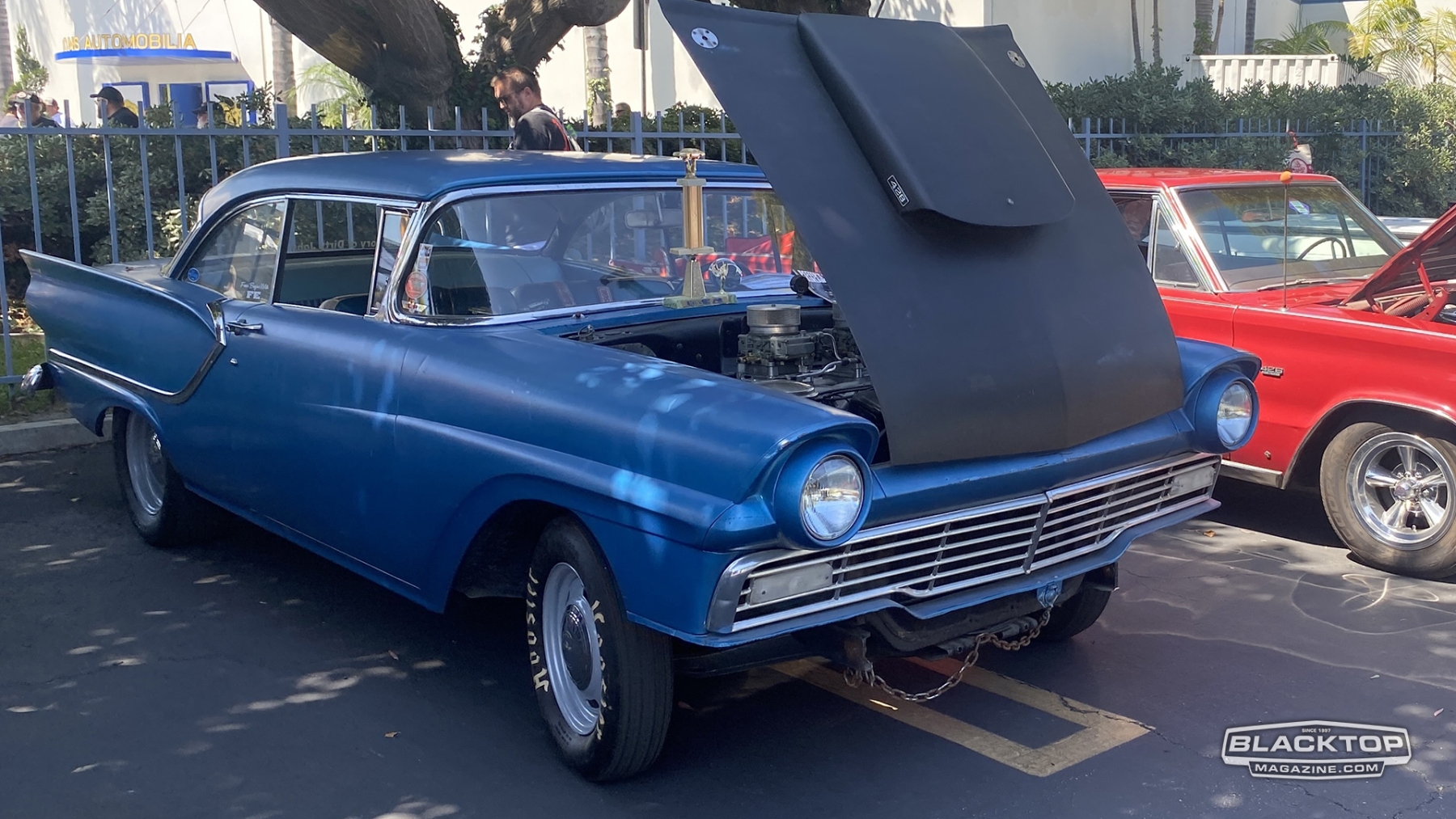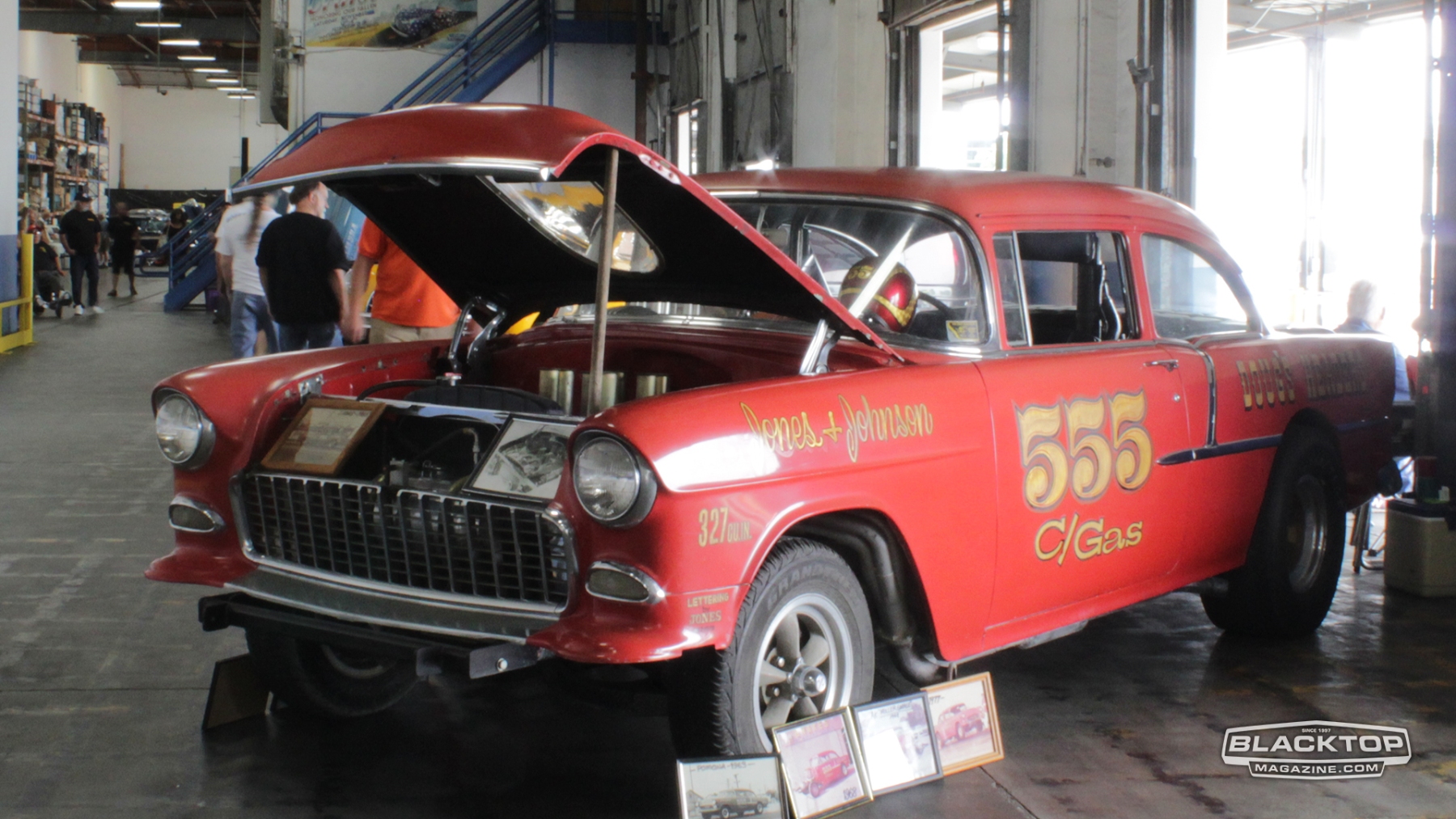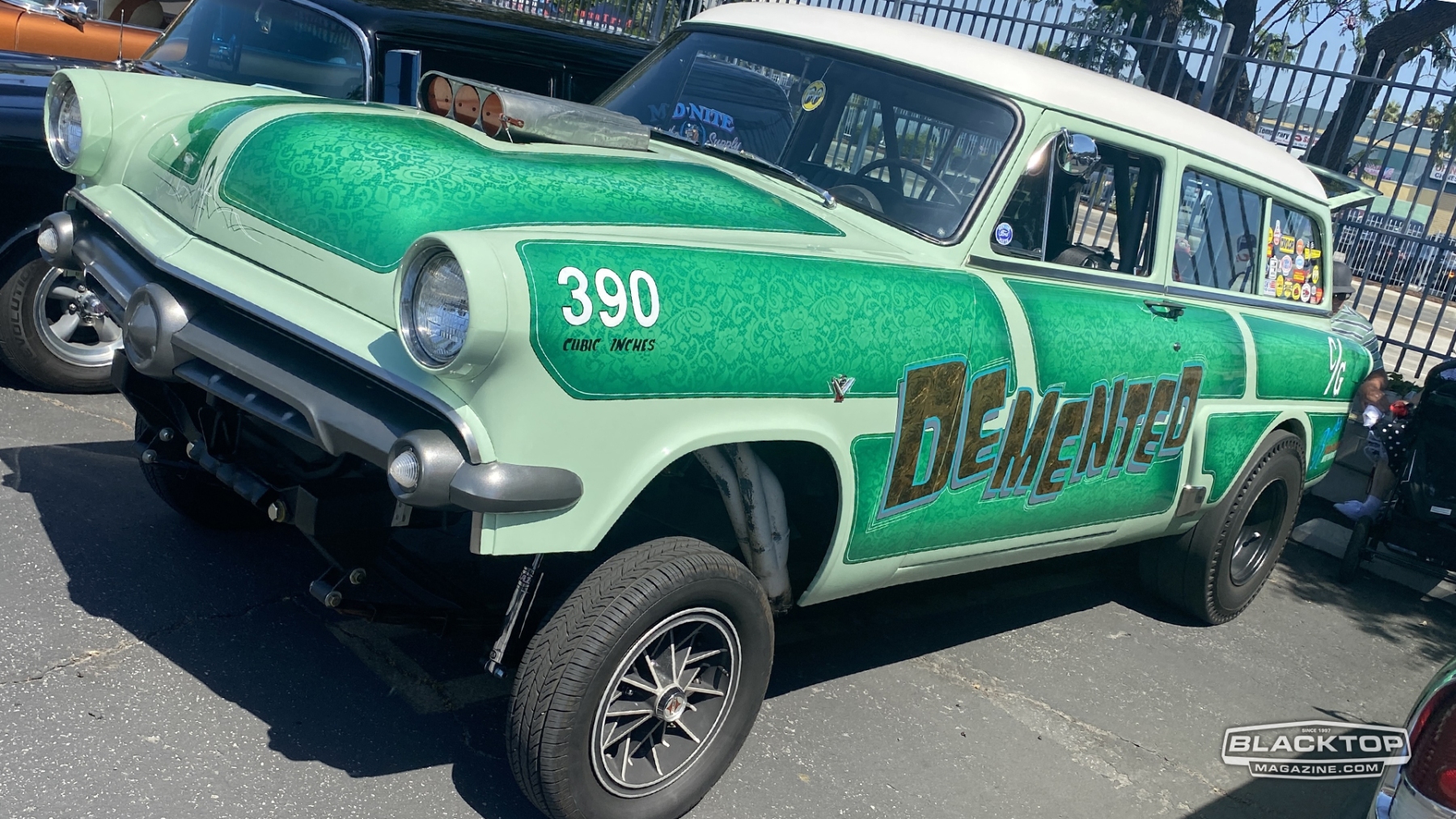
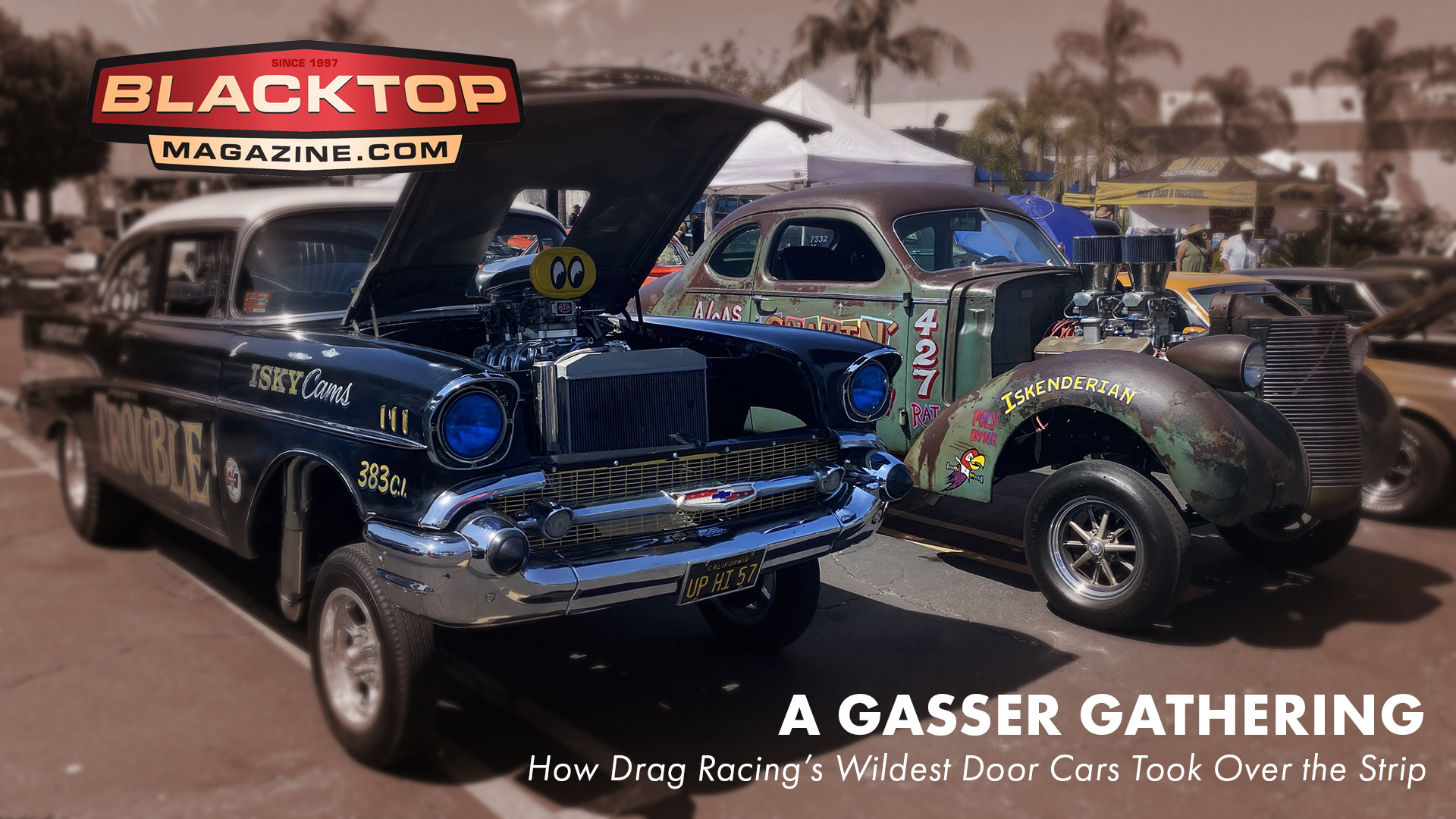
How Drag Racing’s Wildest Door Cars Took Over the Strip
Before Funny Cars became fiberglass missiles and Pro Stock turned factory hot rods into a professional science, the kings of full-bodied drag racing were the Gassers.
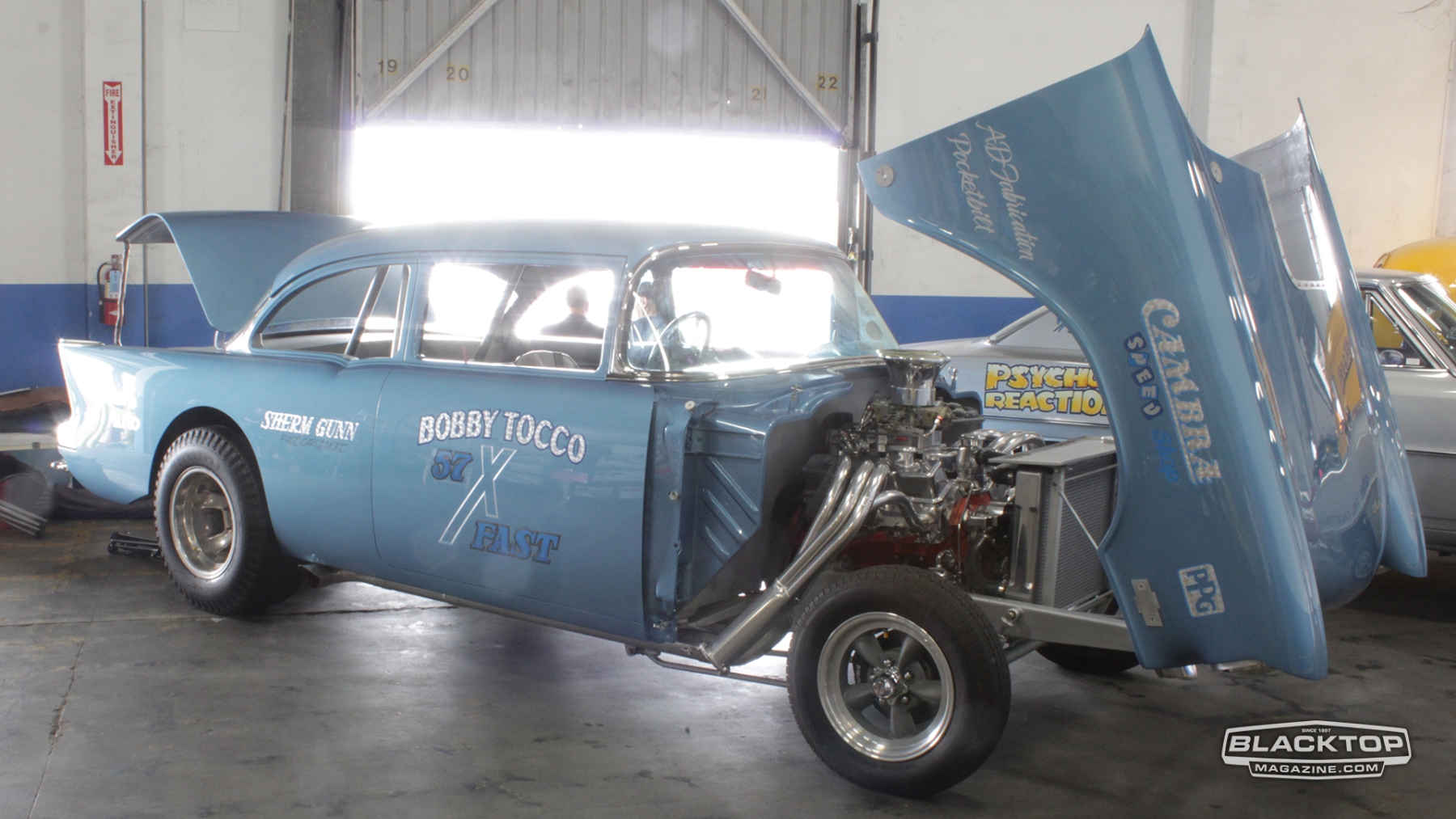
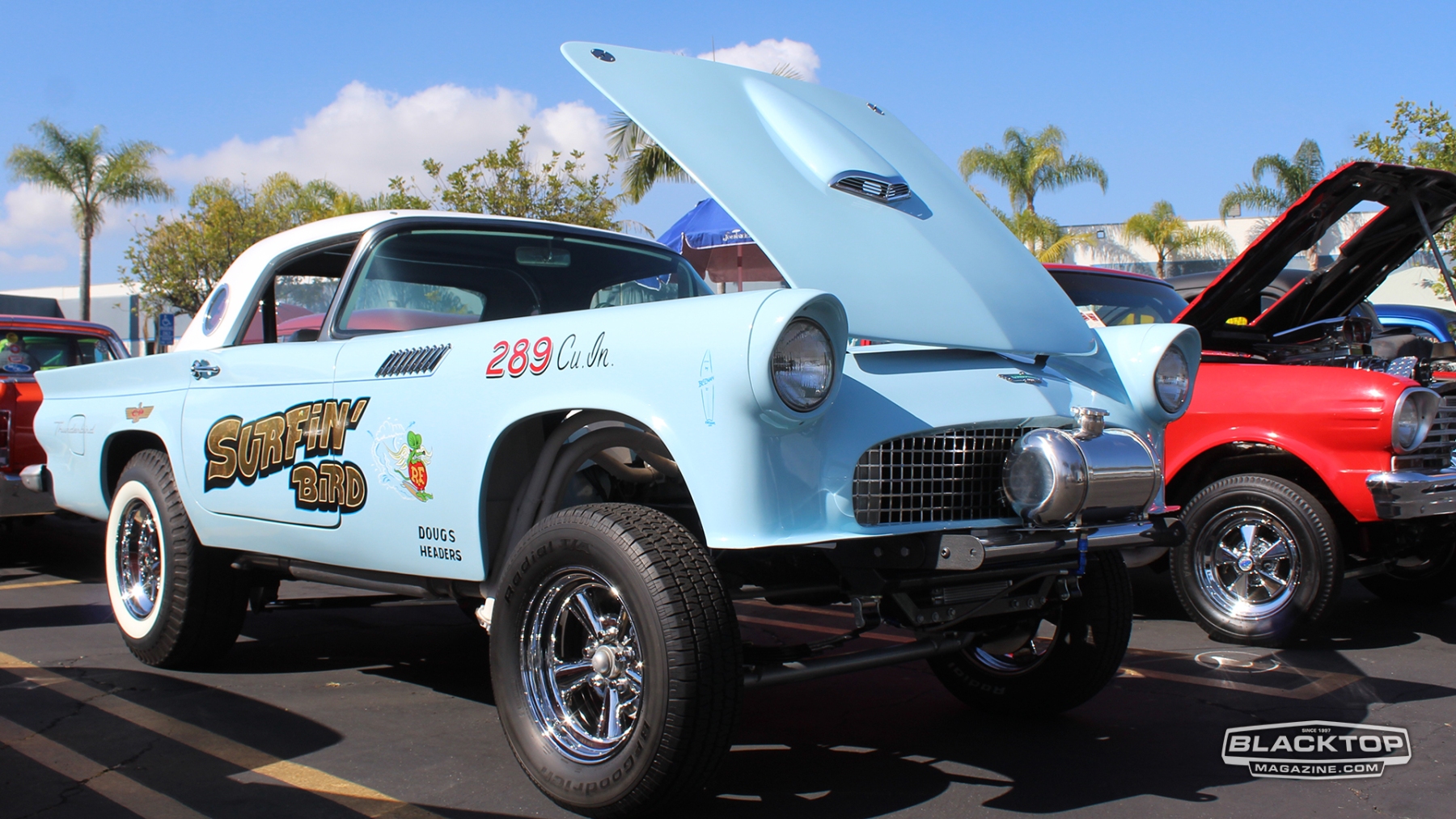
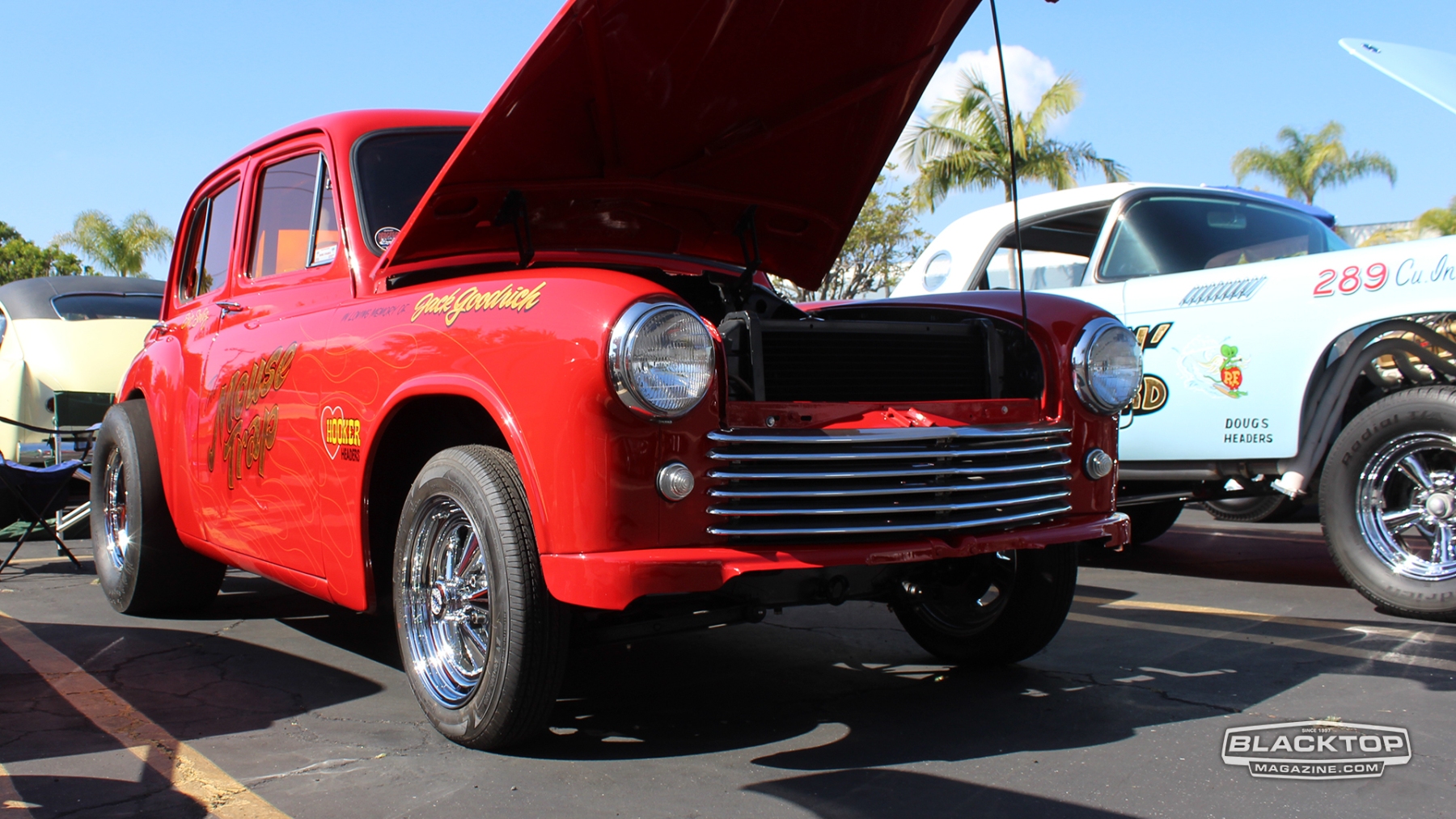
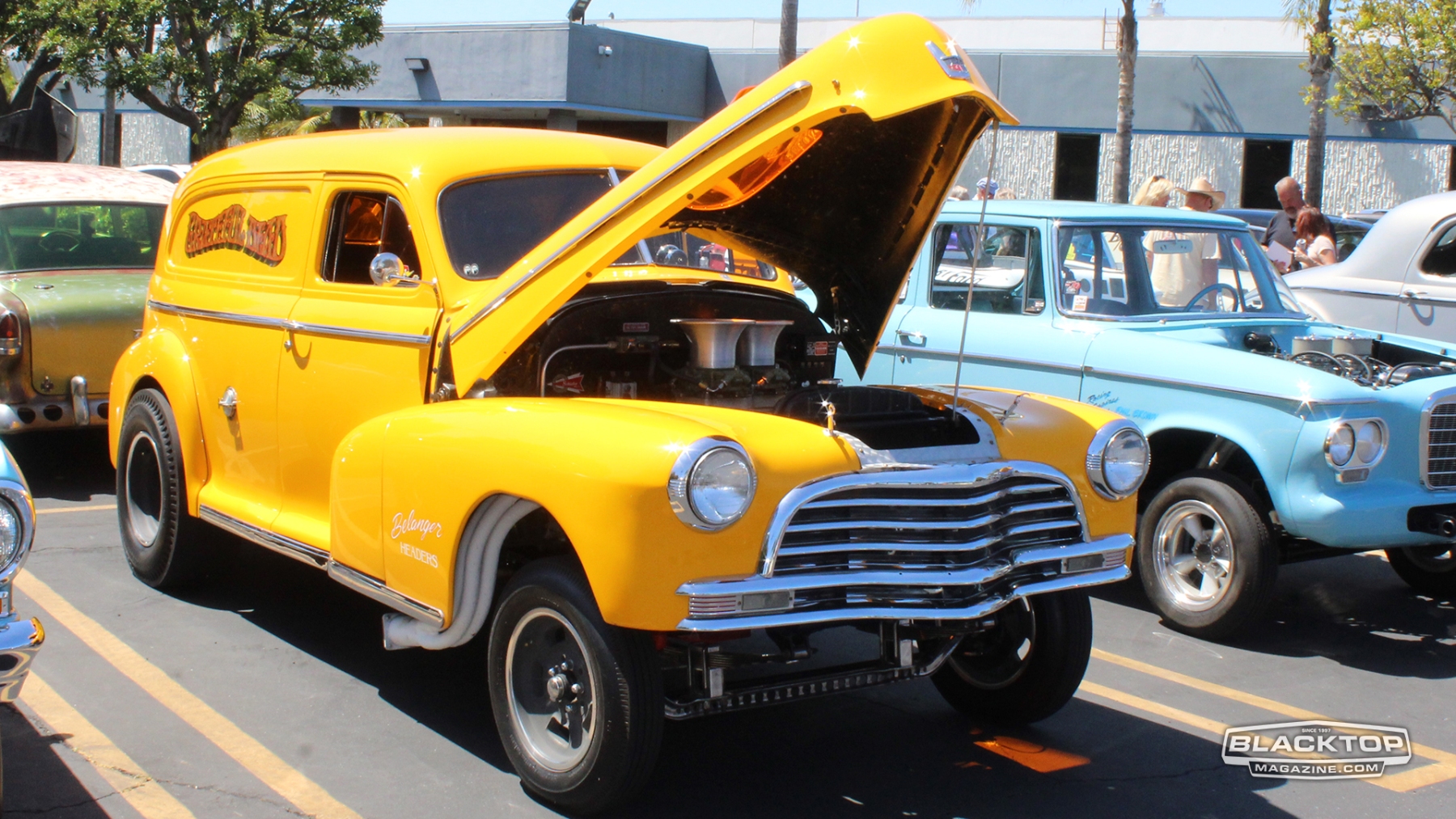
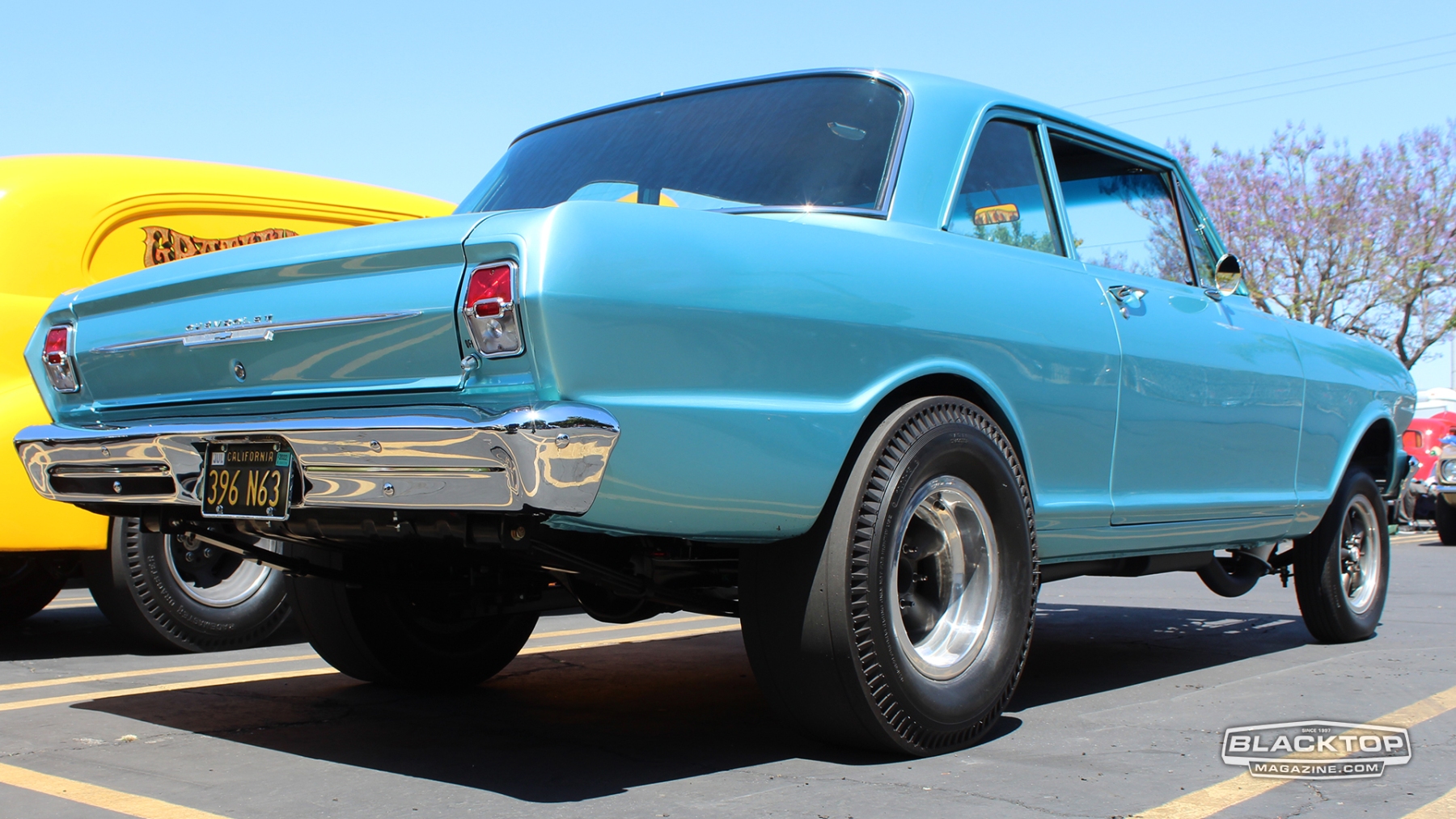
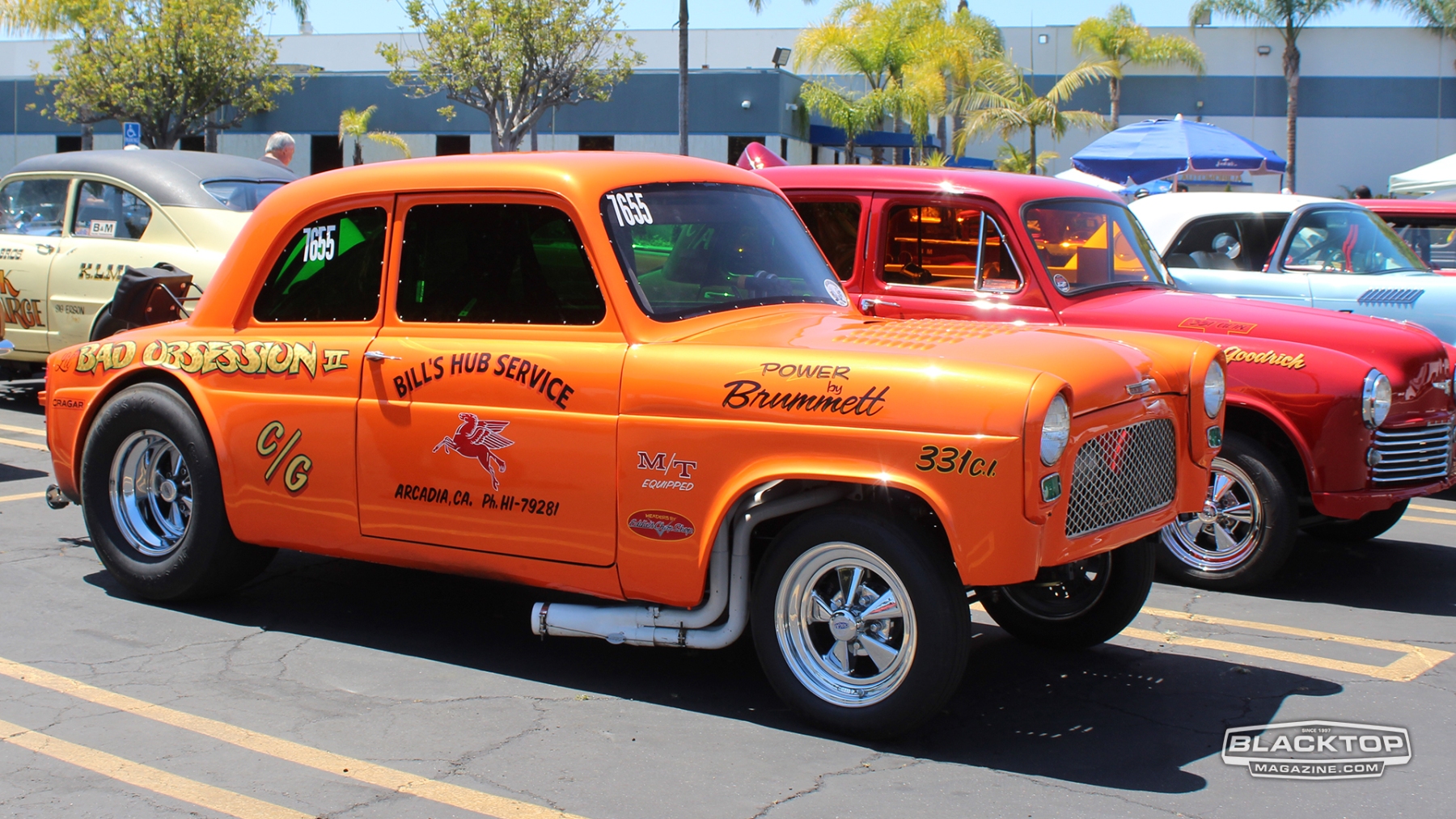
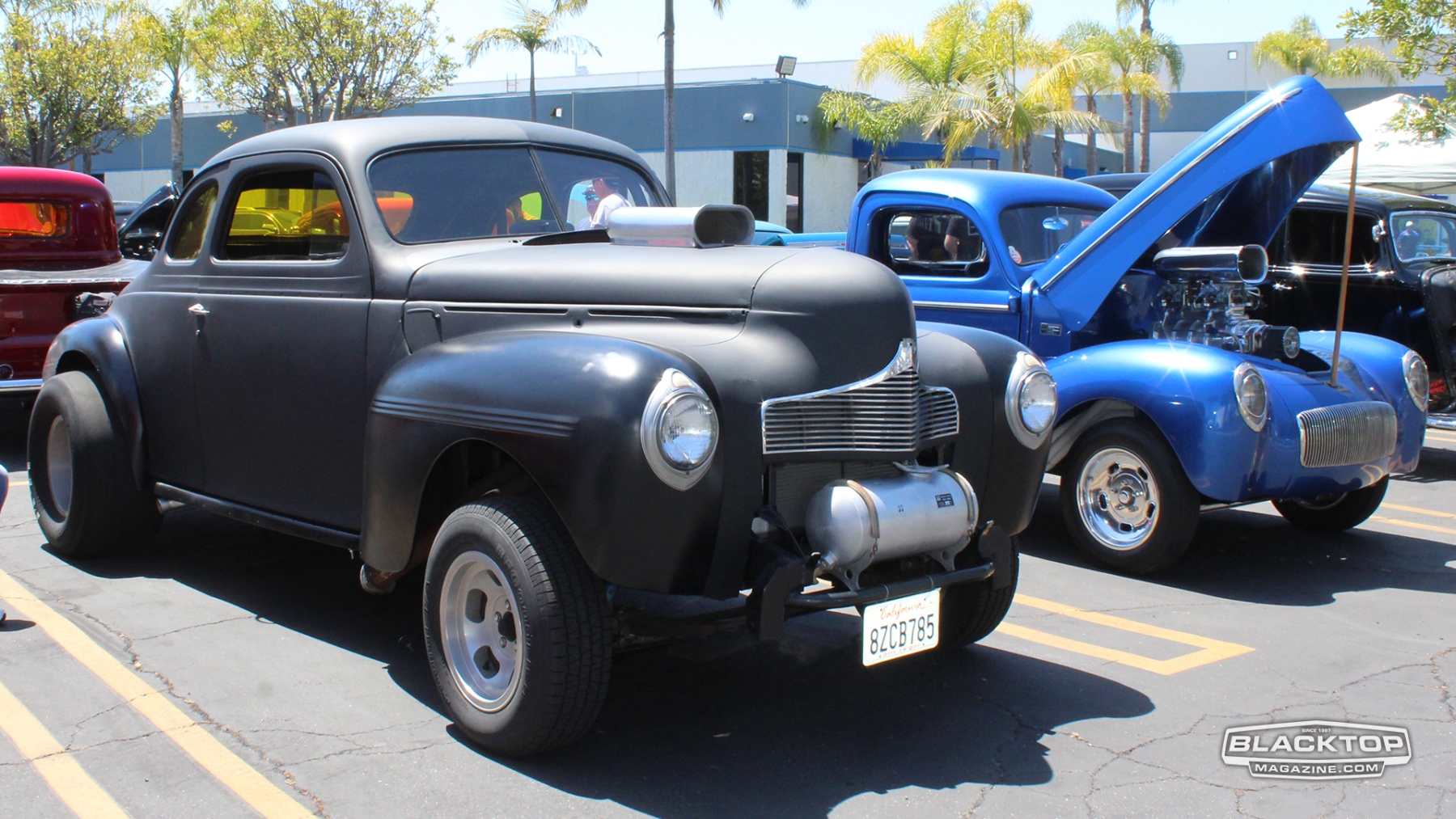
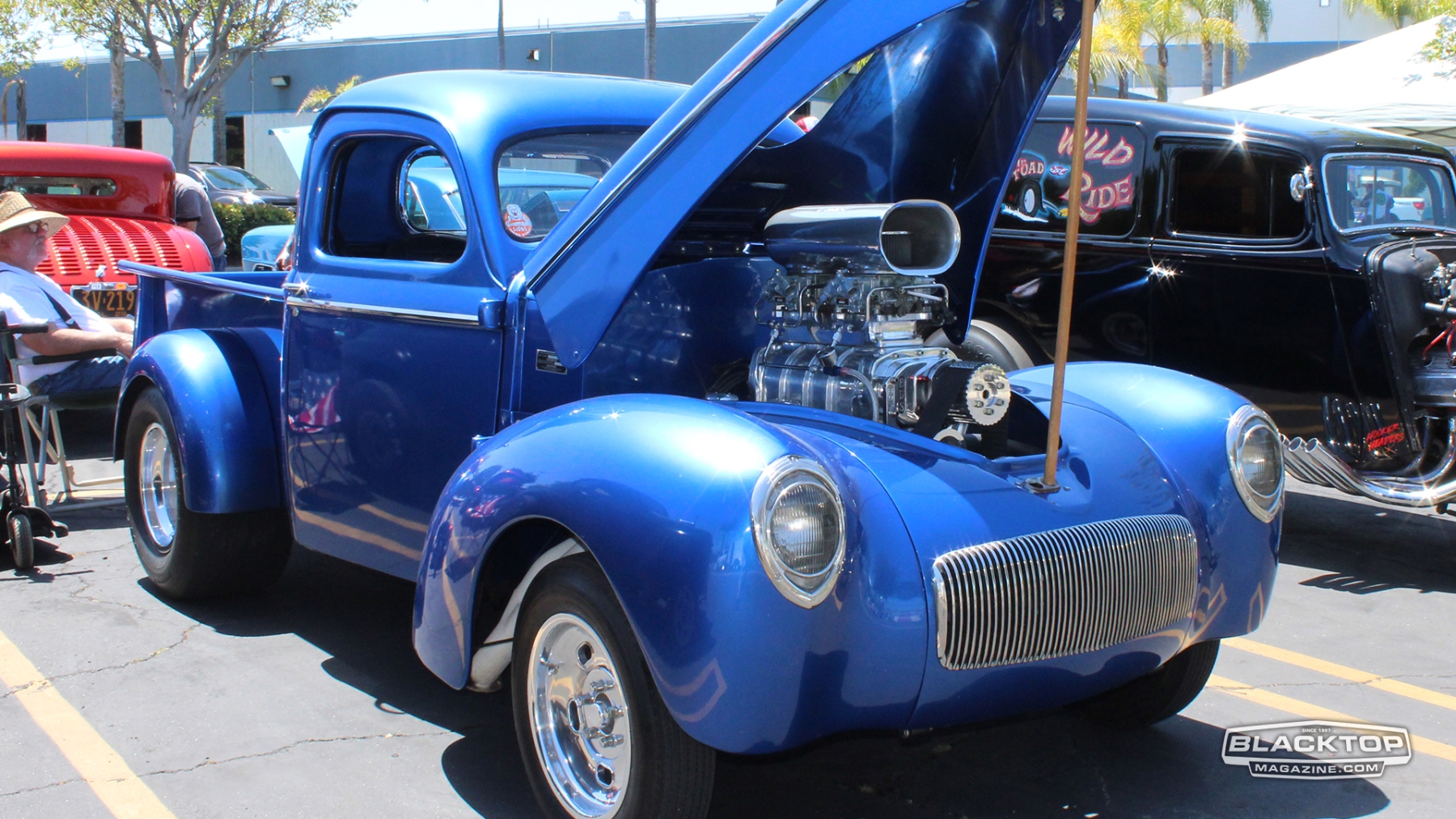
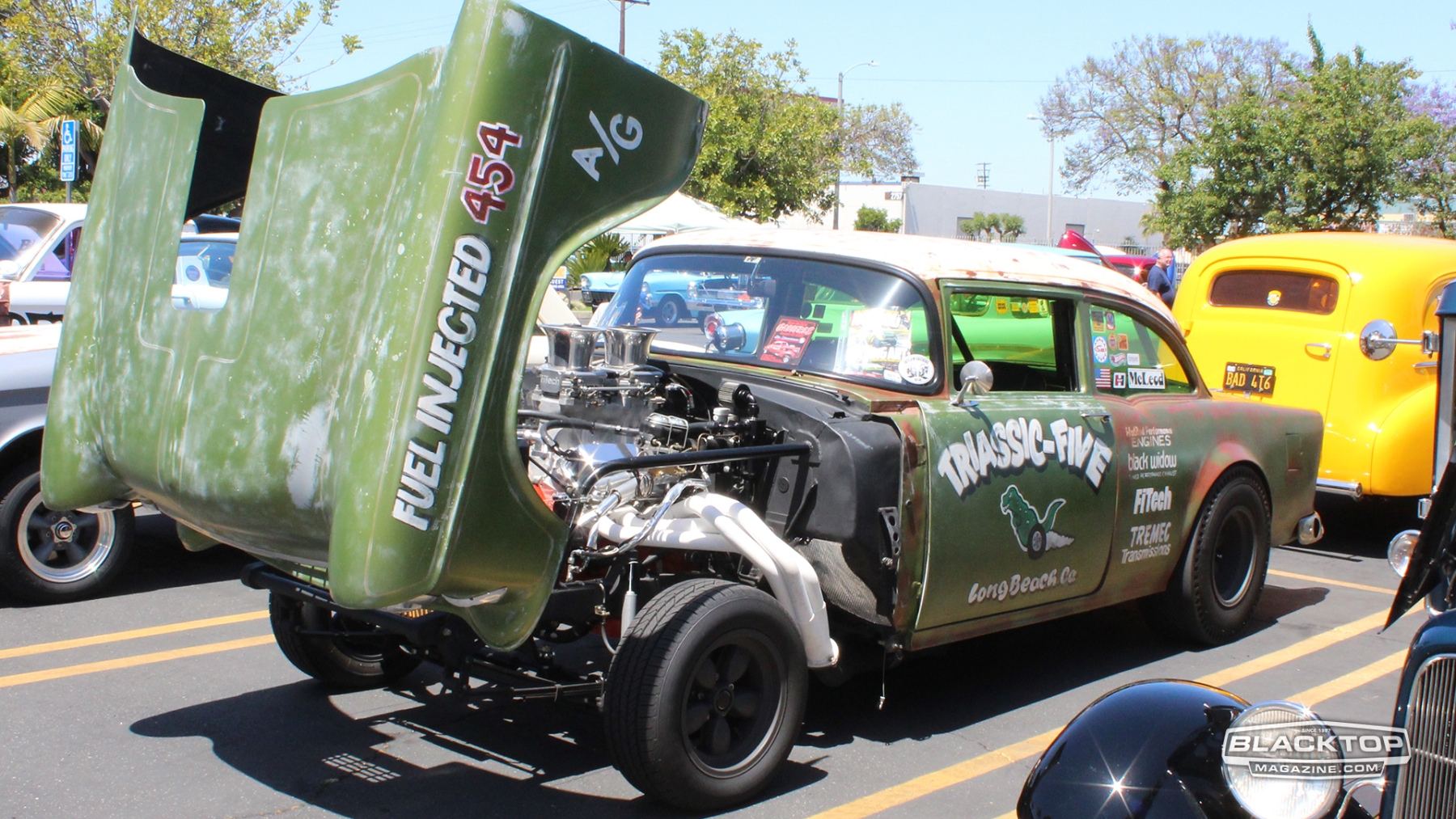
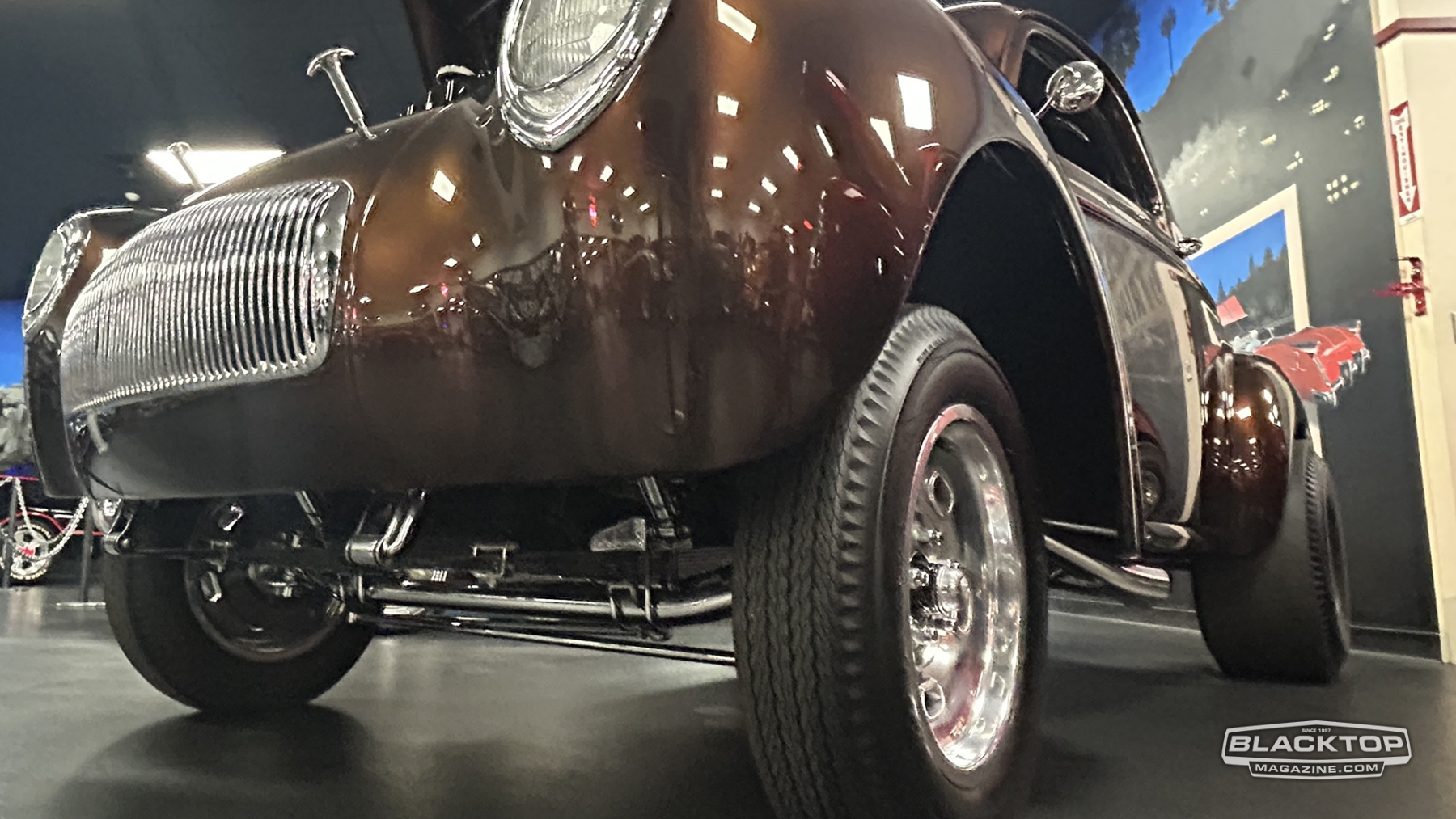
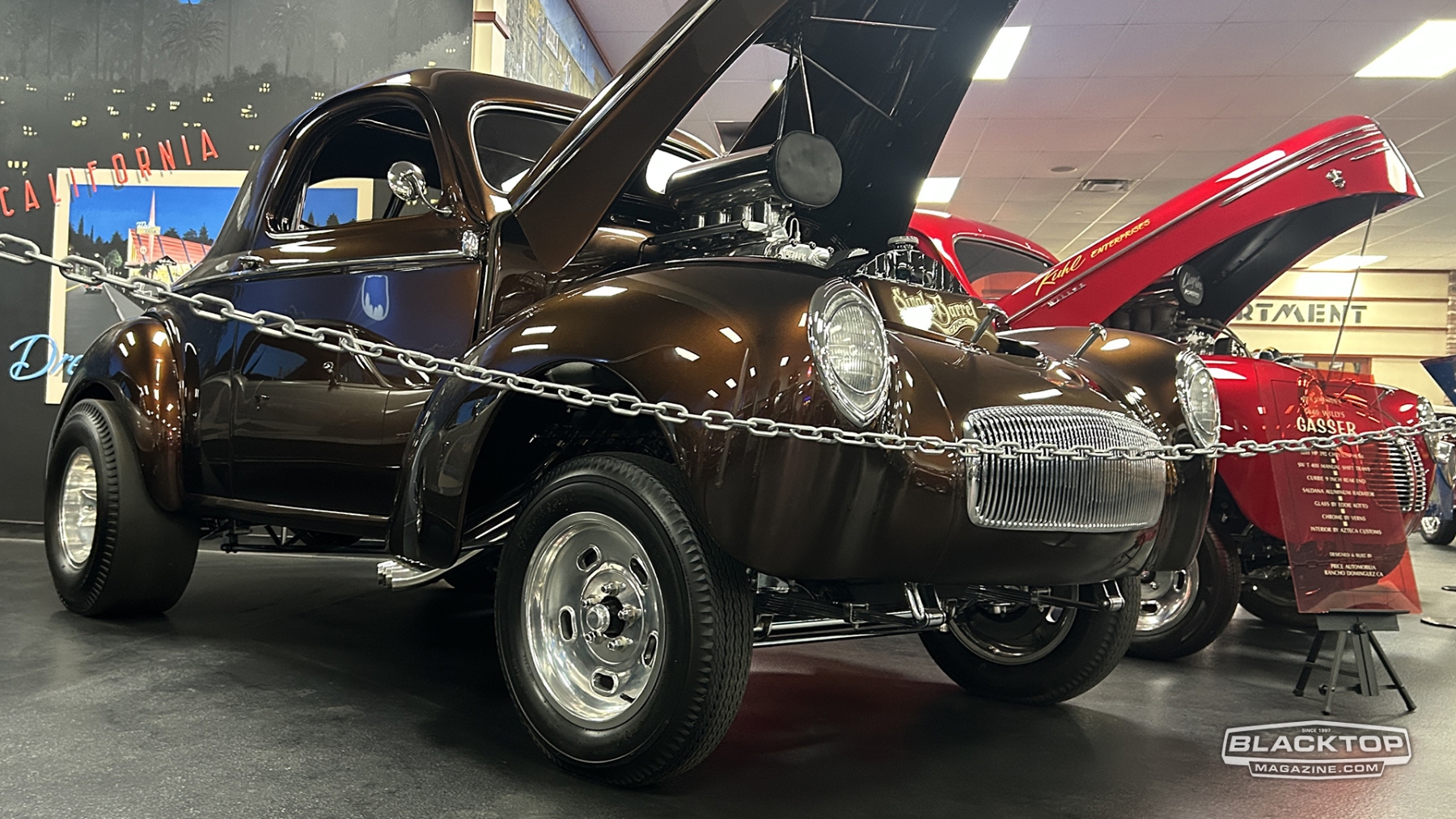
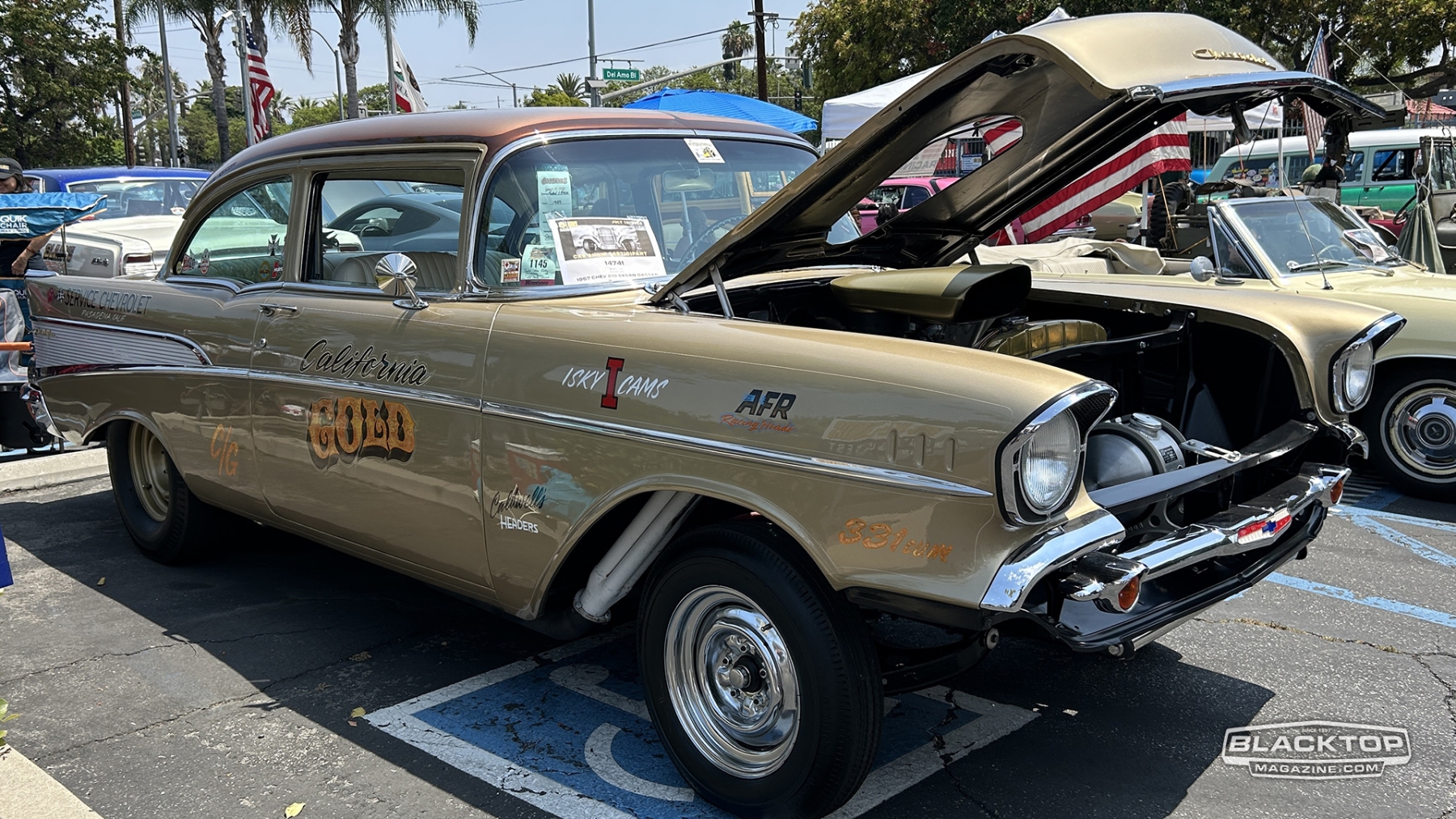
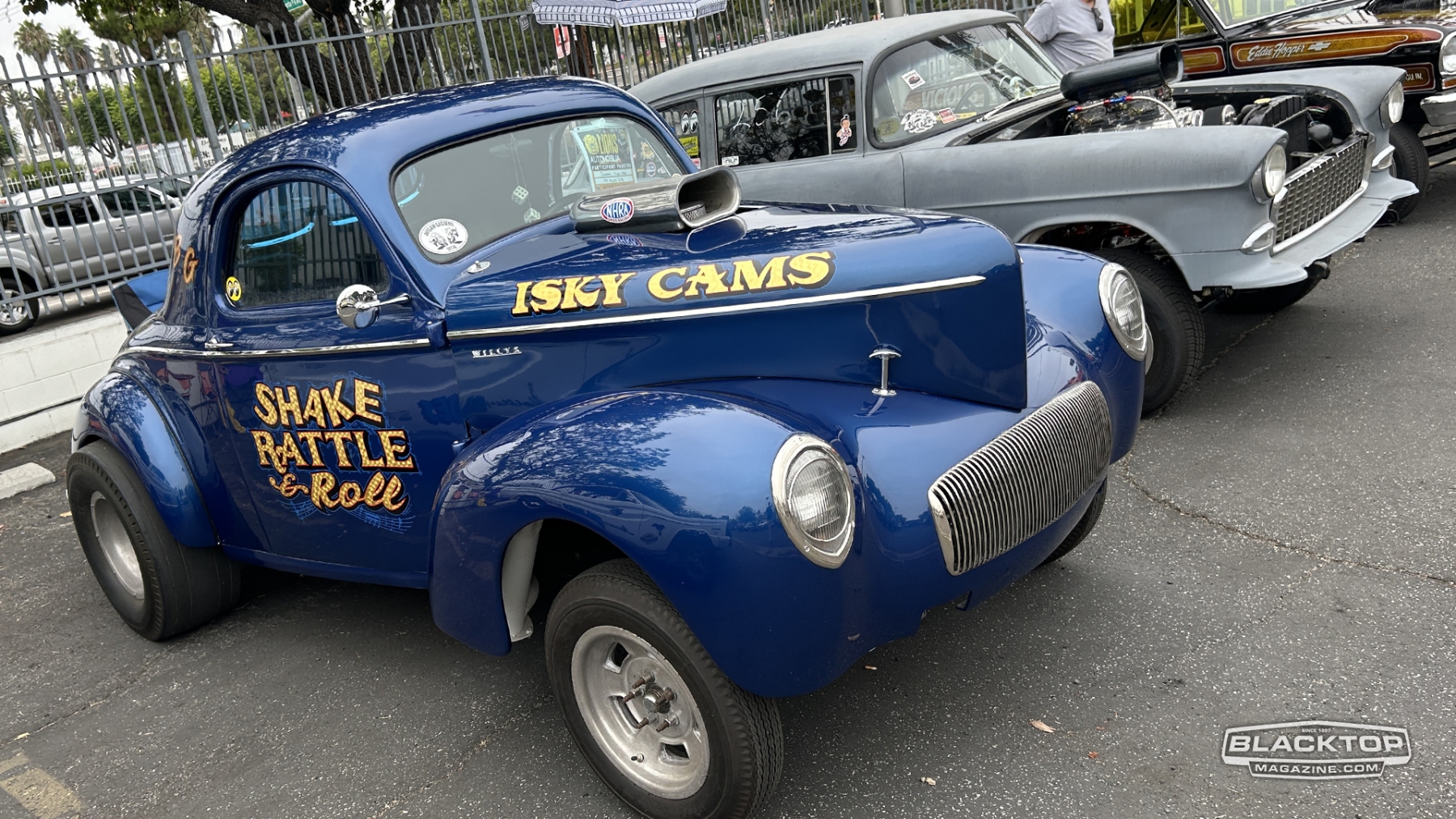
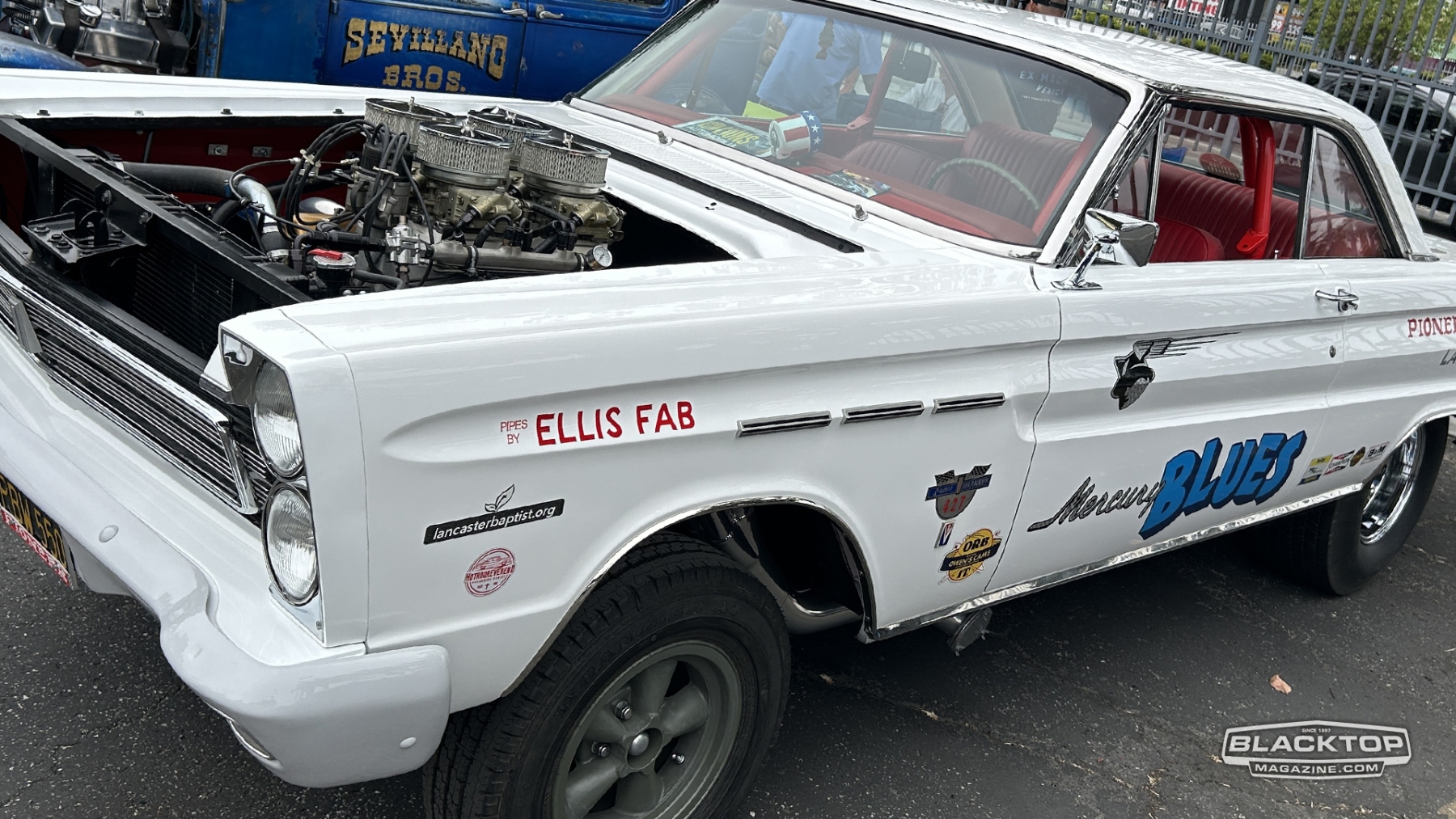
They were short, tall, loud and often unpredictable. Willys coupes, Ford Anglias, Henry Js, Austin sedans and Tri-Five Chevrolets sat nose-high over straight front axles, packing everything from injected small-blocks to supercharged Chrysler Hemis. When the light changed, they did not simply accelerate. They leaped.
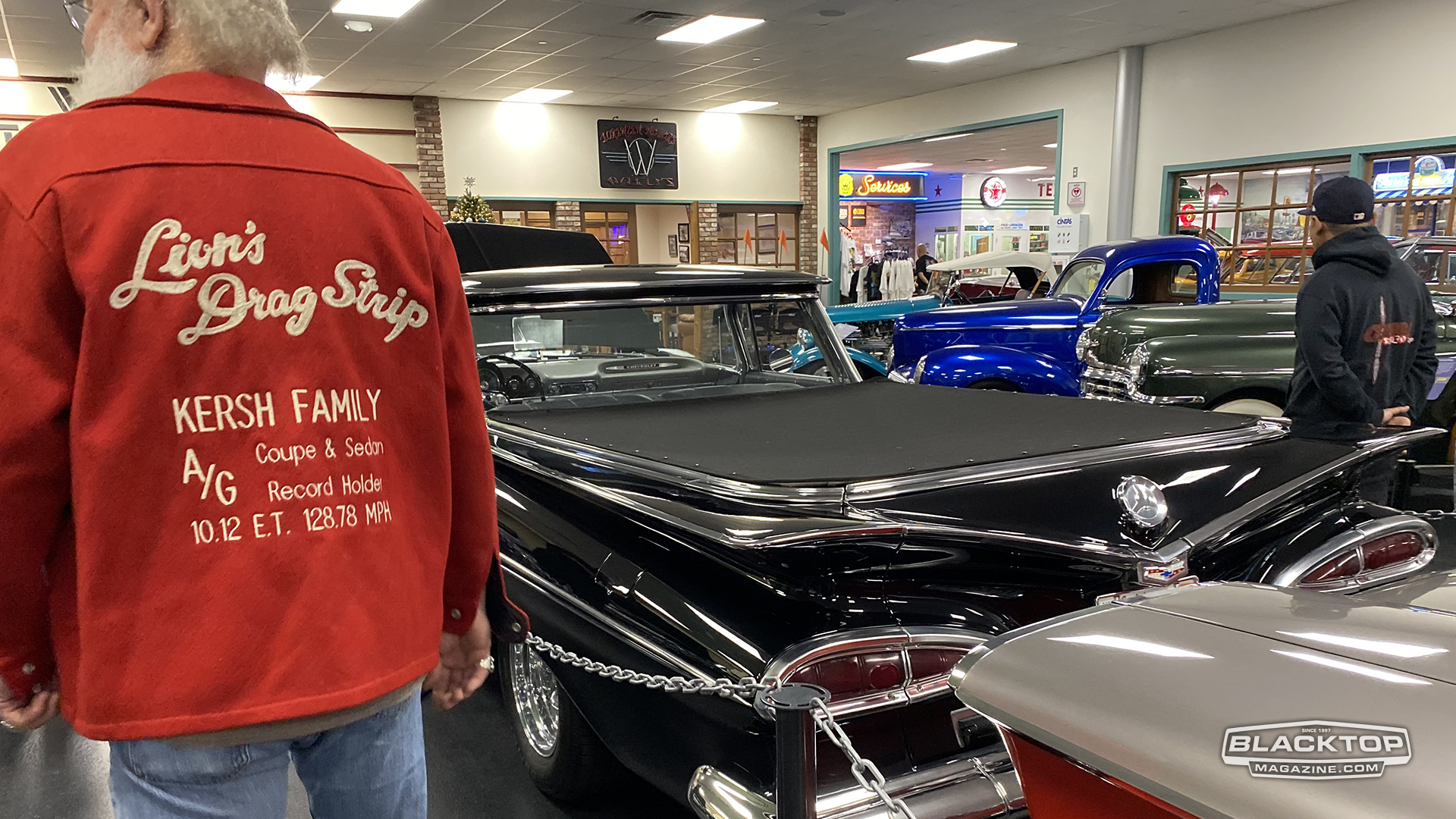
Article brought to you in part by the Lion’s Automobilia Foundation and Museum.
For a generation of drag racing fans, the Gasser Wars of the 1960s represented the sport at its most colorful: independent builders, regional heroes, mechanical experimentation and hard-running rivalries that could fill grandstands from California to the East Coast.
How Gasser Racing Got Started
Gasser racing grew directly from postwar hot-rodding culture. Young mechanics and returning servicemen were modifying production automobiles for greater speed at dry lakes, abandoned airstrips and the growing number of organized dragstrips appearing around the country.
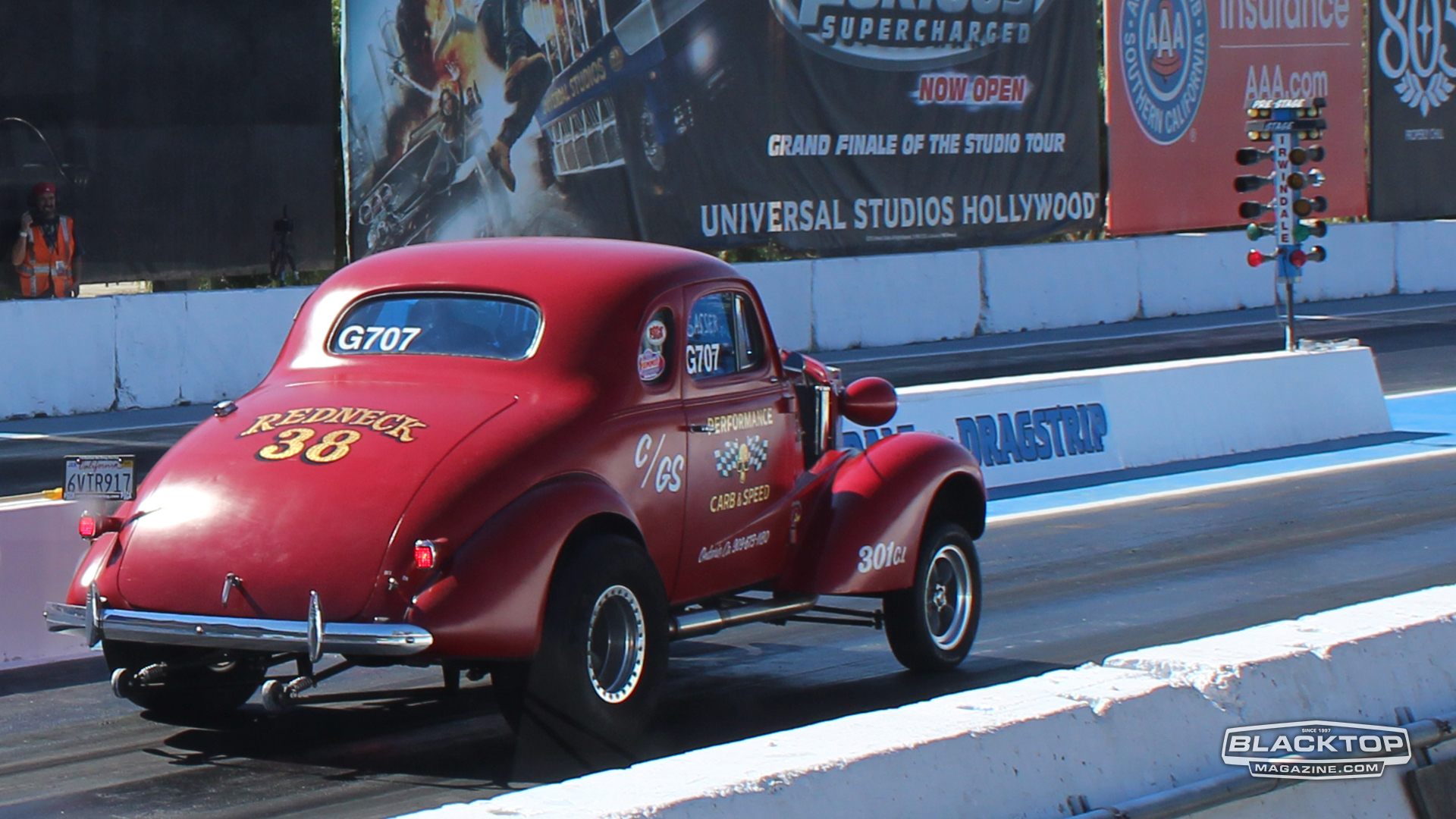
As the National Hot Rod Association brought greater structure to drag racing during the 1950s, it created classes for modified production coupes and sedans running gasoline. The official designation was Gas Coupe and Sedan, but racers and fans quickly shortened the name to “Gasser.”
By the 1958 NHRA Nationals, winners from the A through E Gas classes were racing one another for the event’s Little Eliminator title. The Gas category had already become an important part of organized drag racing.
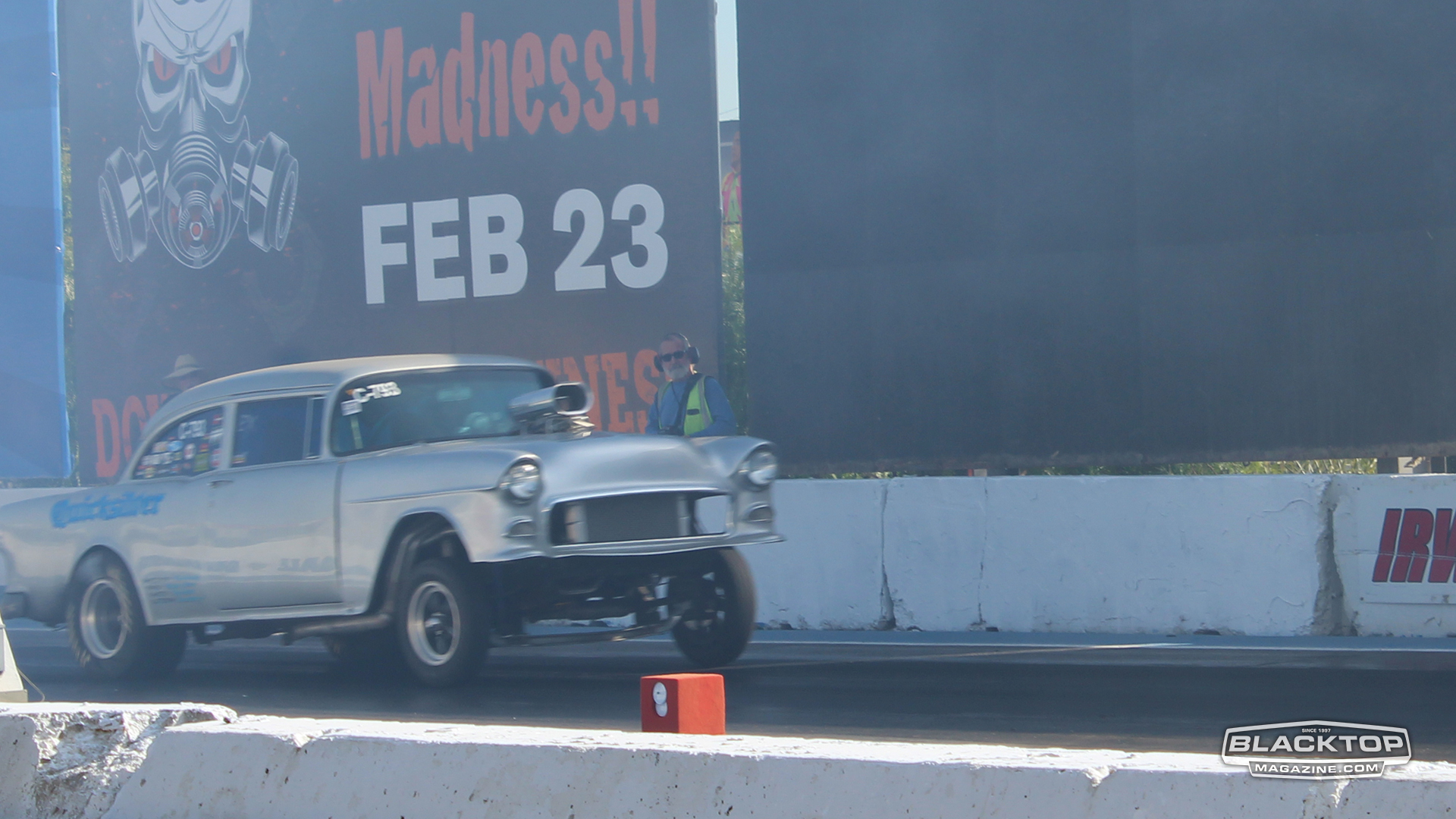
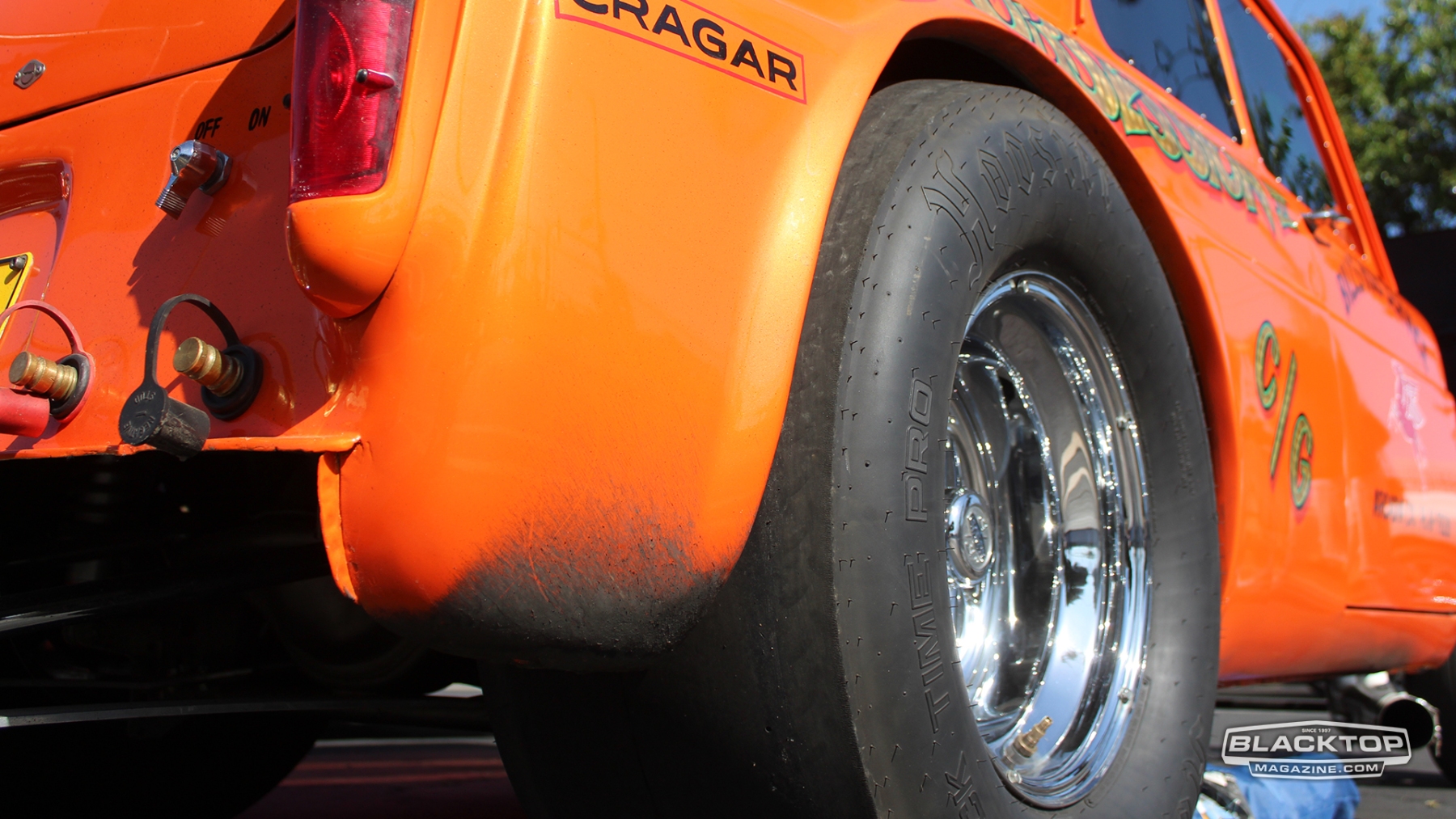
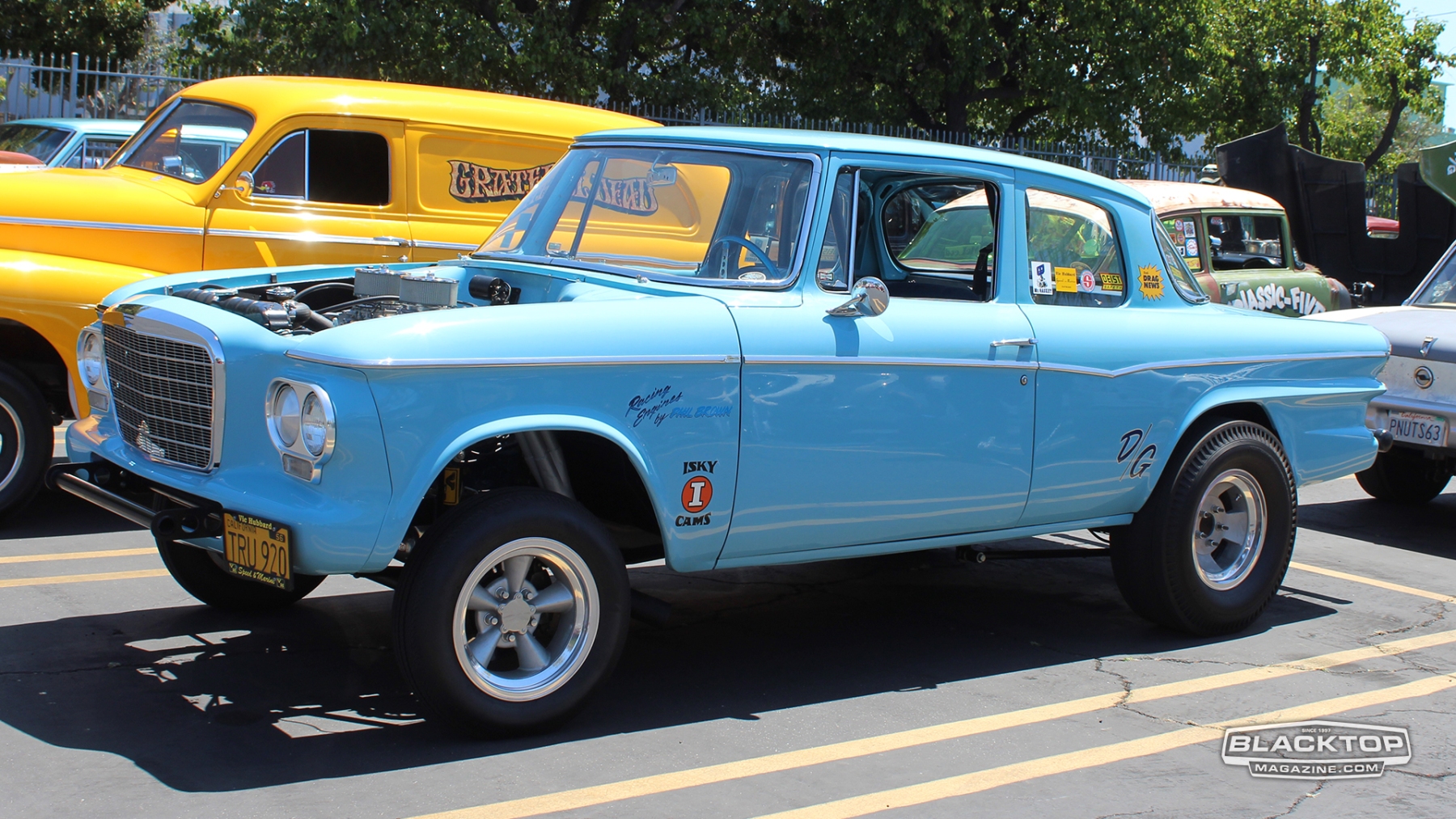
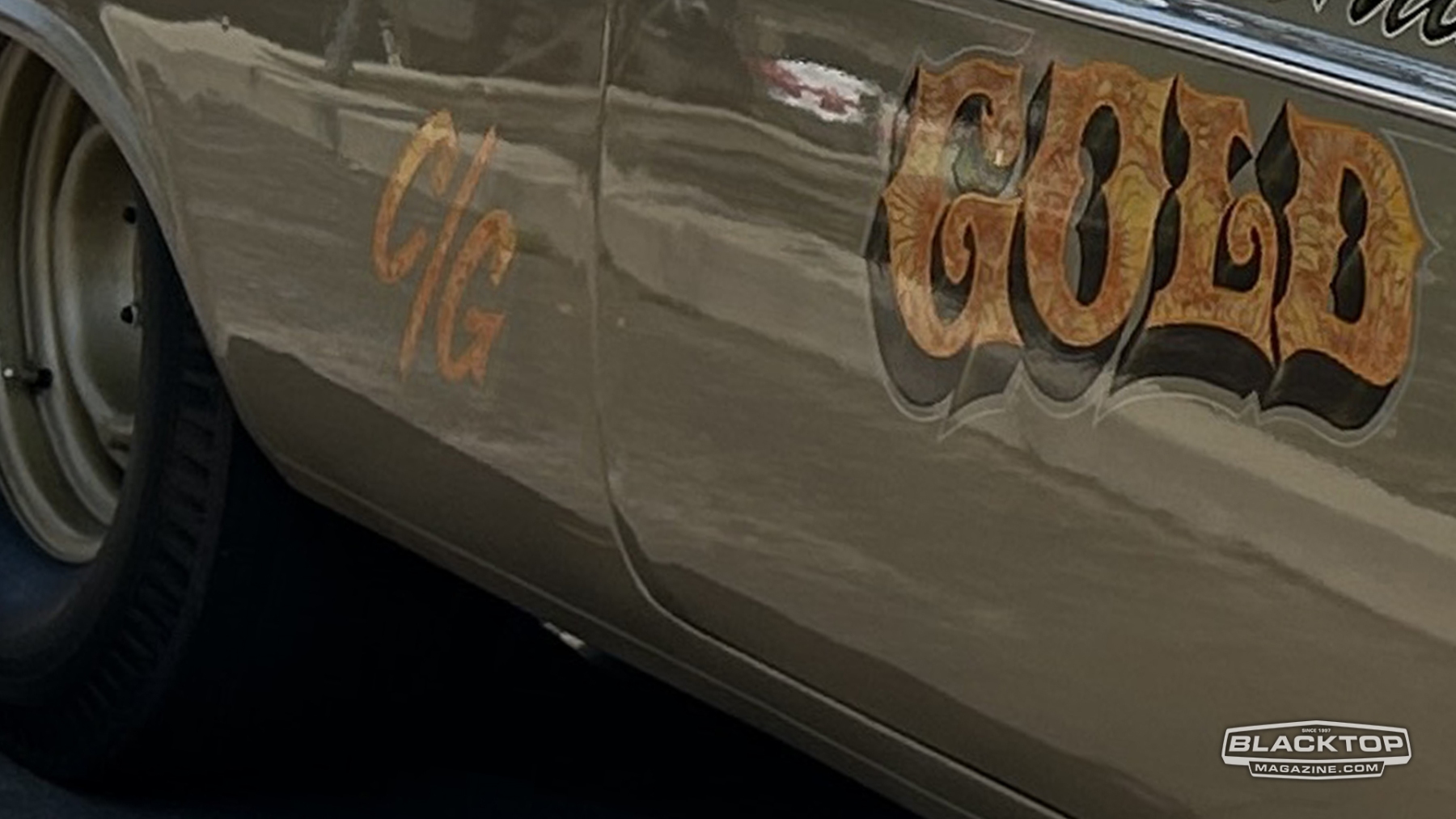
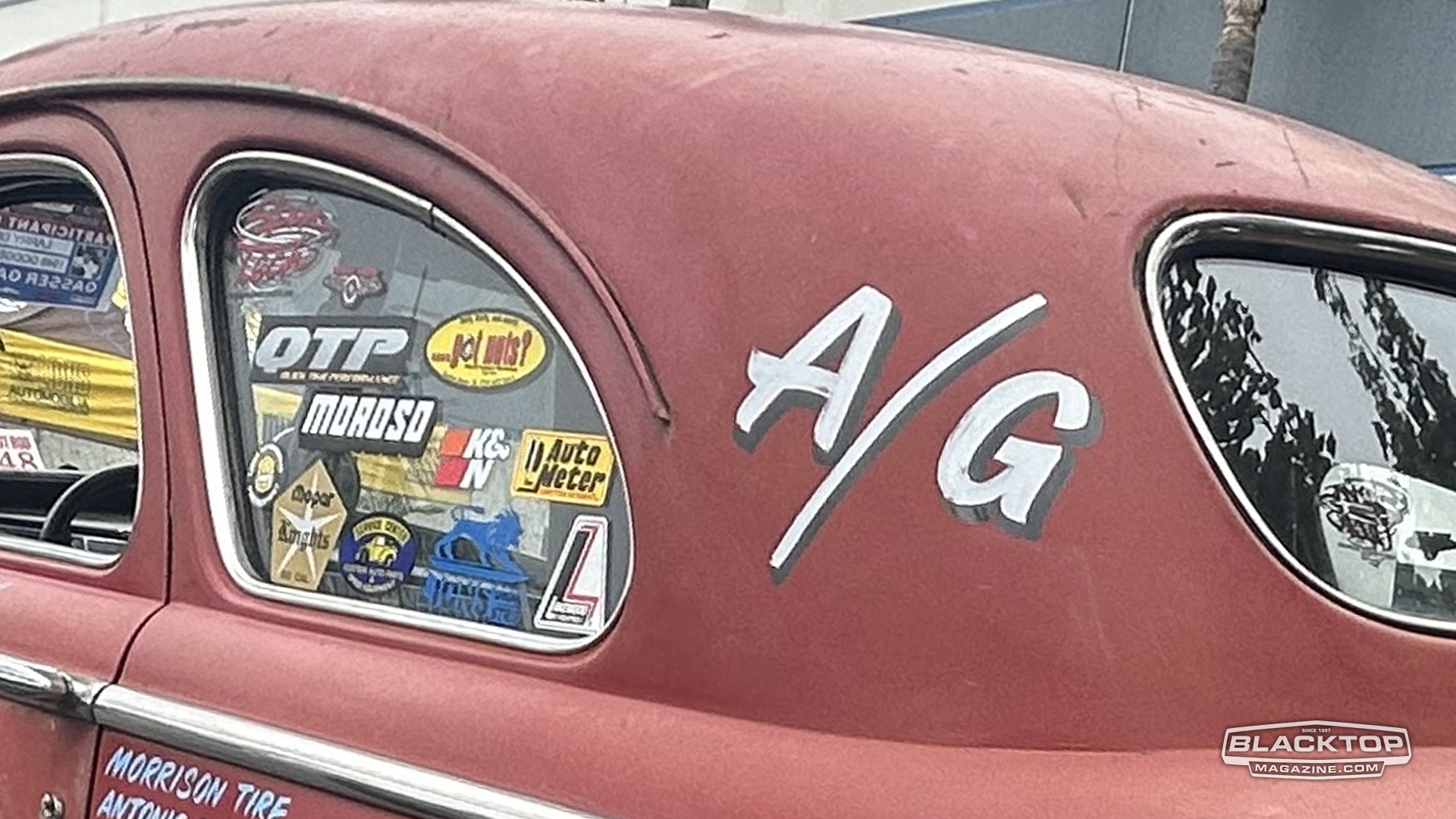
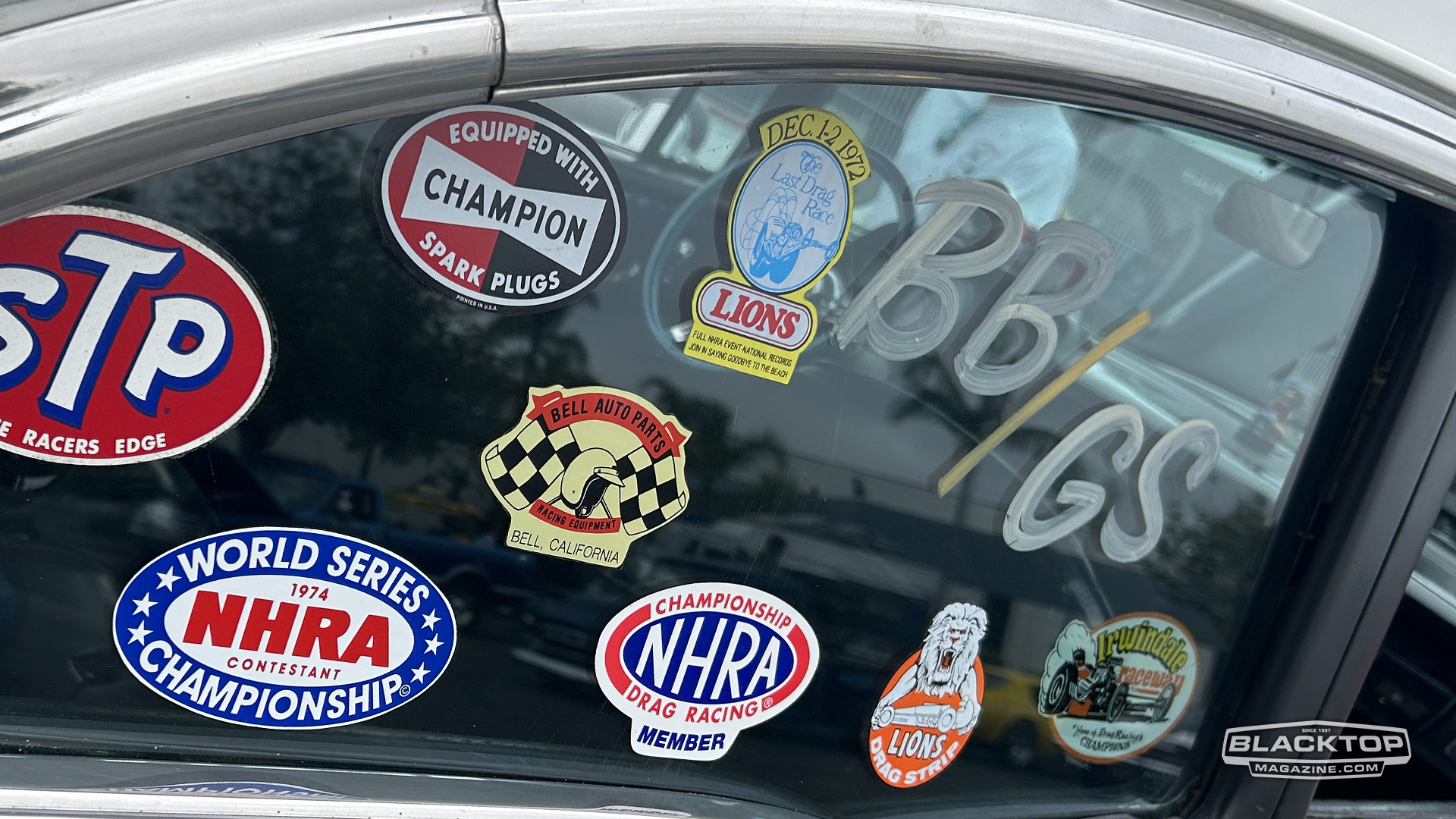
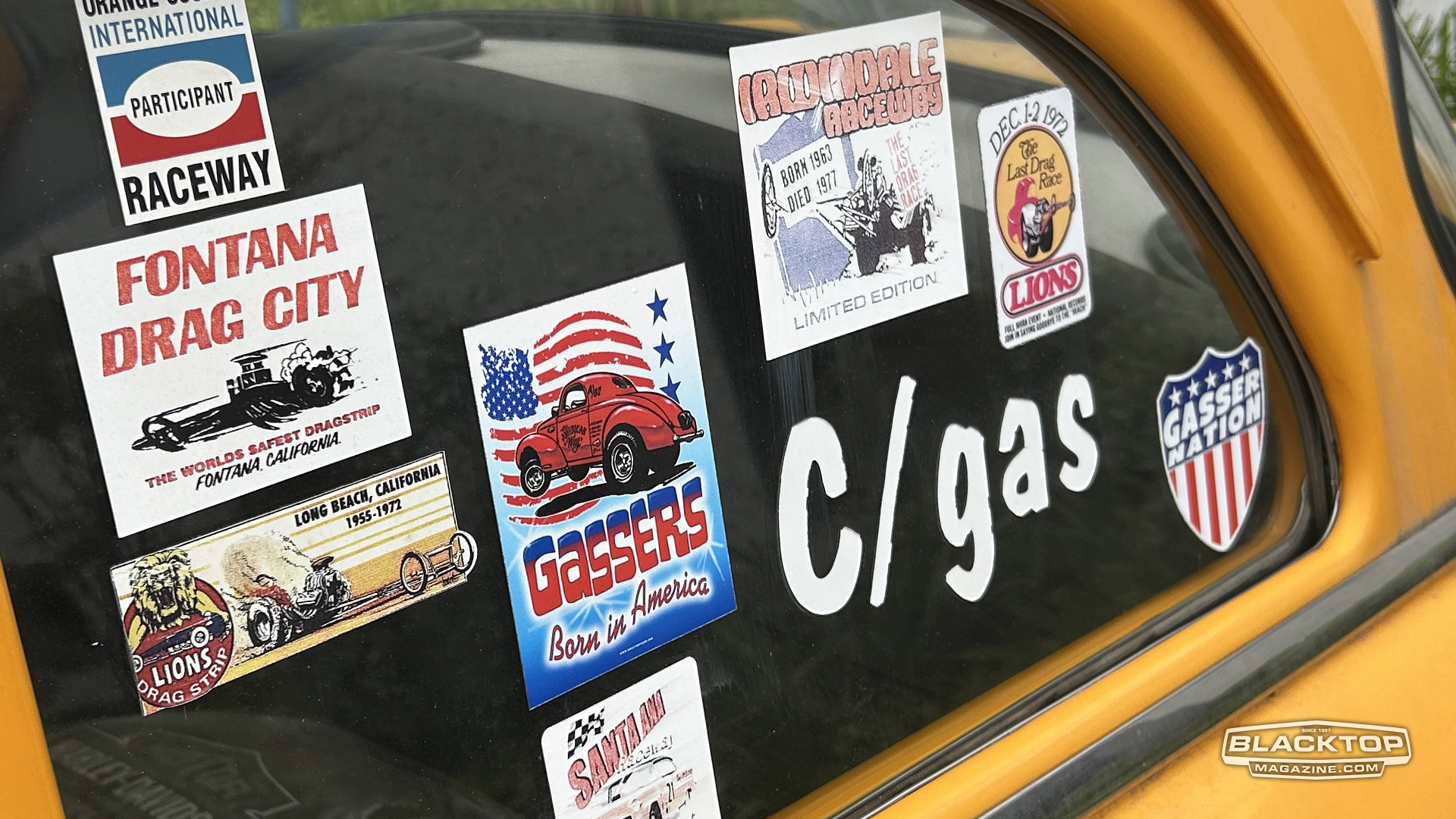
The original rules were considerably more restrictive than many modern nostalgia builds suggest. According to the 1958 NHRA rulebook, Gas-class cars had to run service-station pump gasoline and use a production coupe or sedan body. They were classified according to total vehicle weight divided by engine displacement, creating divisions such as A/G, B/G, C/G, D/G and E/G.
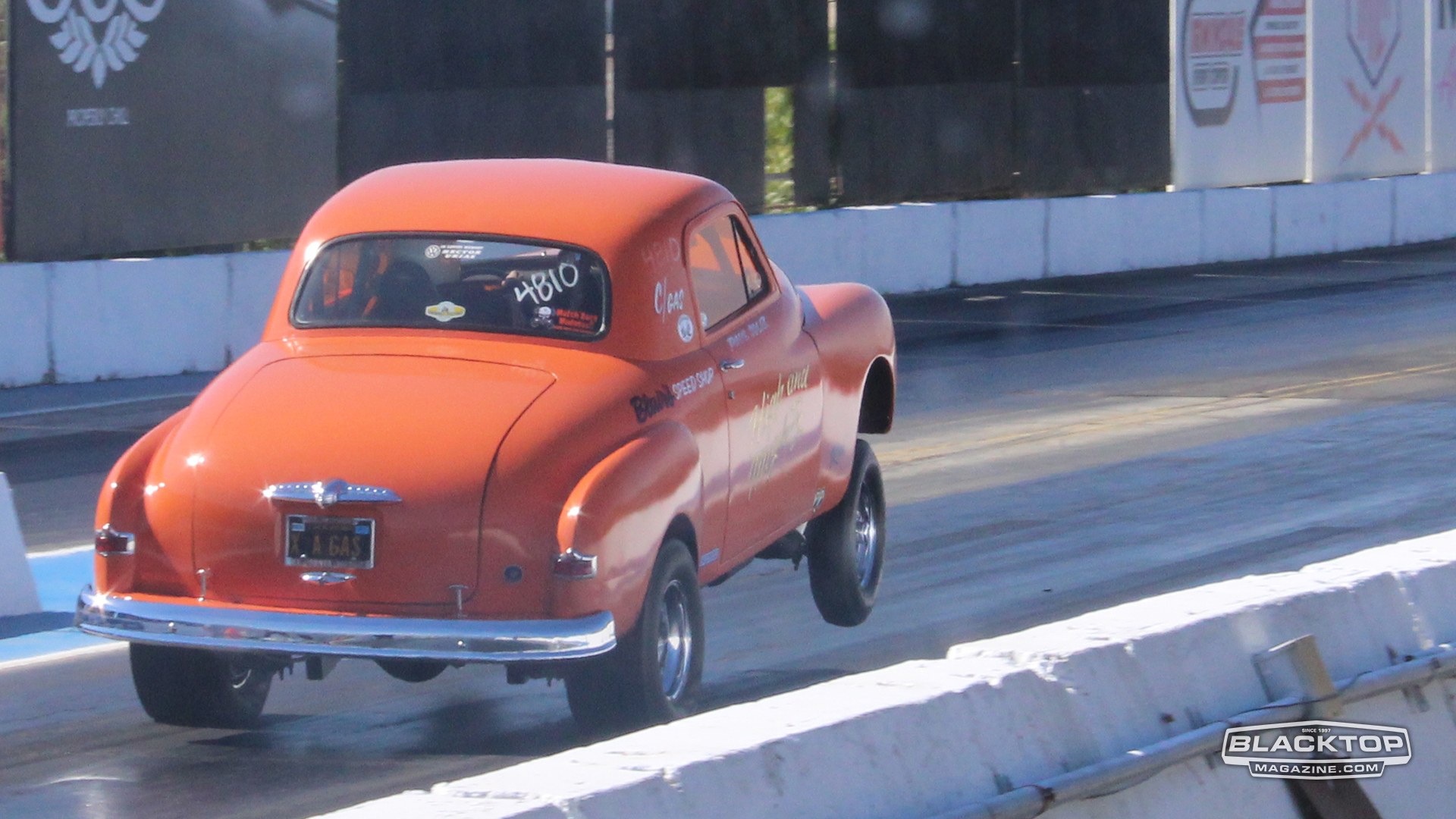
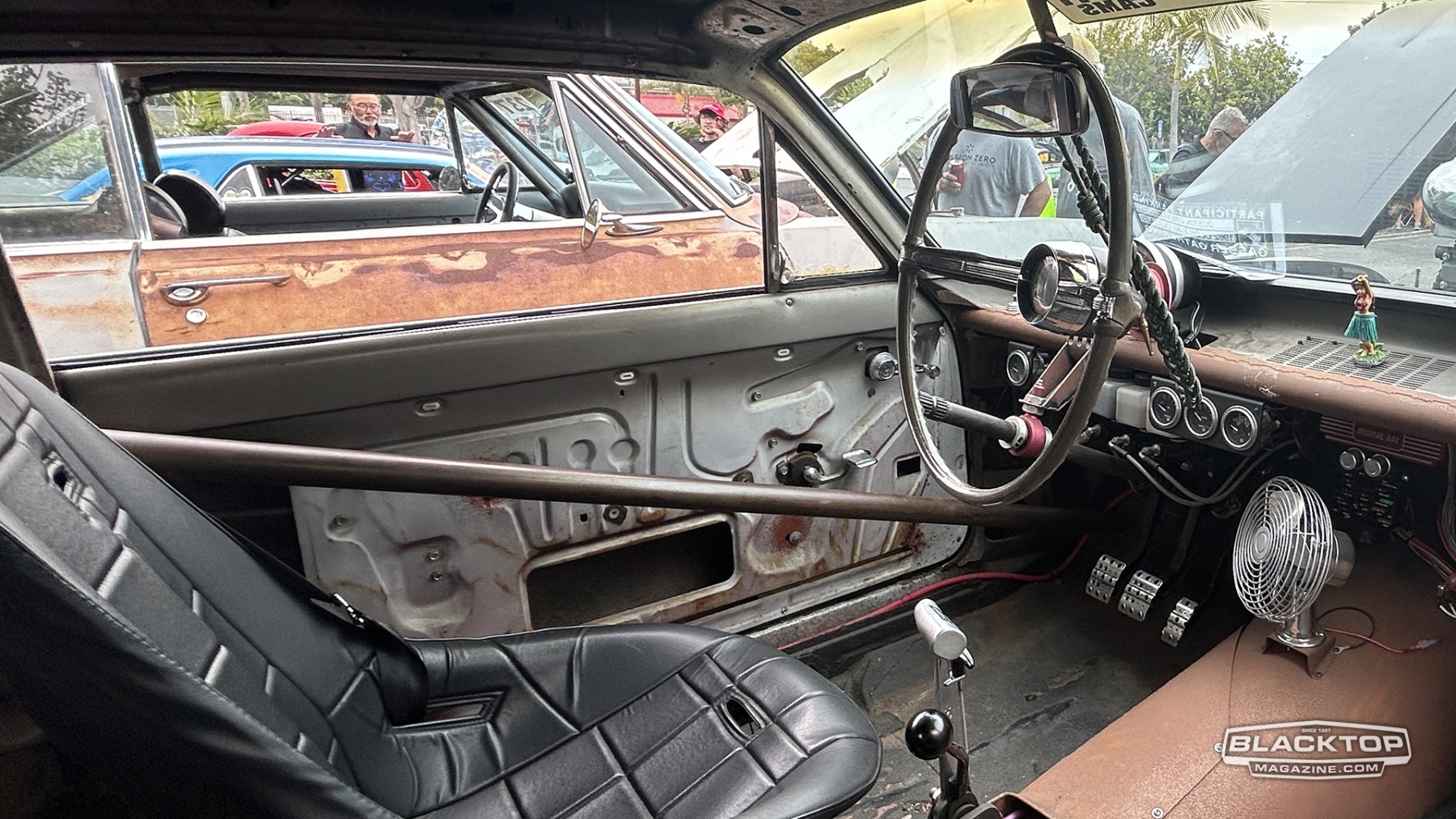
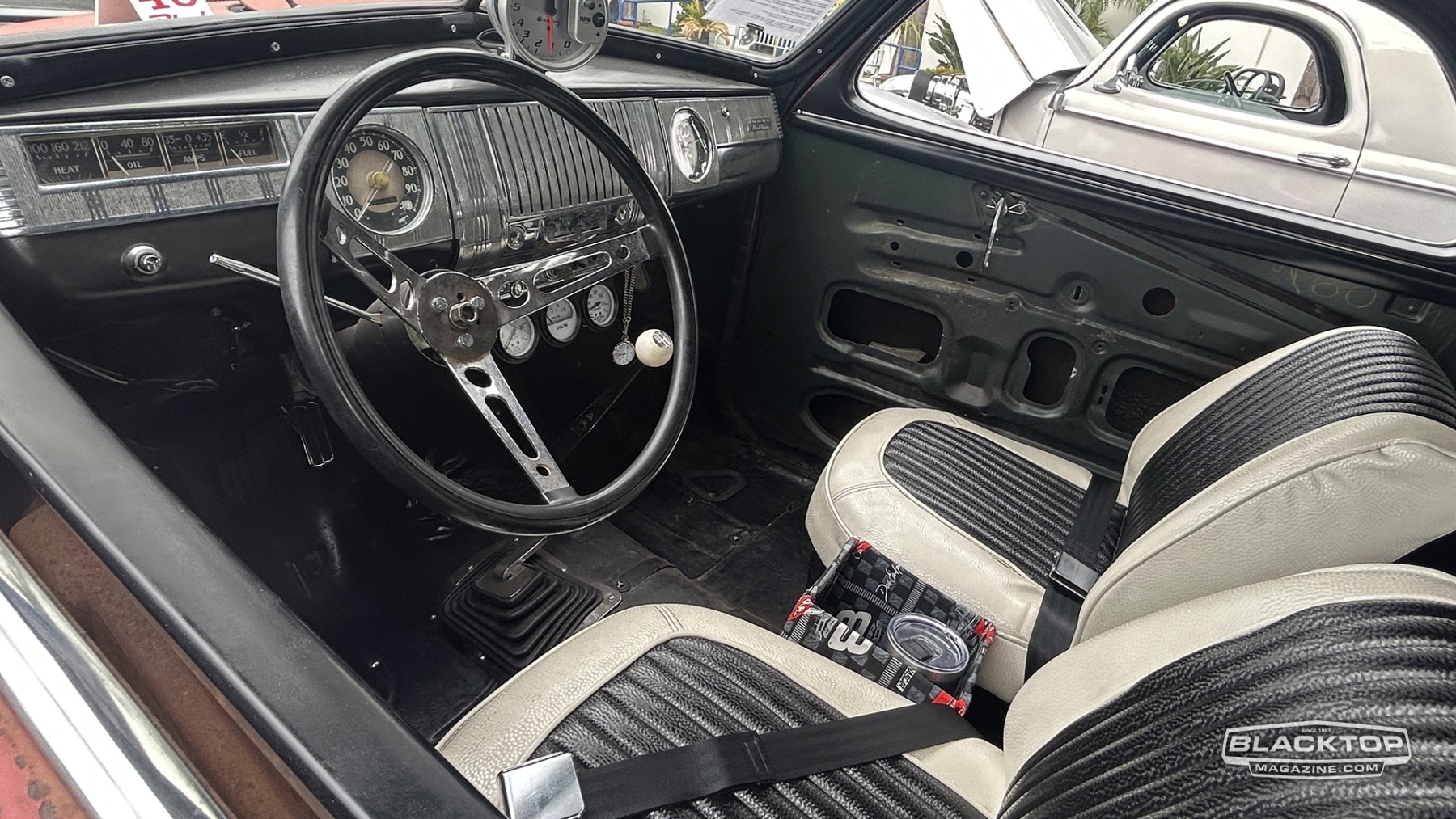
Early Gas cars were also expected to retain much of their street-going character. Four fenders, working street equipment, upholstery, mufflers, a full transmission and four-wheel brakes were required. The engine could not simply be relocated wherever the builder wanted it. These were supposed to be recognizable automobiles—not dragsters wearing token bodywork.
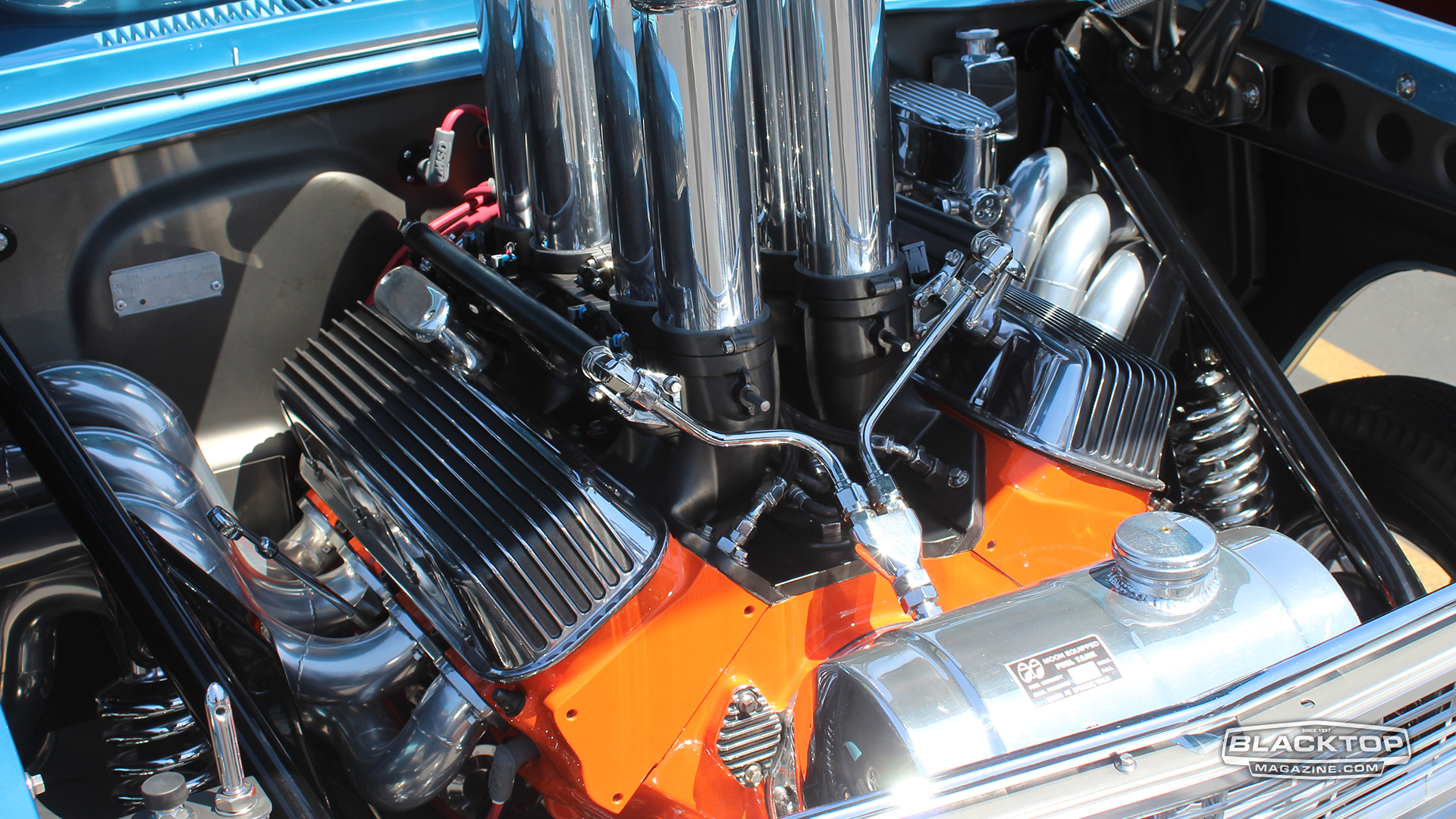
That distinction is important. A real period Gasser was not defined solely by a straight front axle or a nose-high stance. It was defined by the rulebook.
What Makes a Gasser?
The essential Gasser formula combined a production-based body with a heavily modified gasoline-burning engine. The car’s competition class was determined by its weight-to-cubic-inch ratio, while supercharged cars competed in separate or elevated classifications.
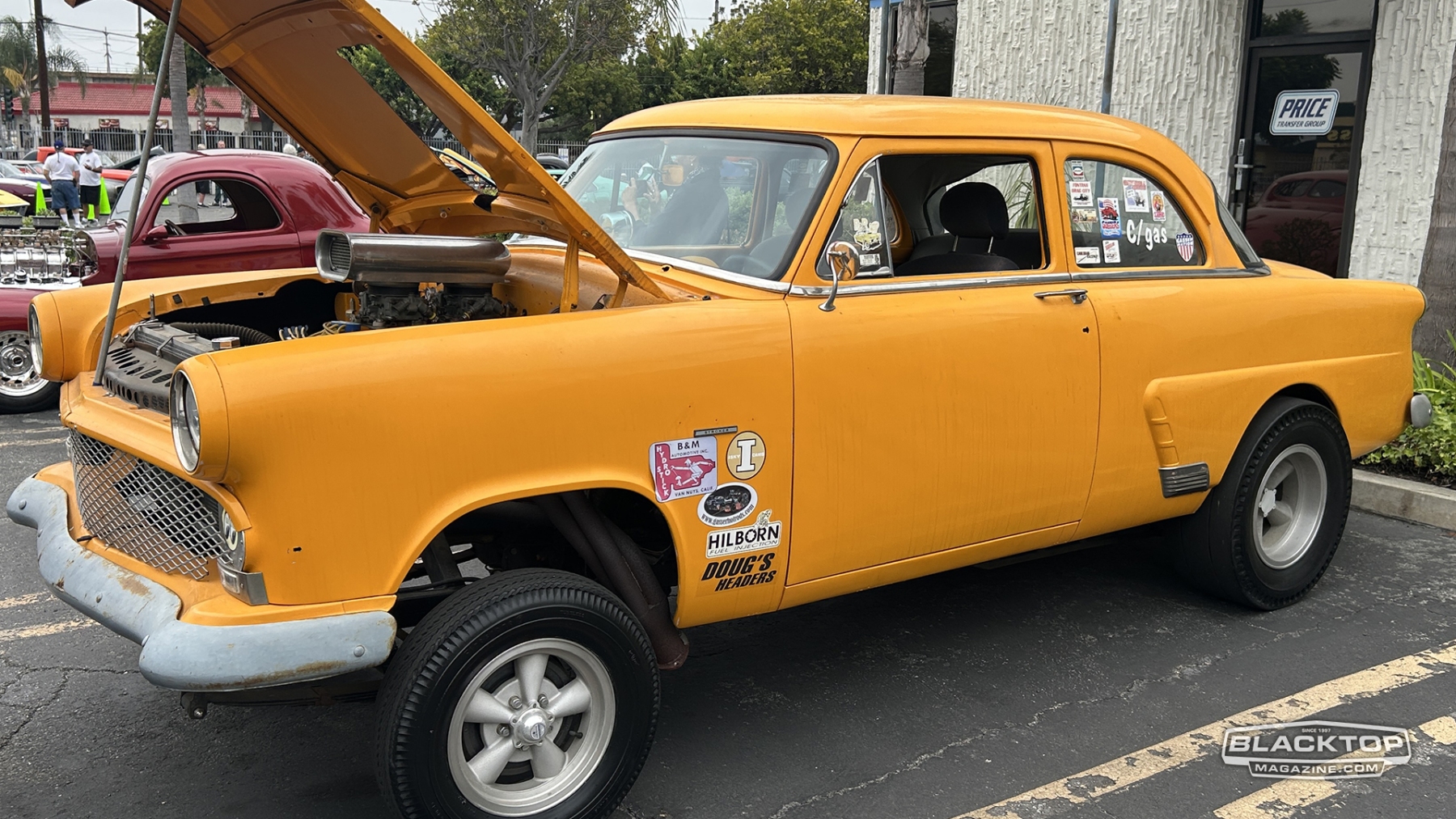
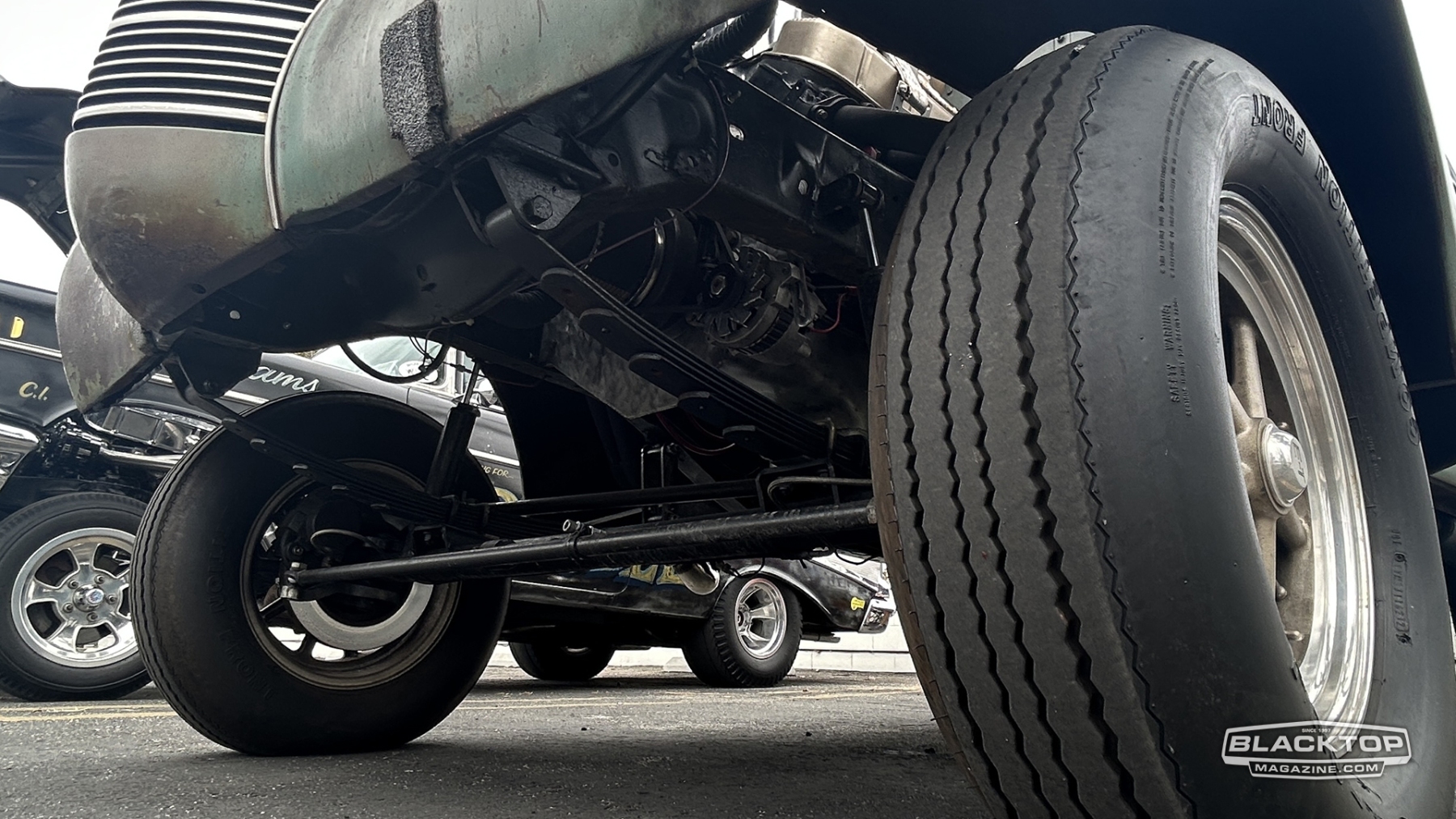
As racers began pushing harder, the appearance of the cars evolved. Builders raised the front suspension, reduced weight and experimented with chassis geometry to help transfer weight onto the rear slicks. Straight front axles became common because they were strong, relatively simple and allowed builders to alter the ride height and front suspension more easily.
The classic Gasser appearance eventually included:
- A production coupe or sedan body
- Full fenders and recognizable factory body lines
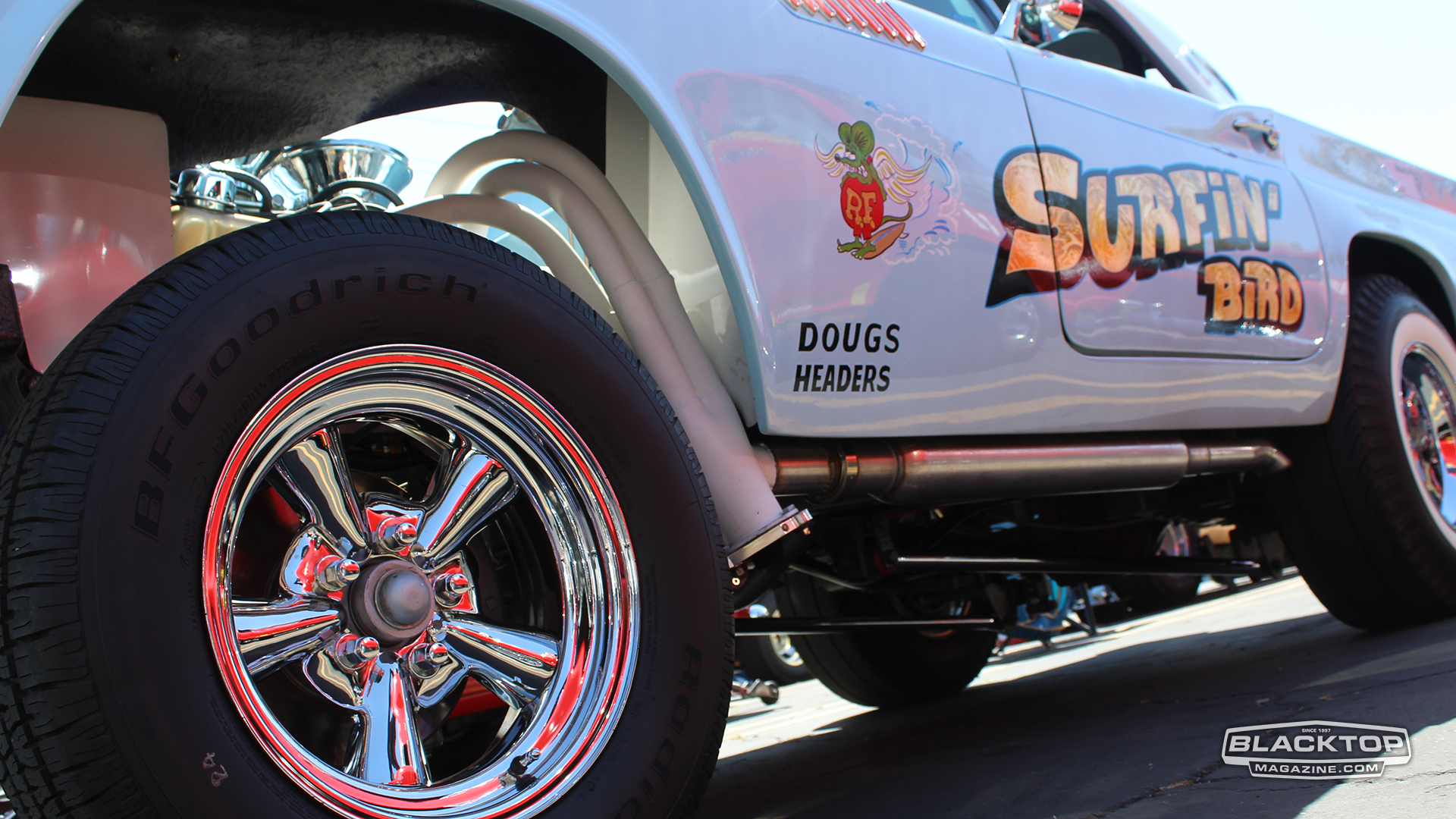
- A raised front suspension and aggressive nose-high stance
- A solid or straight front axle
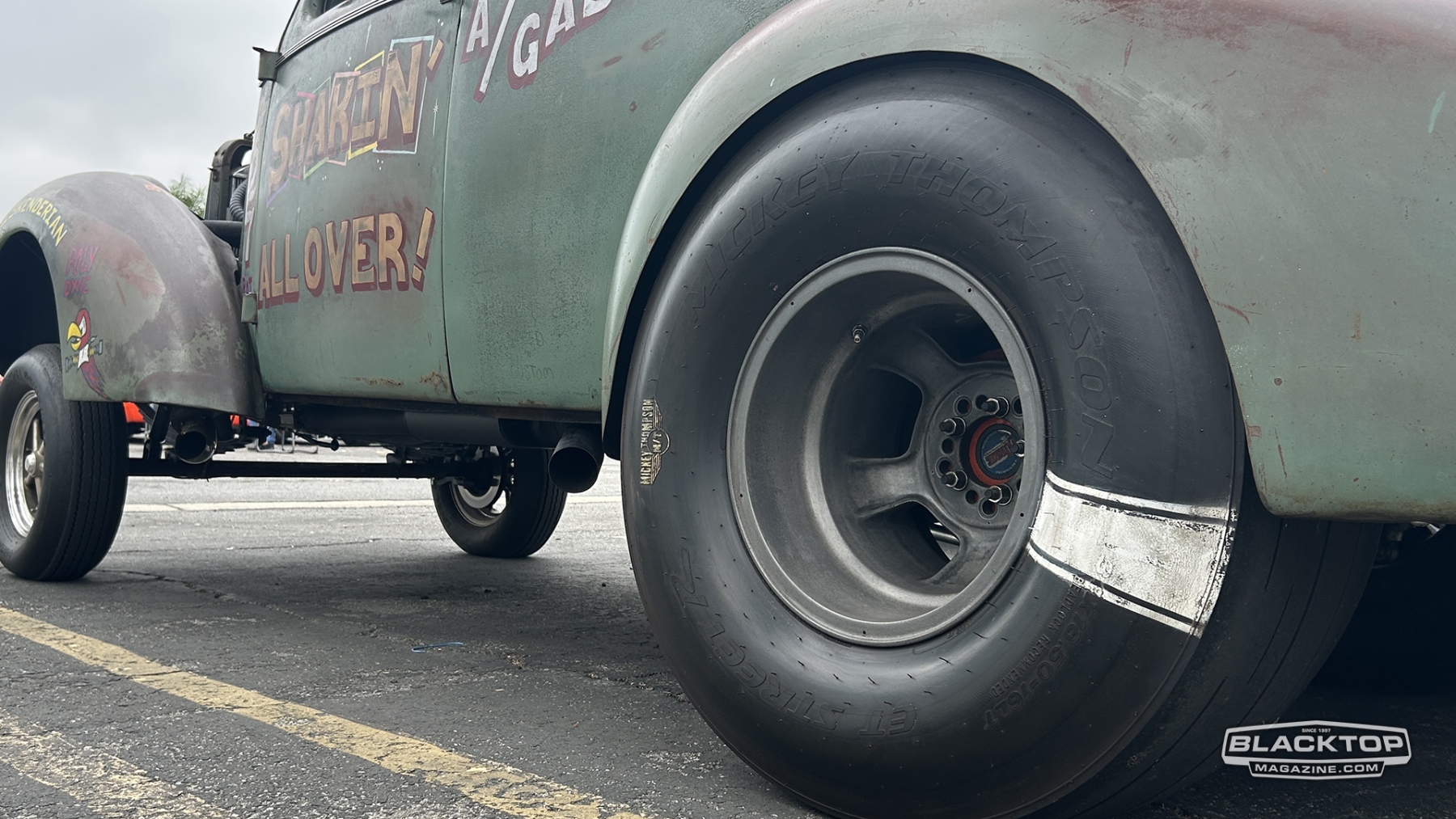
- Large rear slicks and narrow front tires
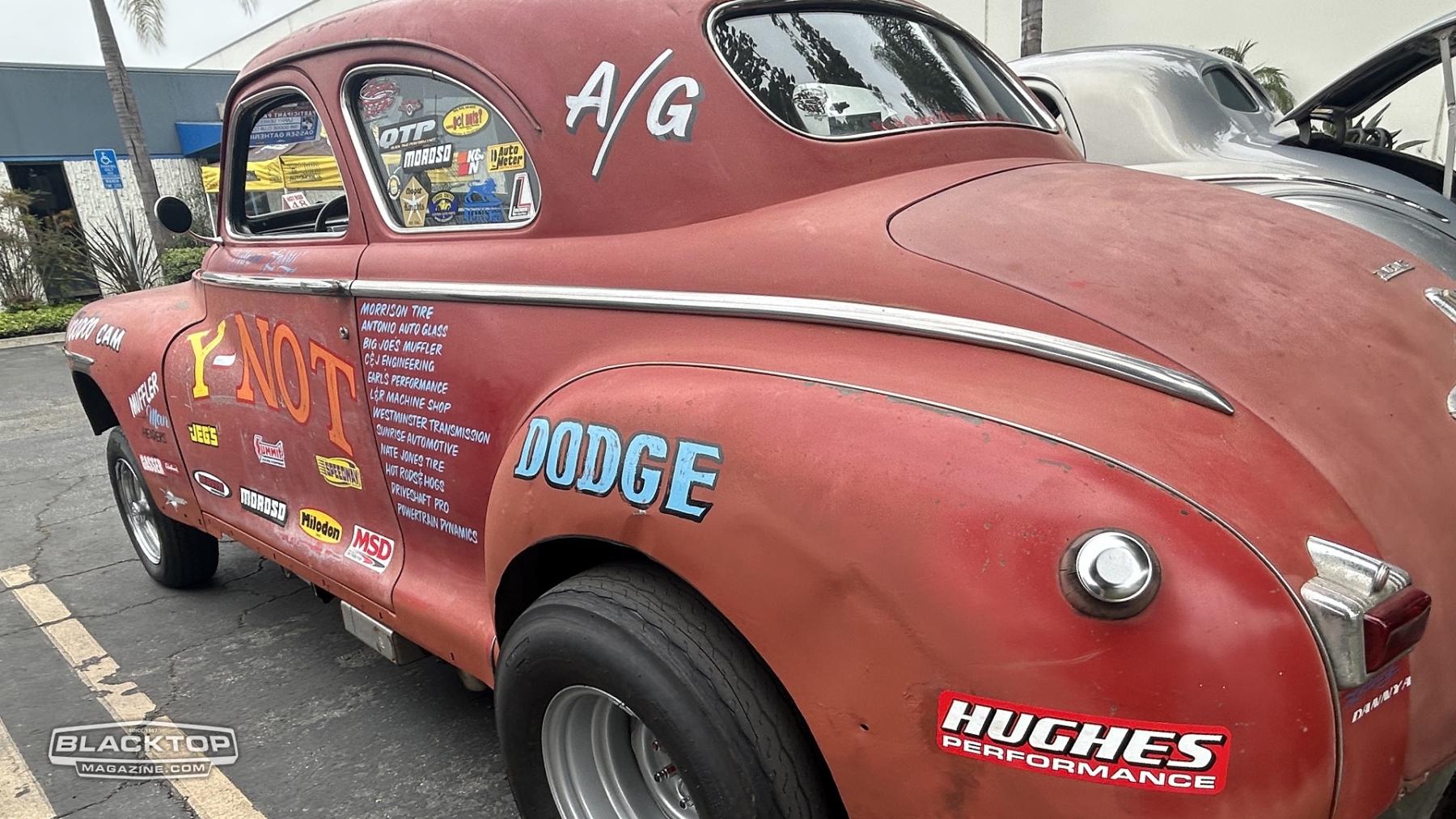
- Lettered doors and hand-painted team names
- An engine from another manufacturer or model
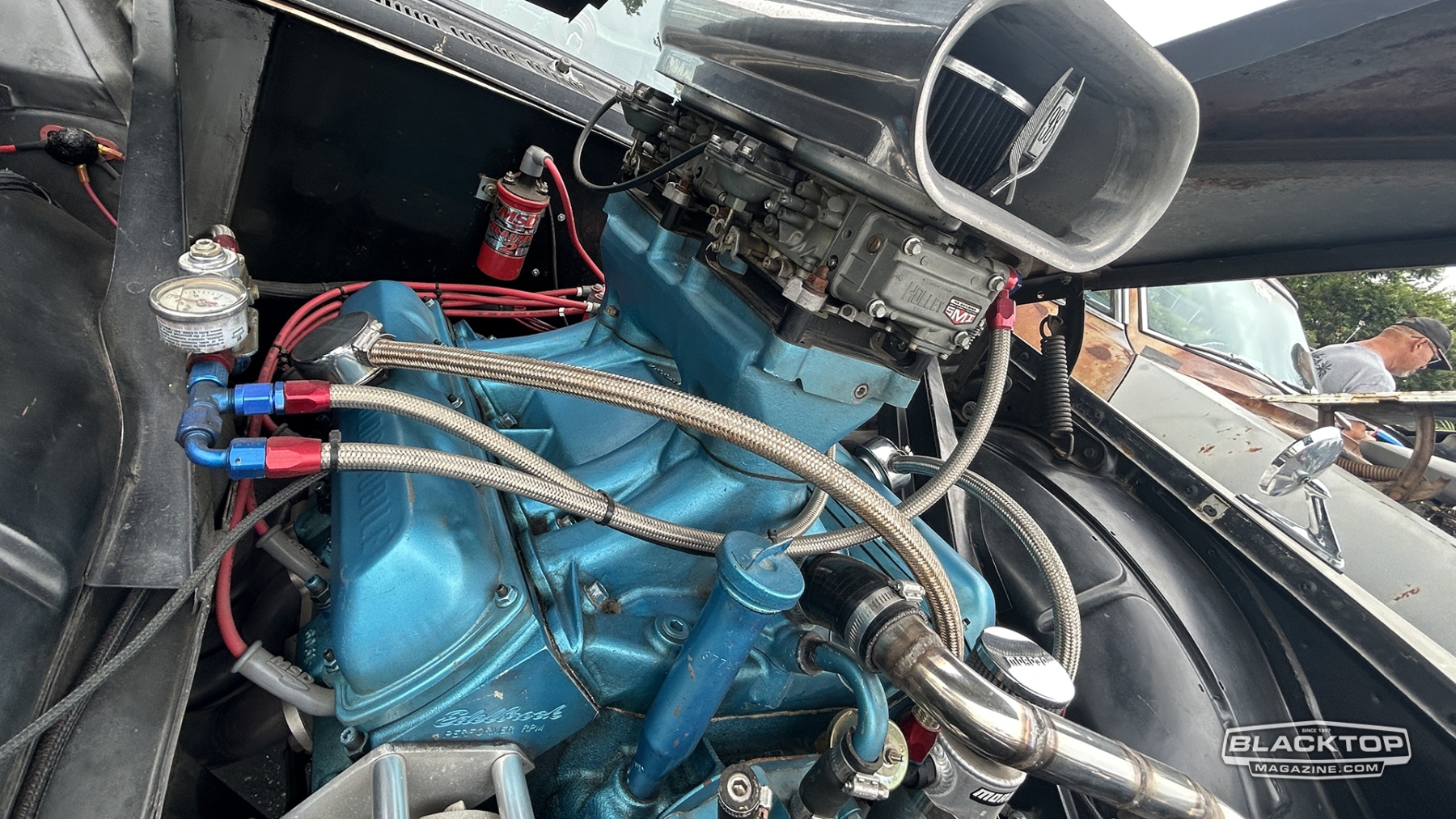
- Mechanical fuel injection or multiple carburetors
- A Roots-style supercharger in the blown classes
- Gasoline rather than nitromethane as the primary fuel
Not every historic Gasser had every one of these features. The towering stance and exposed suspension that enthusiasts associate with the category today became more pronounced as the cars grew faster and builders fought for traction.
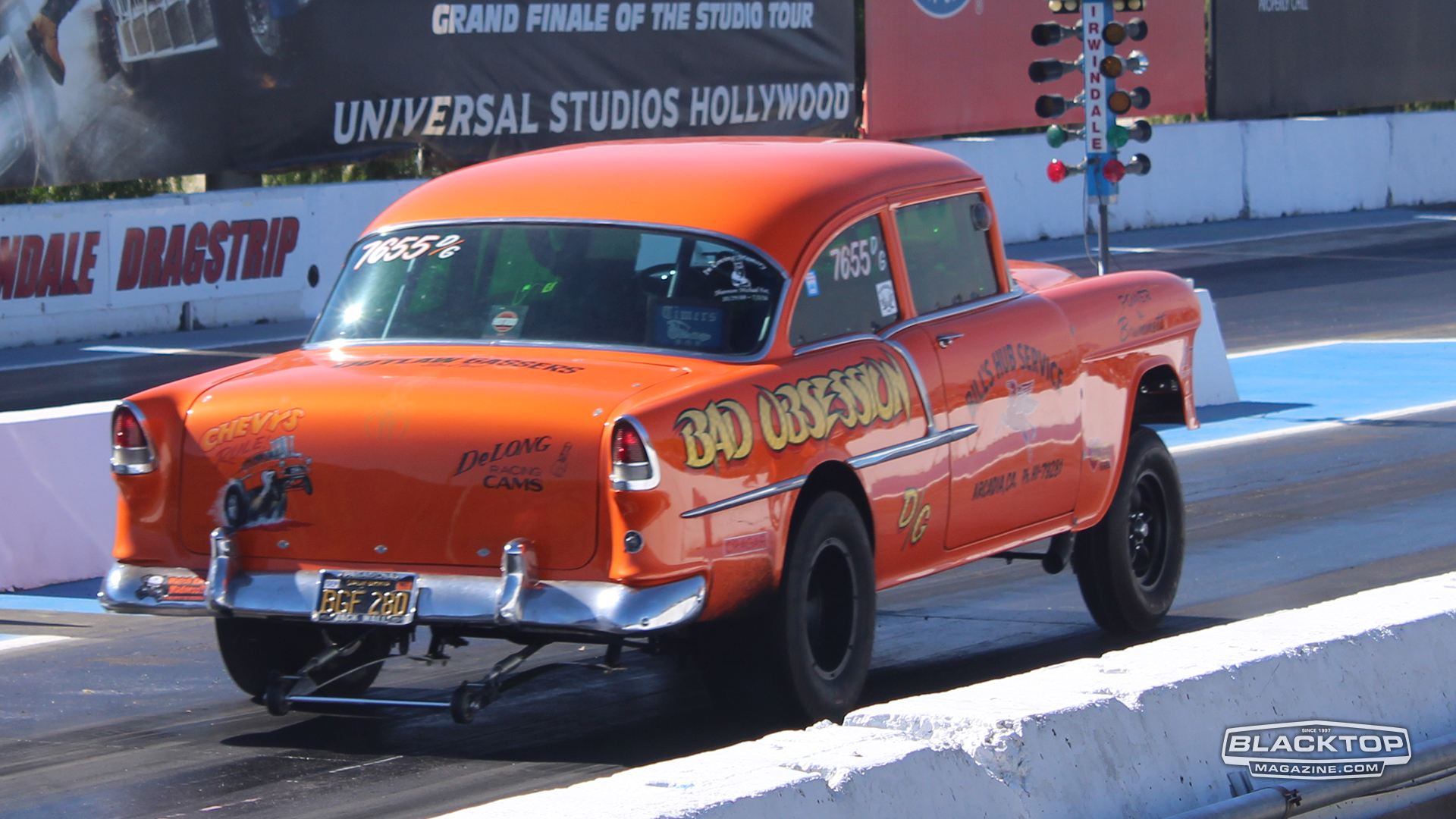
The cars that best captured the public’s imagination were the supercharged machines. NHRA has described the A/Gas Supercharged racers as the fastest street-type automobiles of their era—the spiritual equivalent of today’s Pro Mod cars.
The Gasser Wars Begin
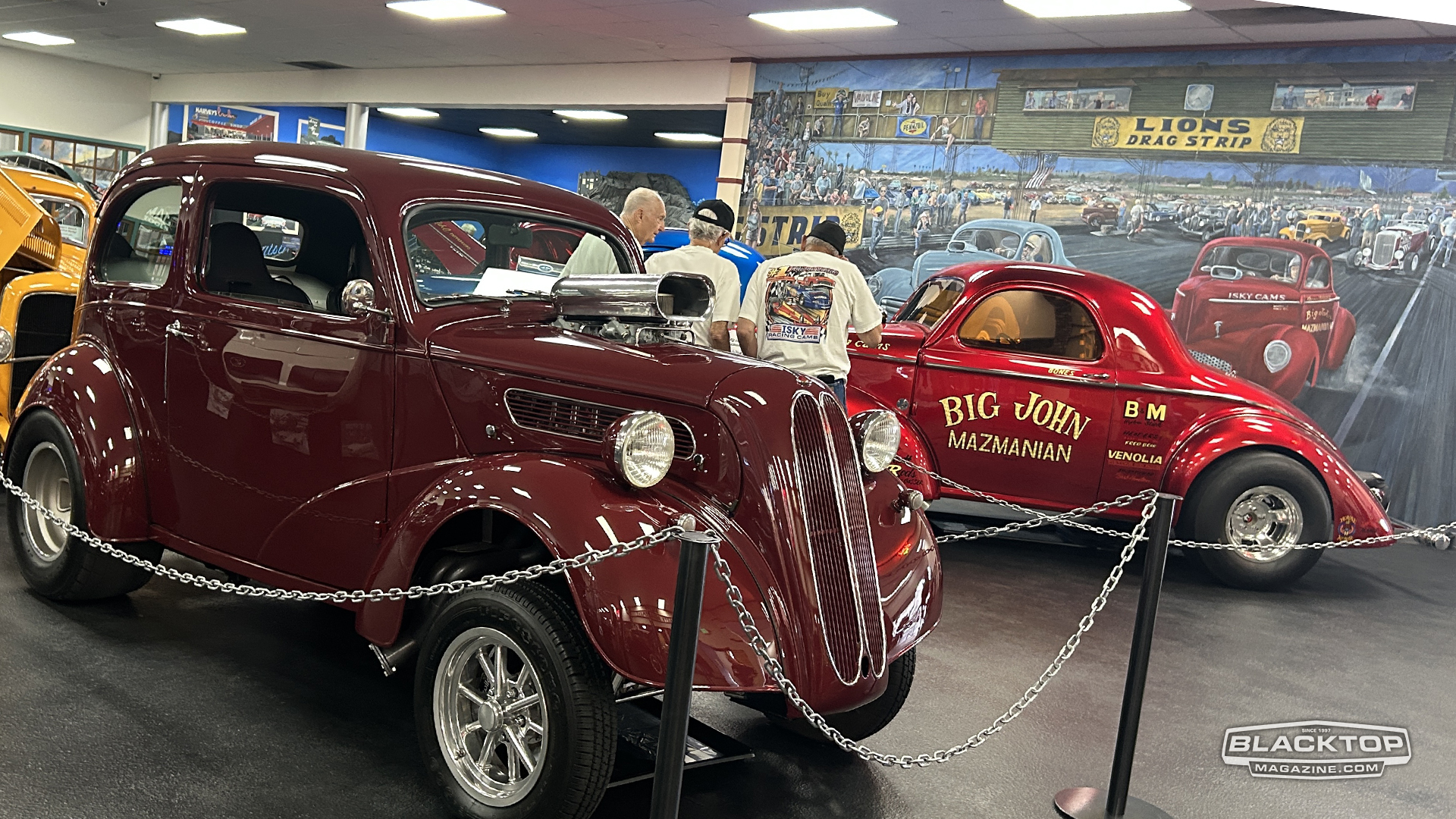
By the early 1960s, the quickest Gas cars were no longer just class competitors. They were traveling attractions.
Promoters booked the leading teams for match races, often pairing famous rivals in best-of-three showdowns. The advertising began before the cars arrived. Camshaft companies, speed-equipment manufacturers and team owners traded challenges and insults in enthusiast magazines and weekly racing newspapers.
The result became known as the Gasser Wars.
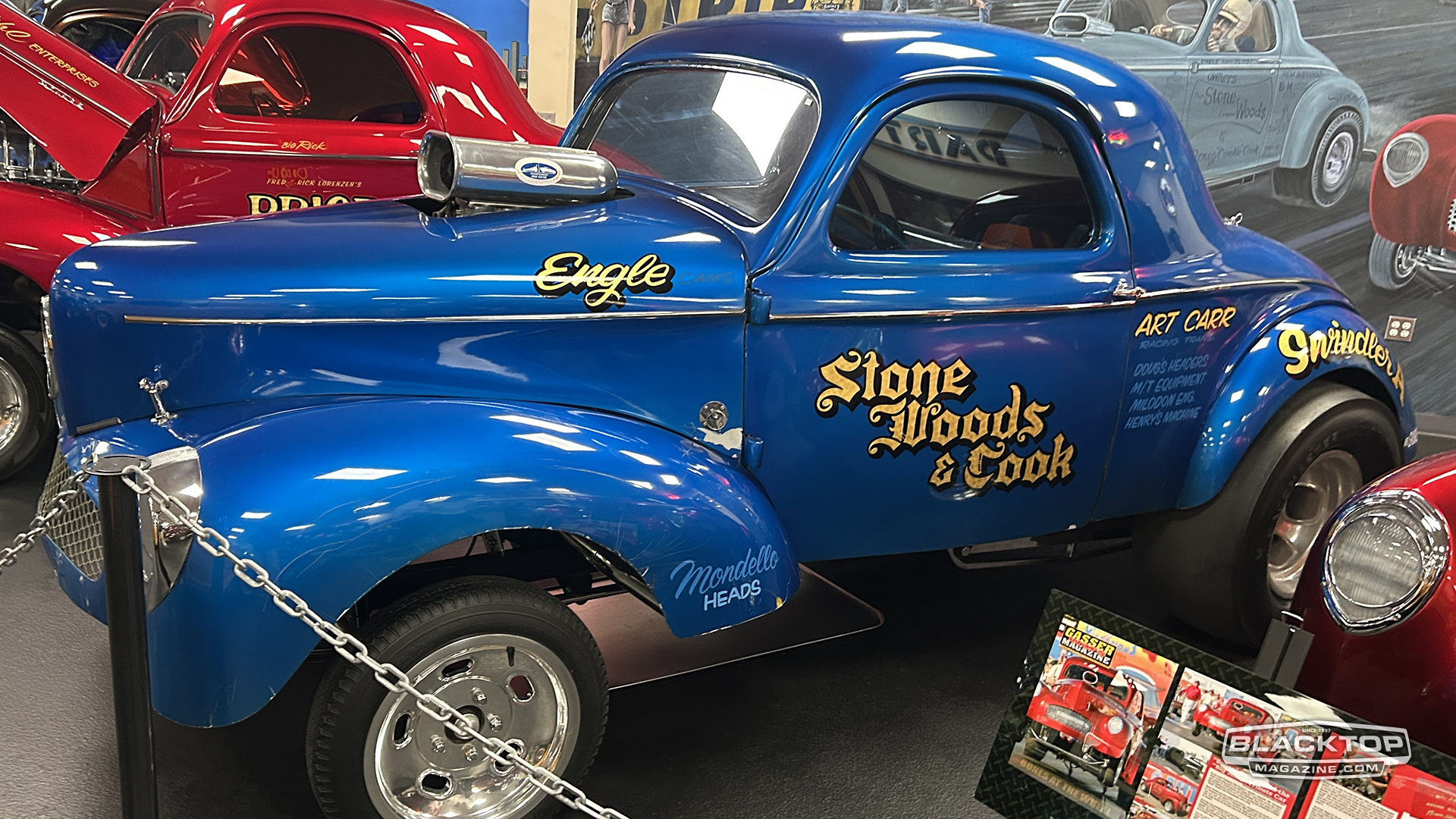
Few teams represented the era better than Stone, Woods & Cook. Fred Stone, Leonard and Tim Woods, and driver-tuner Doug “Cookie” Cook campaigned a series of Willys coupes, including the famous Swindler machines. Their 1941 Willys became one of the best-known race cars in drag racing history.
The team was significant beyond its success on the track. Stone and the Woods family were Black team owners competing during a heavily segregated period of American history, while Cook was white. Their integrated operation faced real obstacles while traveling, yet it developed into one of drag racing’s most professional and respected teams.
Waiting in the other lane was often “Big John” Mazmanian, whose beautifully prepared red Willys became the natural rival to the Stone, Woods & Cook machines. With respected racer and engine builder Robert “Bones” Balogh behind the wheel, Mazmanian’s car was fast, polished and instantly recognizable.
The Stone, Woods & Cook versus Mazmanian rivalry became one of the defining battles of the decade. It was fueled by performance, pride, promotional showmanship and a steady stream of advertisements needling the opposition.
The Men Who Made the Gassers Famous
Stone, Woods & Cook
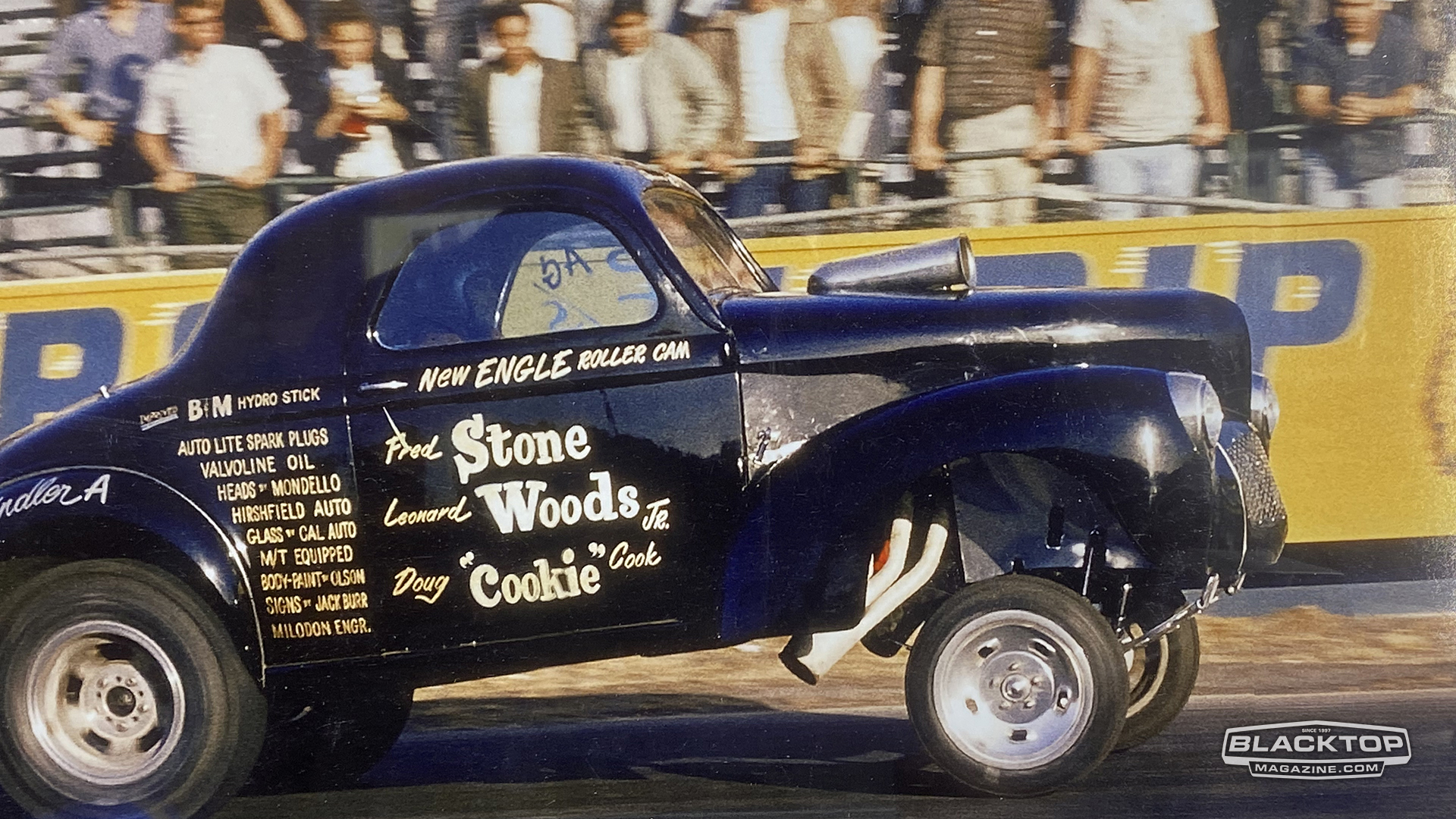
Stone, Woods & Cook combined mechanical skill with professional presentation and smart promotion. Doug Cook was both a talented driver and a gifted tuner, while Fred Stone understood that a race team needed to be memorable as well as fast.
Their success extended far beyond trophies. Model kits, magazine coverage and national match-race appearances turned the team into a recognizable brand. Their relatively brief partnership, running from approximately 1961 through 1967, left a permanent impression on the sport.
“Big John” Mazmanian and Bones Balogh
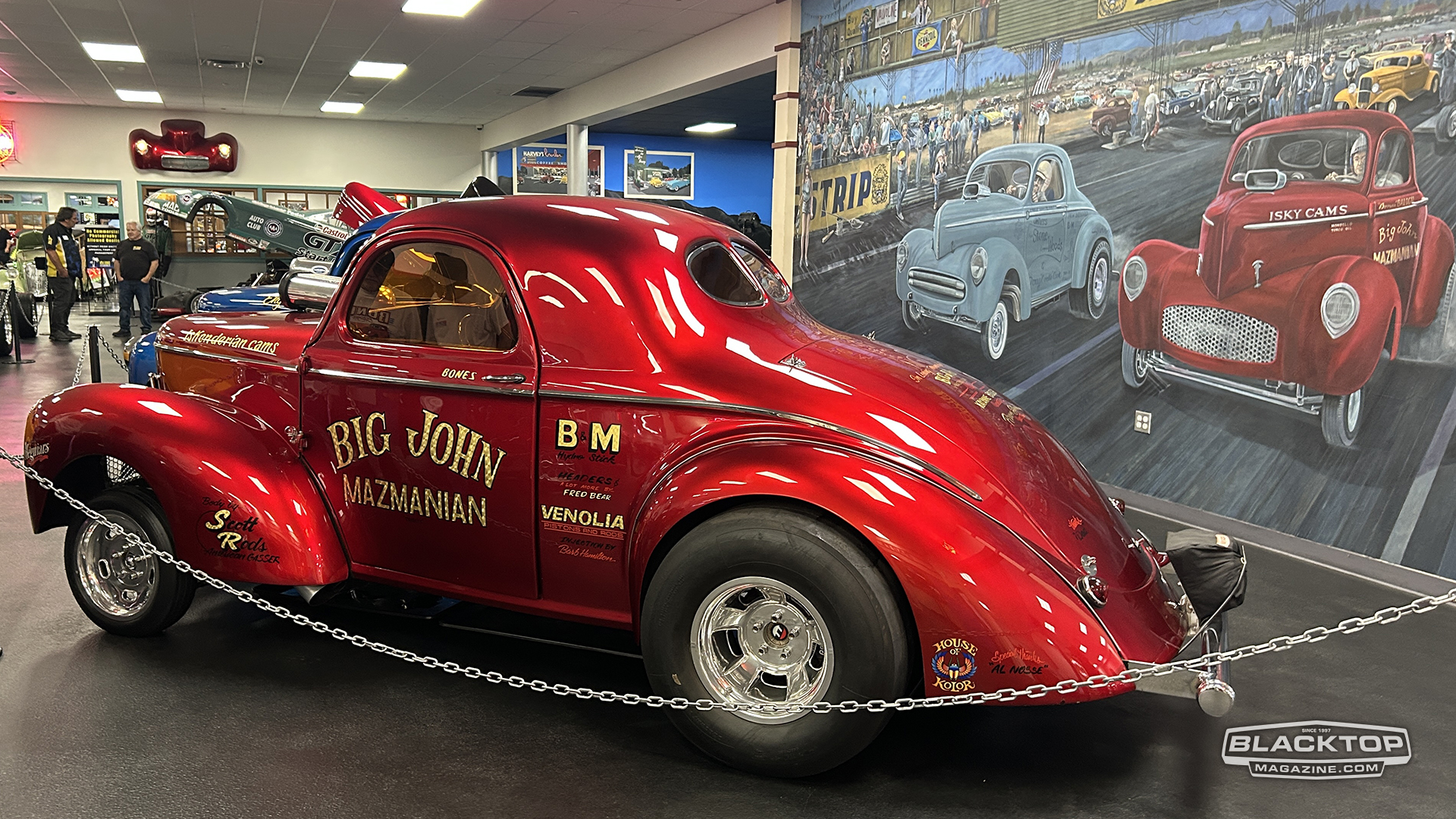
Mazmanian understood the value of appearance. His race cars were immaculately prepared, brilliantly painted and mechanically serious. Bones Balogh supplied driving ability and engine knowledge, helping make the red Willys one of the strongest competitors in the supercharged Gas ranks.
Mazmanian and Stone, Woods & Cook gave spectators exactly what they wanted: two famous teams, two unmistakable cars and a rivalry that could be promoted anywhere in the country.
“Ohio George” Montgomery
George Montgomery proved the Gasser Wars were not limited to Southern California. Known as “Ohio George,” Montgomery became one of the most successful Gas-class racers in NHRA history.
His achievements brought him national match-race bookings against Stone, Woods & Cook, Mazmanian and K.S. Pittman. Montgomery was also invited by NHRA founder Wally Parks to join the group of American racers who introduced organized drag racing to British audiences in 1964.
Montgomery constantly developed his combinations, moving from his famous Willys to Ford-powered Mustang Gassers. His later cars pointed toward the changing face of full-bodied drag racing.
K.S. Pittman
K.S. Pittman was another essential figure in the supercharged Gas wars. He drove for Stone and Woods before Doug Cook joined the team and later campaigned his own hard-running Willys entries.
Pittman’s aggressive machines and national match-race appearances made him one of the category’s most recognizable independent racers. He represented the working racer who could build a reputation by taking on the biggest names anywhere they were willing to meet.
The Regional Heroes
The Gasser phenomenon extended well beyond the headline names. Jack Merkel became an East Coast favorite, Gene Altizer’s Anglia was a serious national contender, and countless local racers turned older coupes and sedans into class competitors.
The variety was part of the appeal. A Willys might face an Anglia, a Chevrolet sedan, an Austin or a Henry J. Engines, transmissions and body manufacturers could be mixed according to what the builder understood, could afford or believed would be faster.
SIDELINE: Ed “Isky” Iskenderian and the Cam Wars
It would be difficult to tell the history of Gasser racing without Ed “Isky” Iskenderian.
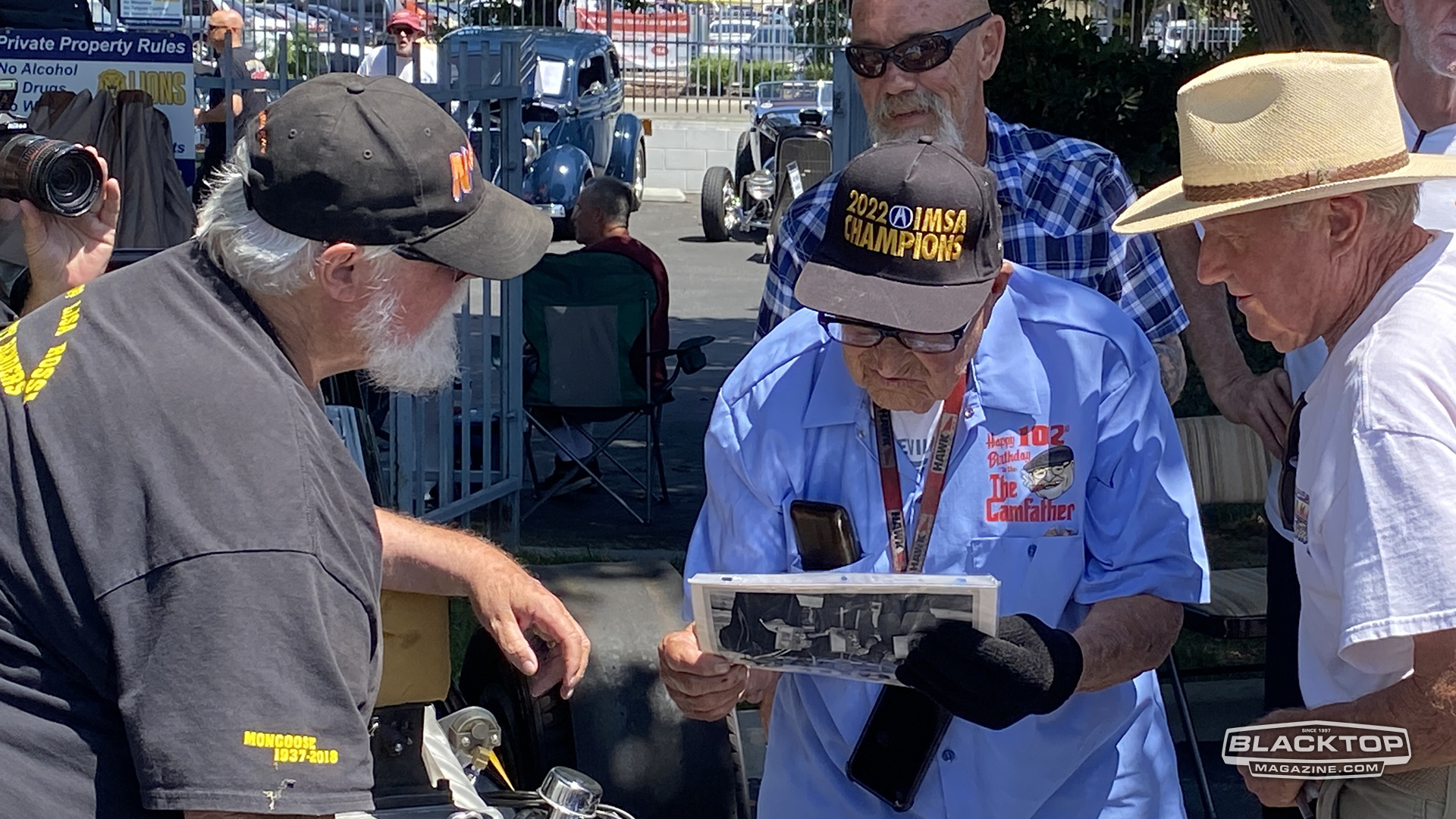
Iskenderian began grinding camshafts after World War II, using his experience as a dry-lakes racer to develop performance combinations for Ford flatheads, Oldsmobile Rockets, Chevrolet small-blocks and Chrysler Hemis. His famous 5-Cycle cam treated valve overlap almost like an additional engine cycle and became an important development in high-performance racing engines.
But Isky’s influence went well beyond the parts inside the engine.
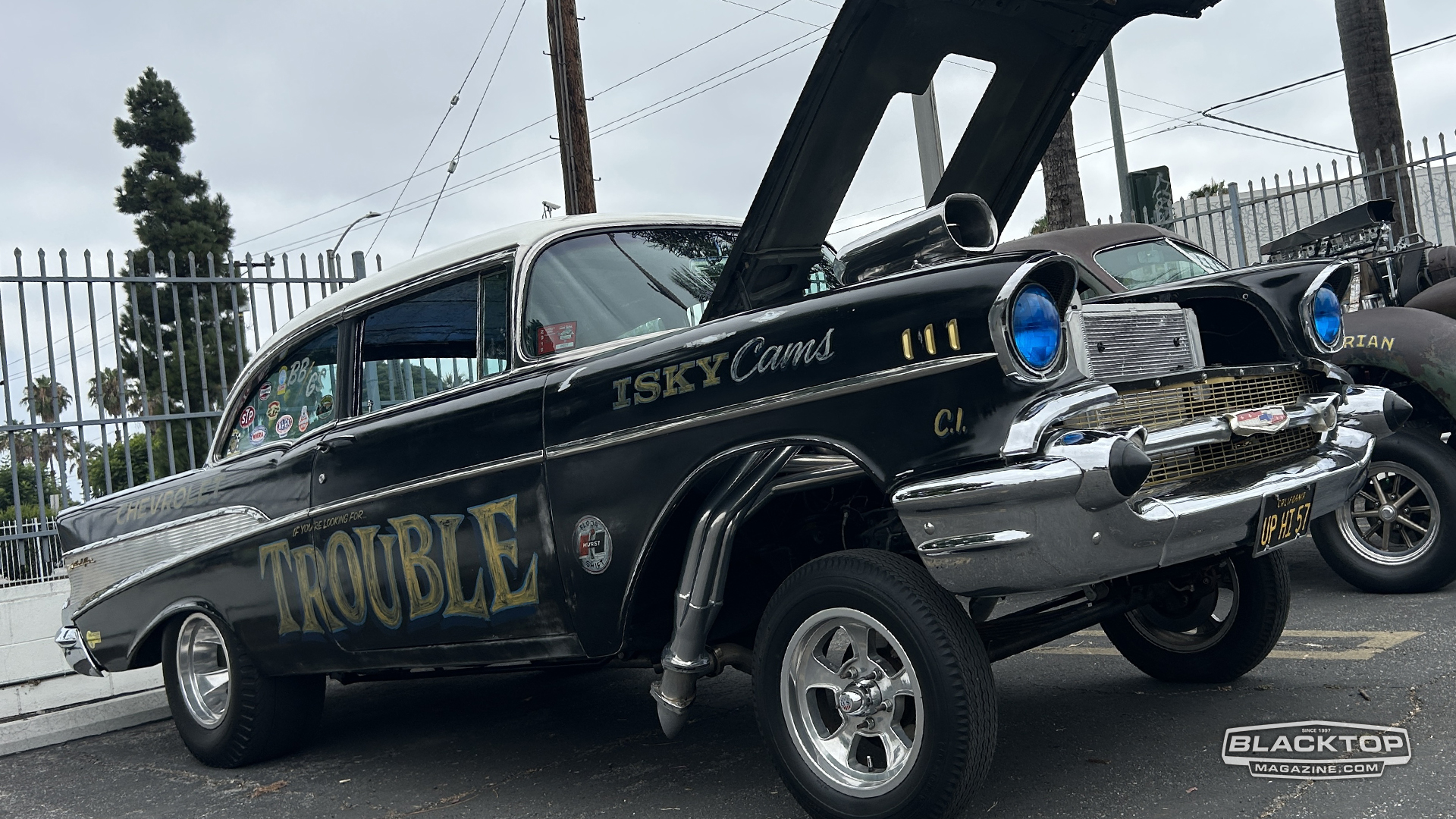
He recognized early that racers could sell products more convincingly than traditional advertising alone. Isky became a prolific magazine advertiser, promoted racers using his camshafts and participated in the colorful “cam wars” between competing manufacturers. He was also among the earliest speed-equipment companies to use branded T-shirts and is credited with arranging one of professional drag racing’s first major sponsorship relationships with Don Garlits.
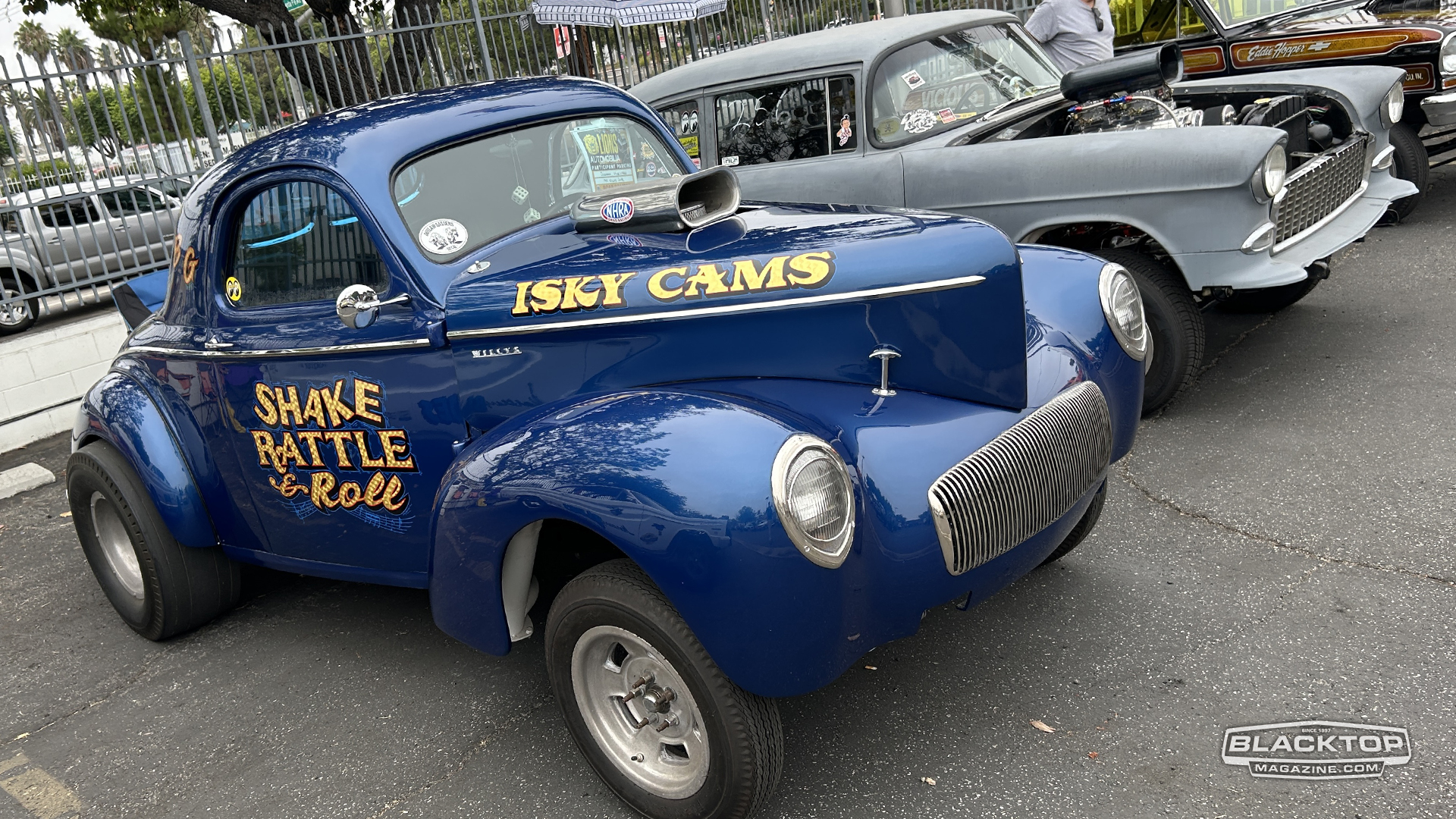
That combination of engineering and promotion fit the Gasser era perfectly. A fast race car could win on Sunday, appear in an Isky advertisement shortly afterward and become a nationally recognized attraction on the match-race circuit.
Iskenderian later became a founding member and the first president of SEMA, helping transform the scattered speed-equipment business into an organized industry. He remained an active and enthusiastic part of hot-rodding culture for the rest of his life. Following his passing at age 104, SEMA described him as a man who helped turn a hobby into an industry and a community into a movement.
How Did Gasser Racing Go Away?
The Gassers were not killed by a single rule change. They were overtaken by the next generation of drag racing.
The first major challenger was the Funny Car. Early Funny Cars borrowed heavily from the appearance and attitude of the Gassers but offered lighter chassis, more radical construction, newer body styles and considerably greater performance.
Some of the biggest Gasser teams followed the money and attention. Stone, Woods & Cook moved toward Funny Car competition by 1967. Mazmanian also transitioned into Funny Cars, and by 1969 the Gas ranks were already being displaced by the new category.
“Ohio George” Montgomery later summed up the shift plainly: Funny Cars performed the same basic show as the blown Gassers, only faster. Spectators, promoters and sponsors naturally followed.
Then came Pro Stock.
NHRA officially introduced Pro Stock at the 1970 Winternationals as a manufacturer-versus-manufacturer battleground. The category attracted factory attention, professional teams and many of the leading drivers from Super Stock, Modified Production and Factory Experimental competition.
The old Gassers suddenly found themselves caught between two newer attractions. Funny Cars offered supercharged spectacle and greater speed. Pro Stock offered contemporary automobiles and factory rivalries. The traditional Gas classes continued for a time, but their position at the center of the sport was over.
The Gasser Returns
The original class may have faded, but the Gasser never disappeared from hot-rodding culture.
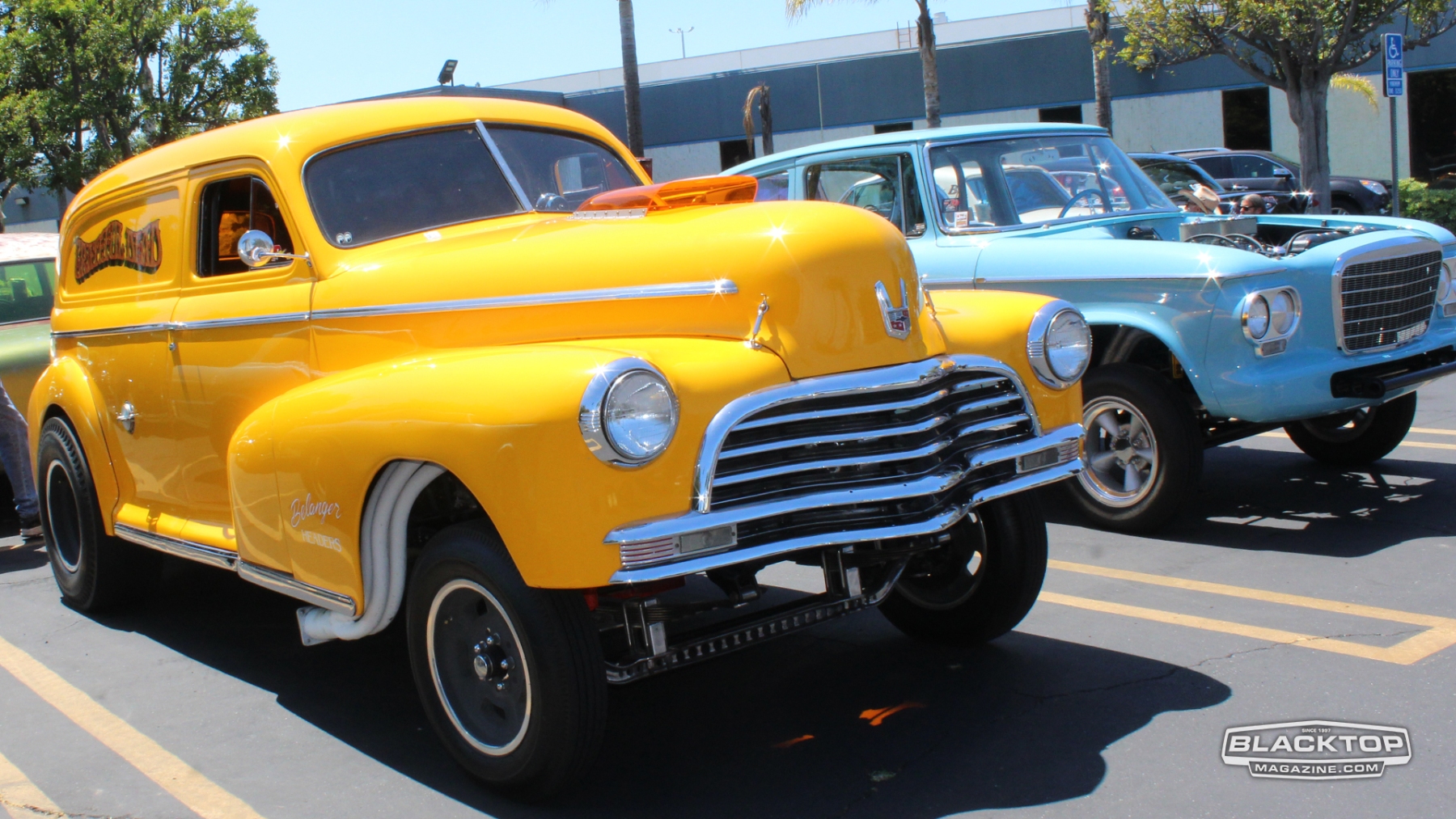
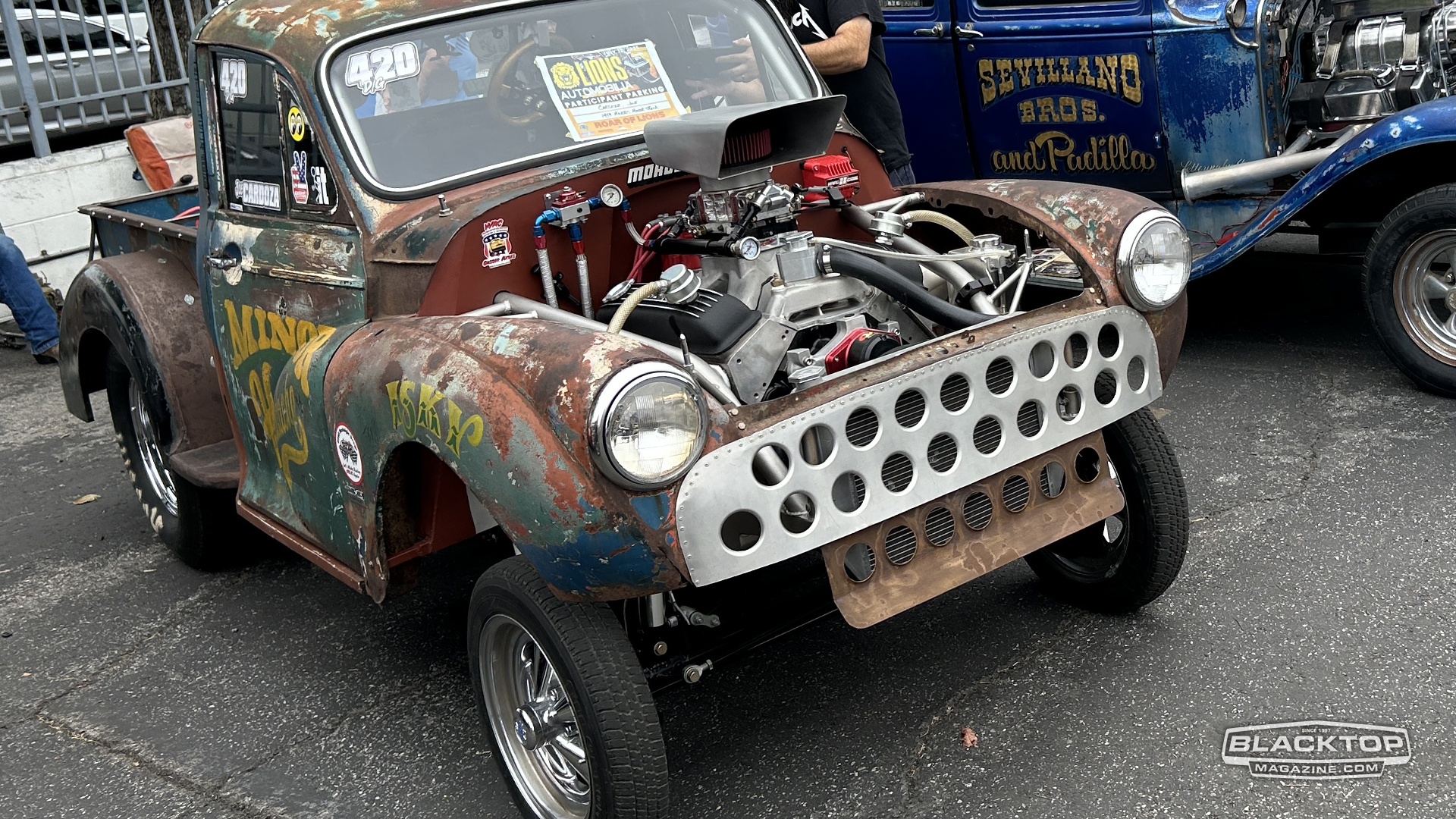
Nostalgia racing organizations revived period-style competition. Car builders rediscovered Willys coupes, Henry Js and Ford Anglias. Historic race cars were restored, replicas were constructed and new generations learned why a high-riding coupe with hand-painted lettering could still stop spectators in their tracks.
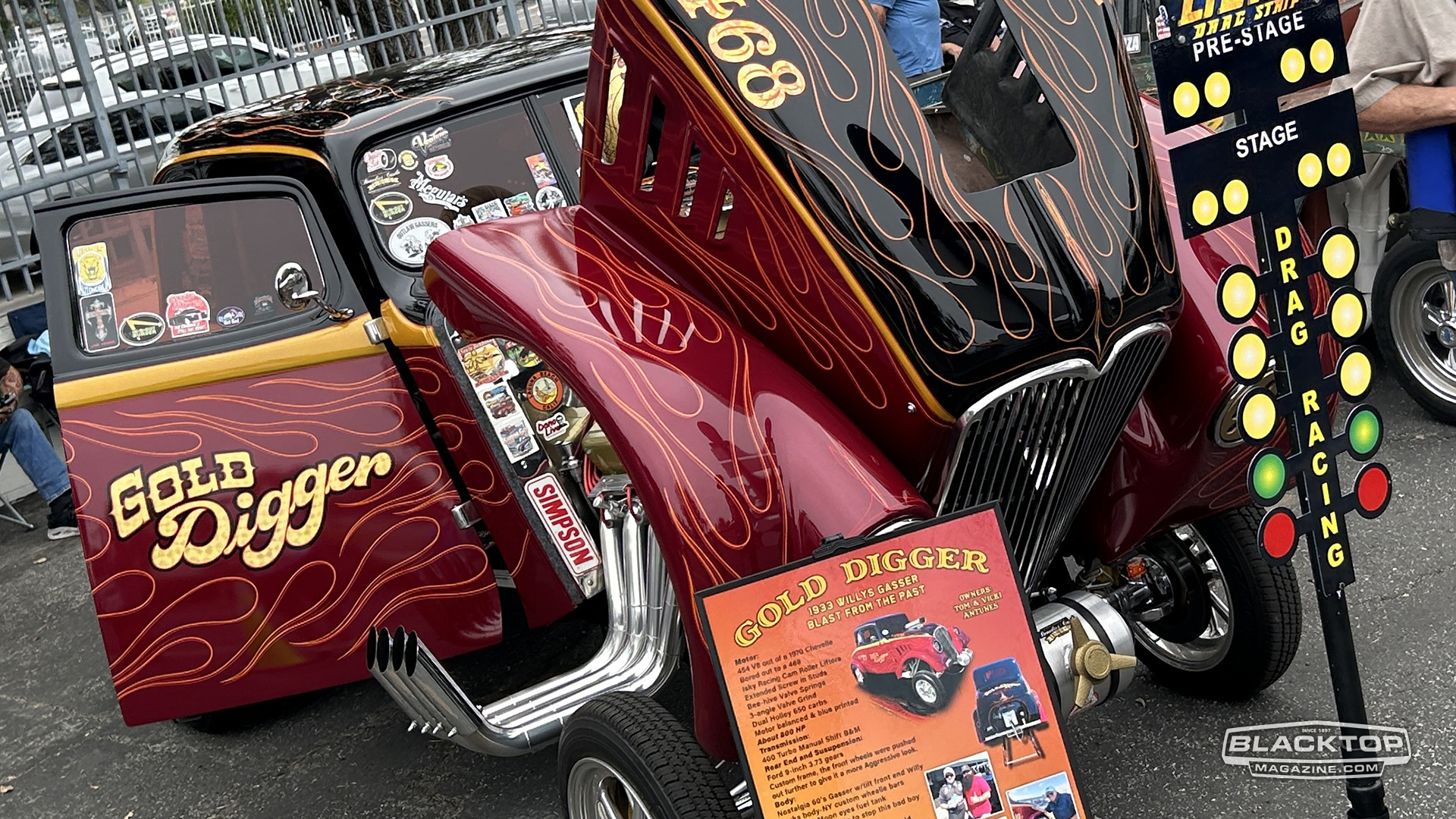
Modern nostalgia Gassers range from historically accurate race cars to street-driven customs inspired primarily by the appearance of the originals. Purists may debate the details, but that debate proves how strongly the original formula continues to matter.
Lions Automobilia Keeps the Story Alive
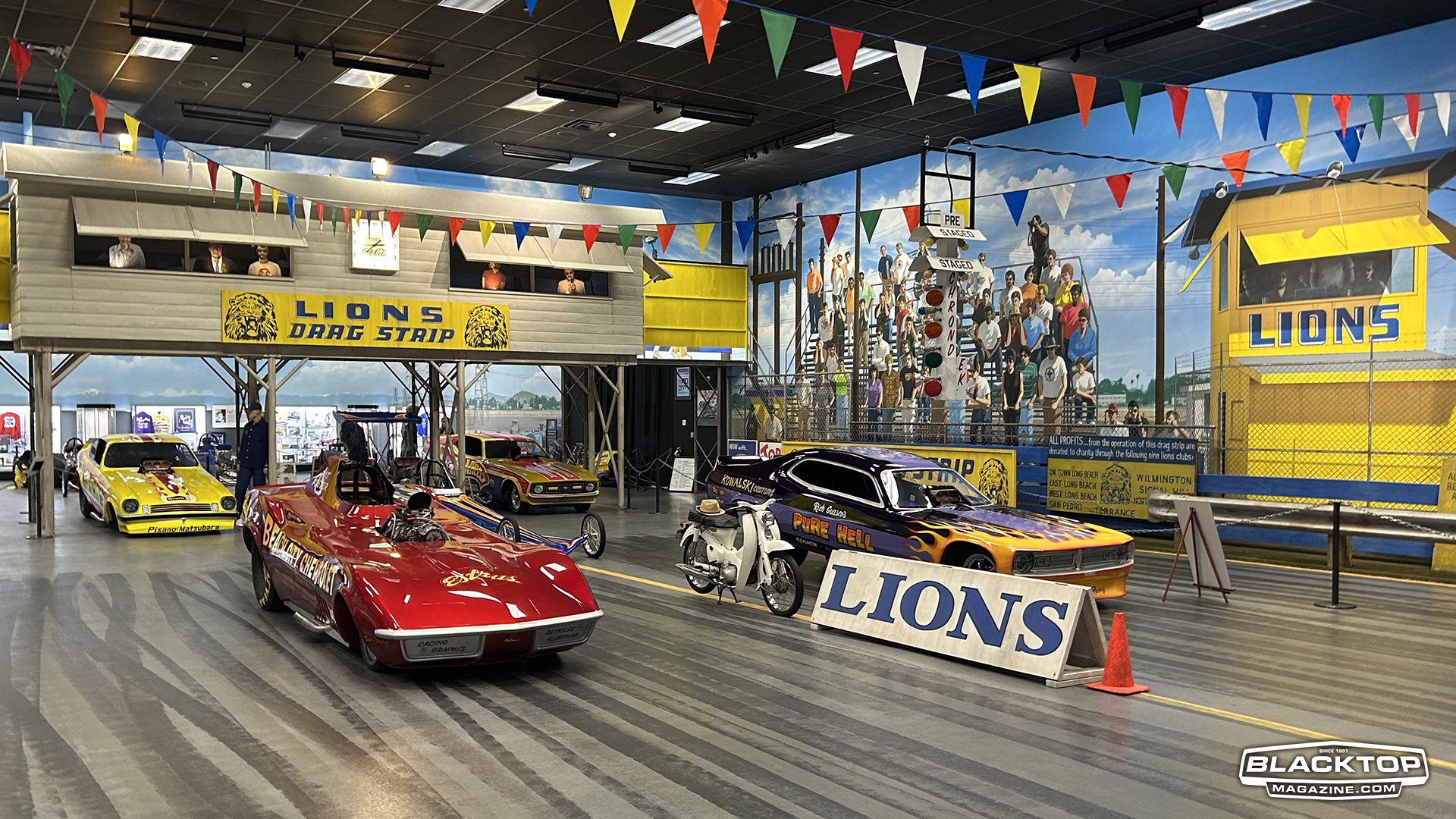
Southern California remains central to Gasser history, and the Lions Automobilia Foundation & Museum in Rancho Dominguez has become an important gathering place for preserving that legacy.
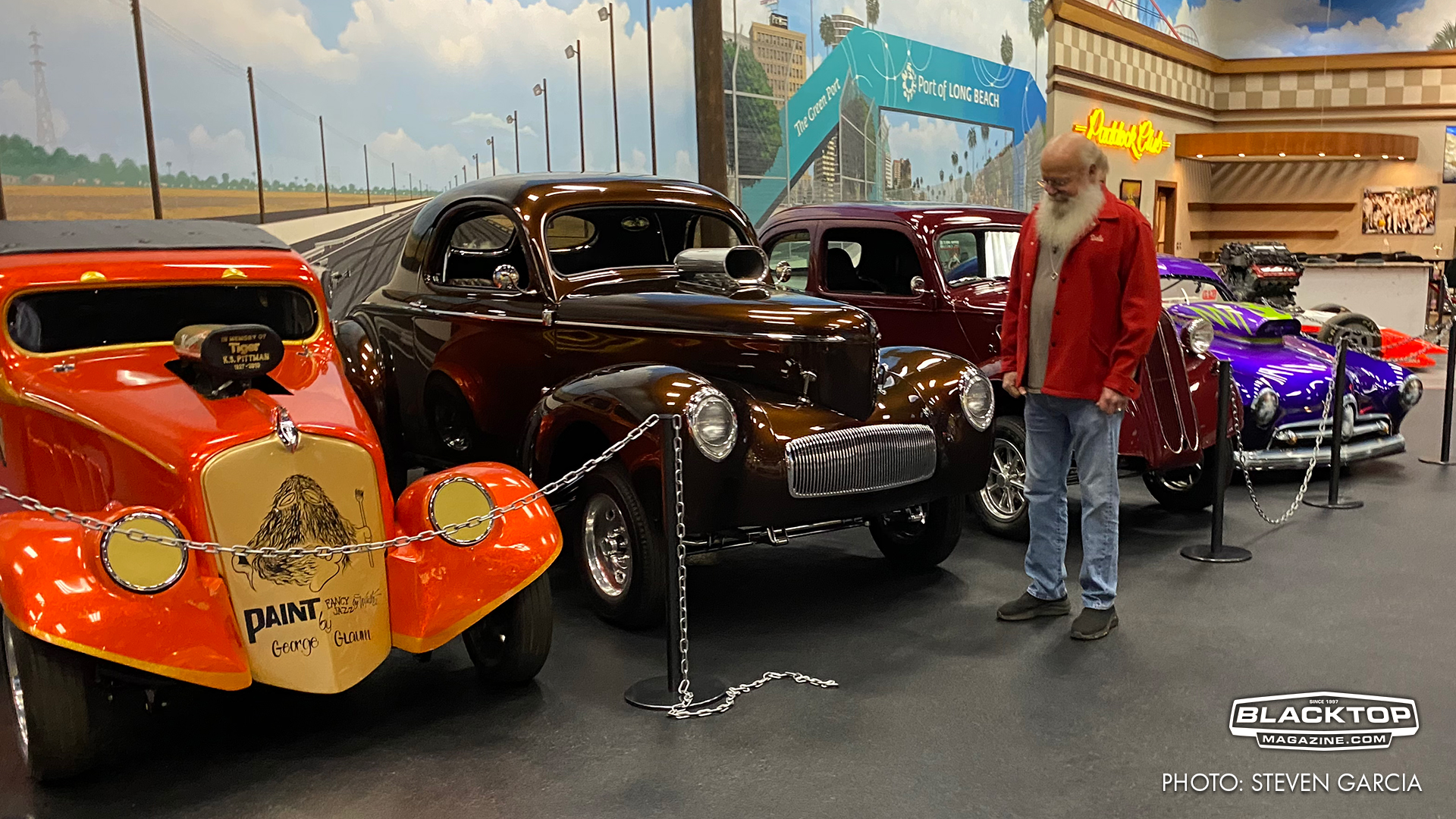
Named in tribute to the legendary Lions Associated Drag Strip, the museum celebrates Southern California automotive culture and the racers, builders and manufacturers who helped create it.
Its annual Lions Gasser Gathering brings historic race cars, Gasser-style hot rods, racers and enthusiasts together to share the machines and stories of the era. The July 11, 2026 gathering was dedicated to remembering and celebrating Ed Iskenderian and his remarkable life. The event also included a Christmas in July toy drive supporting Miller Children’s Hospital.
It is a fitting tribute.
The Gasser Wars were built on more than elapsed times. They were built on personalities, mechanical ingenuity, colorful advertising, independent businesses and rivalries that brought people through the gates.
Isky understood all of it.
He understood that the right camshaft could make a race car faster—but also that a memorable name, a bold advertisement, a branded shirt and a good story could turn a racer into a hero.
Still Carrying the Front Wheels
Gassers belonged to a time when successful drag cars could still be built in small garages by racers willing to study the rules, fabricate their own parts and work late into the night.
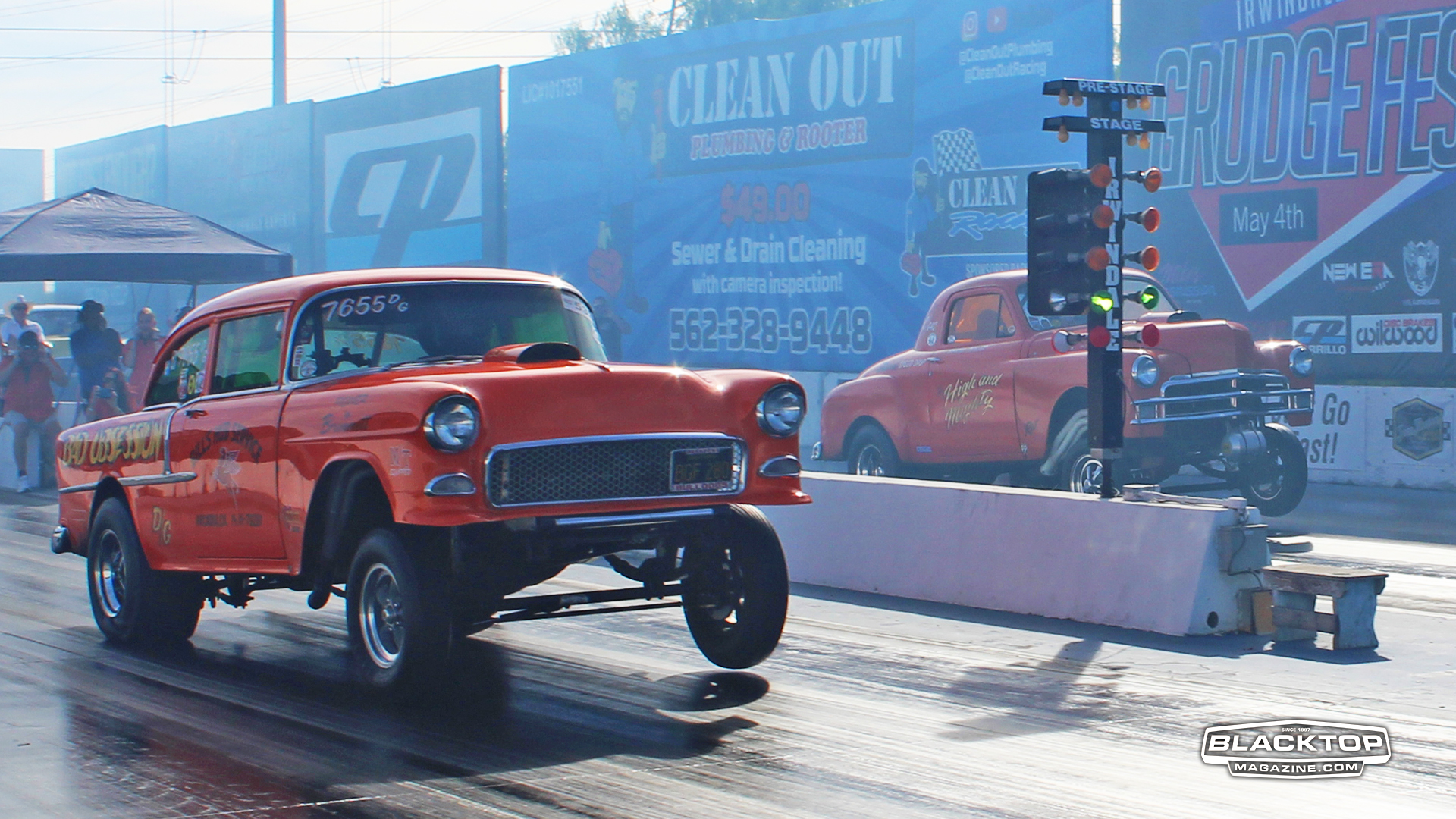
They were not refined by modern standards. They wandered, shook, lifted their front tires and occasionally frightened the men driving them. That was part of the attraction.
The original Gas classes may have given way to Funny Car and Pro Stock, but the spirit of the Gasser remains alive wherever an old coupe rolls toward the starting line with a straight axle underneath it, injector stacks above the hood and a hand-lettered name across the doors.
The front wheels rise, the crowd steps closer and the Gasser Wars begin again.